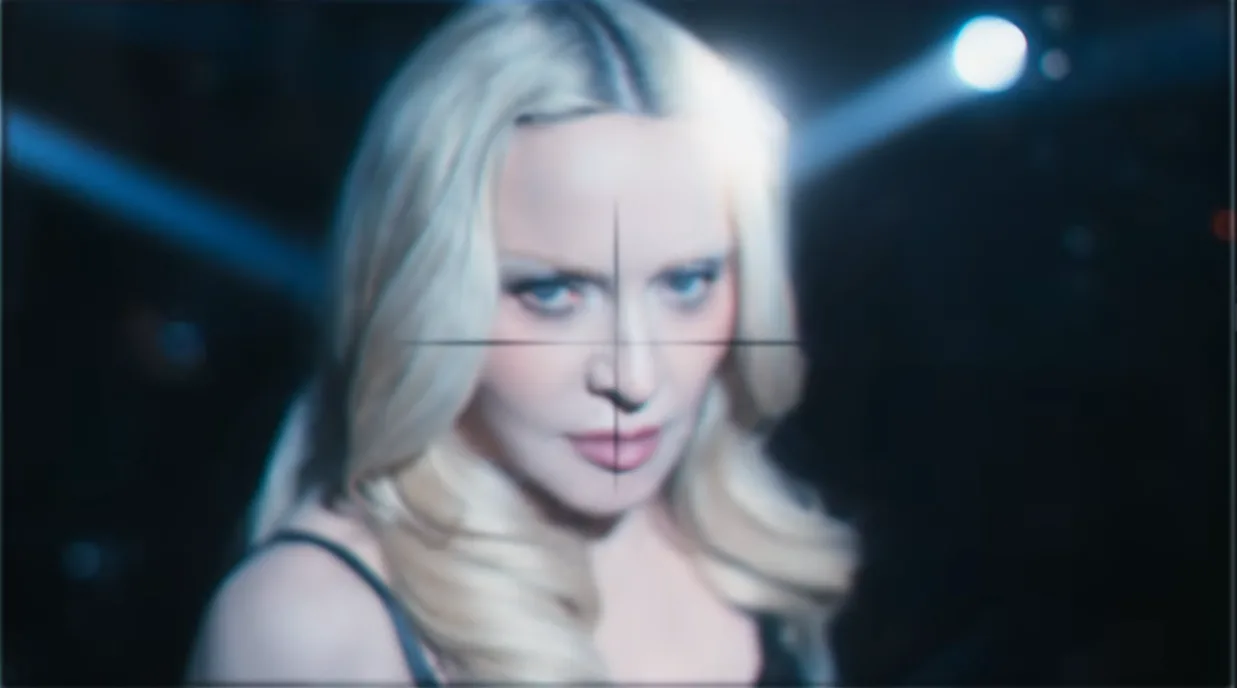
Fez — Madonna has unveiled “Confessions II – The Film,” a new short film tied to her forthcoming album “Confessions II,” setting the stage for one of her most ambitious musical returns in years.
The project premiered at the 2026 Tribeca Festival in New York, where Madonna appeared for a screening and conversation with directors David Toro and Solomon Chase, known professionally as TORSO. Tribeca described the film as a cinematic presentation accompanying the first six tracks of her new album.
Running just over 10 minutes, the short film is built as a continuous visual work rather than a traditional music video. It combines music-driven sequences, surreal imagery, nightclub references, and a futuristic aesthetic that connects Madonna’s past to her next artistic phase.
A return to the dance floor
“Confessions II” is scheduled for release on July 3, with official pre-orders already listing the album and its formats. The project includes “I Feel So Free” and “Bring Your Love,” Madonna’s collaboration with Sabrina Carpenter.
The album is being framed as a sequel to “Confessions on a Dance Floor,” Madonna’s 2005 dance-pop record. That earlier project became one of the defining releases of her mid-career era, built around club rhythms, electronic production, and a continuous-mix structure.
For the new album, Madonna has reunited with producer Stuart Price, who helped shape the sound of the original “Confessions on a Dance Floor.” The move signals a deliberate return to the dance and electronic textures that once placed her back at the center of global pop conversation.
Cameos and self-references
The film also leans heavily into celebrity spectacle. Reports on the short film list appearances by Julia Garner, Sabrina Carpenter, Benedict Cumberbatch, Kate Moss, Lourdes Leon, Gwendoline Christie, and other figures from fashion, film, and music.
One of the most discussed moments involves Madonna symbolically transforming into Julia Garner. The scene appears to reference the long-discussed Madonna biopic, in which Garner has been linked to the role of the pop star.
The film also revisits the atmosphere of New York club culture, including references to Danceteria, the legendary venue connected to Madonna’s early rise in the 1980s. That setting gives the project a biographical layer, turning the album rollout into a reflection on identity, fame, and survival.
Still rewriting the rules
At 67, Madonna is once again refusing a simple promotional cycle. Instead of releasing only singles and interviews, she is building a visual universe around “Confessions II,” using film, fashion, celebrity presence, and club memory as part of the story.
That approach has long defined her career. Madonna’s greatest strength has not only been reinvention, but control over the terms of that reinvention.