Fez — Known as the Indigenous people of North Africa, the Amazigh (Berbers) have shaped world history for millennia, from ancient Numidia to modern cultural movements.
Their influence extends across governance, philosophy, travel, and resistance. Here are six Amazigh individuals who stand out for their enduring impact on global history.
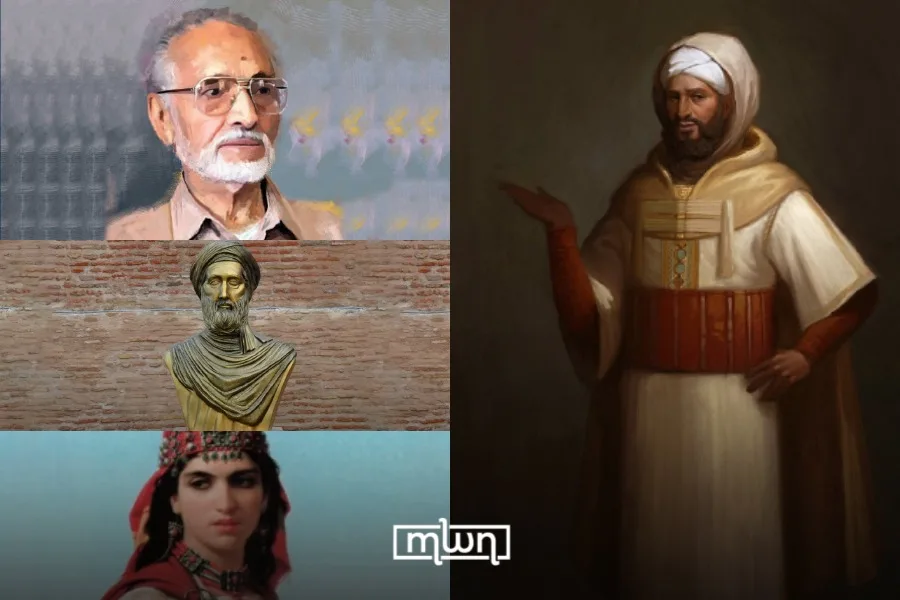
Masinissa (c. 238–148 BC)
The first king to unify Numidia, Masinissa played a pivotal role in North African history. A one-time ally of Carthage turned Roman partner, he created the first Amazigh kingdom recognized by Rome. His reign laid the foundation for Amazigh statehood.
Queen Kahina (Dihya) (c. 7th century CE)
A legendary 7th-century warrior queen, Kahina led the Amazigh resistance against the Arab-Muslim expansion in the Maghreb. Often portrayed as a prophetess and military strategist, she remains a symbol of Amazigh pride and female leadership.
Tariq ibn Ziyad (c. 670–720 CE)
Commander of the 711 CE conquest of Iberia, Tariq ibn Ziyad’s crossing of the Strait of Gibraltar forever linked North Africa to Europe. Gibraltar, derived from “Jabal Tariq,” bears his name. His legacy endures across Islamic and Amazigh historiographies.
Ibn Battuta (1304–1368/69 CE)
Born in Tangier, Ibn Battuta is considered one of history’s greatest travelers. His journeys through Africa, Asia, and Europe covered over 70,000 miles. His travelogue, the “Rihla,” offers a vital 14th-century perspective on the Islamic world.
Ahmad al-Mansur (1549–1603)
As Sultan of Morocco under the Saadi dynasty, Ahmad al-Mansur brought political stability and economic prosperity. He fostered diplomacy with Europe, expanded Moroccan influence into the Sahel, and sponsored major architectural works.
Mohamed Chafik (b. 1926)
A linguist, writer, and cultural reformer, Chafik has been central to the Amazigh identity revival. As the founding rector of Morocco’s Royal Institute of Amazigh Culture (IRCAM), he championed Tamazight recognition in education and public life.
These figures reflect the diversity and depth of Amazigh contributions to world history. Their legacies continue to shape Moroccan identity, Amazigh cultural revival, and international understandings of North Africa’s past.