Rabat – Tattoos of Amazigh women are a spoken beauty in visual symbols, carrying meanings of belonging, womanhood, and spirituality. The tattoos on their bodies were not a mere beautification but also a connection between the past and the present — holding stories and marks of identity and power.
For different occasions and purposes, Amazigh women tattooed various parts of their bodies, commonly faces, arms and feet. For decades this practice was a living tradition, indicating transformation and pride. Yet, this tradition diminished, leaving the last-tattooed Amazigh women with shame and regret.
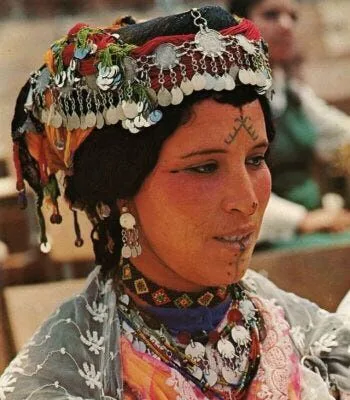
In pre-islamic Morocco, Amazigh women were tattooed to identify what tribe they belonged to. Each tribe has its own symbols, which distinguish between members of different tribes. It is believed also that tattoos cure illnesses and protect women from the evil eye and spirits. Such tattoos are designs near the eyes — above the eyebrows in the shape of a triangle like a palm tree.
The Amazigh tattoos indicate the transformative phases of womanhood, beginning at young age to symbolize fertility or puberty. “Siyala,” a long line down from the lower lip to the chin with small dots on both sides, is the first tattoo girls have. Other tattoos are added if the woman is experiencing any other changes like marriage, motherhood or being widowed.
The process of tattooing happens mostly in social gatherings to support and celebrate the tradition. They are applied by a thorn or a needle, pigmented by a black or green mixture of plants and herbs. The process is often painful. Yet, tolerating the pain is important to show strength and pride in the tribes’ rituals.
The Amazigh tattoos shifted from being a sign of identity and pride into a sign of prostitution and shame. During the French occupation, the colonial force saw tattooed women as exotic. They created brothels for abducted women, most of them tattooed Amazigh women from rural places. They were not just subjected to the male gaze but also exploited sexually: the use of the tattooed women as prostitutes drew a direct association between tattoos and sex workers, making tattoos a sexual stigma.
The Islamization of Morocco is another reason for the diminishing of tattoos from Amazigh culture. Religiously, it is believed that tattoos are forbidden. Changing God’s creation by any means like tattoos or plastic surgeries is “haram,” which indicates dissatisfaction with God’s will. Another debate about tattoos being forbidden in Islam is due to its possibility to obstruct the ablutions of purification “Wudue.”
Throughout history, Amazigh tattoos have been a multilayered tradition. It began as a beautification of the female body and a celebration of identity and growth, but gradually became stigmatized and a mark of prostitution and shame.