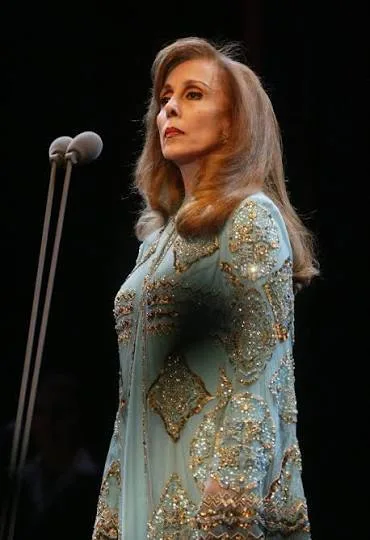
Rabat – Fairuz, the angel’s voice that blesses our mornings. Her songs poured from a radio or an old cassette like an archive, reminding us of a heart that once knew a gentle love, a peaceful city, and a dream of unity. Her voice is a map with no borders, a land with no frontiers where Beirut meets Marrakesh and Baghdad meets Damascus.
Fairuz in her music portrays a collective emotional memory, tackling topics such as love, exile, and displacement. She talked about the isolation in one’s self and alienation in one’s own land. Amount fragmentation, her voice still holds a promise that home still exists.
The no man’s land
In 1975, a civil war started in Lebanon. There was push and pull between many different ideological and religious parties like the Kataeb party, Palestine Liberation Organization, and left-wing parties. Each party of these has their own visualization for the future of Lebanon.
Eighteen sects in one country eventually fragmented the country into smaller parts. The capital Beirut was divided geographically, ideologically, and religiously into two parts. East Beirut, mostly christian citizens, under the control of the christian party. West Beirut, mostly Muslim citizens. In addition to the civil war, Israel tried twice to invade Lebanon in 1978 and 1982.
The circumstances of the war divided the country. Yet the iconic figure Fairuz united them through purpose and the dream of a great country again. She released an album titled “Ma’rifti Feek”(“My knowledge of you”), expressing her sadness saying,“To Beirut, salute from my heart to Beirut. To Beirut, a glory of ashes. To Beirut by the blood of a child carried on its hand. My city put out its lantern, closed its doors, stood in the night alone, alone with the night.”
Too many different groups fighting over ideologies but united over their common feeling towards the country, triggered by the songs of Fairuz.
The shift in Arab music
Nouhad Haddad, known as Fairuz, got her start when she was 15 years old. She met the singer and the composer Halim El Roumi. He described the first time he heard her sing: “I saw new things in her voice that I have not seen in others… Aside from the euphony and melodiousness of her voice, I felt like her heart was the one singing, not her vocal cords.”
Fairuz met the Rahbani brothers, composers and owners of a musical radio program. They discover another side of Fairuz – a gentle and shy voice. She excelled at singing the calm romantic songs as well as dancing songs.
Working together, they contributed to the creation of a new musical style in Lebanon and beyond. The Eagyncian were at the peak of musical production, globalizing their music and melodies. Fairuz, beside the Rahbani brothers, revolutionized the arab melodies to create a new style. They established short and balanced forms between lyrics, melody, and emotional expression. Beside the use of the shorter poetic verses, they relied on folk elements expressed with softness and warmth rather than highly technical vocal delivery.
Fairuz created a new musical identity separated from the Egyptians. Her shy voice is an identity with no belonging. A voice of both loneliness and strength needed in moments of crisis.