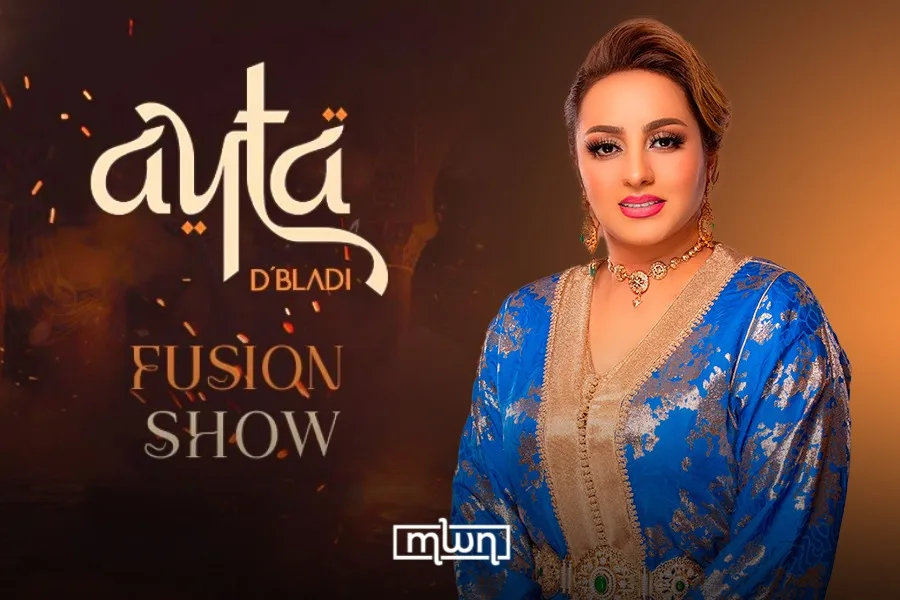
Fez — Moroccan star Zina Daoudia brought her trademark energy and stage presence to the Fusion Show Ayta D’Bladi in Casablanca, reaffirming her status as one of the leading voices of contemporary chaâbi.
Her performance reflected how deeply she draws on Aita traditions while speaking directly to today’s audiences.
At the Mohammed V Complex, Daoudia closed the second night of the festival with a set that turned the venue into a full-scale celebration, blending heritage rhythms with modern arrangements and crowd-ready hooks.
Taking the stage after a series of collaborative performances, Daoudia stepped into a key role in the festival’s mission: connecting ancestral Moroccan sounds with the evolving landscape of popular music. Throughout the evening, she moved seamlessly between classic chaâbi pieces and reworked tracks infused with pop and contemporary instrumentation.
Earlier in the show, Daoudia joined Maâlem Hamid Kasri for a special fusion of the traditional piece “Aita Sidi Hmed,” combining the powerful vocal lines associated with Aita and the deep, spiritual textures of Gnawa. Her vocal delivery, shaped by years of work in the chaâbi scene, reinforced the idea that Moroccan popular music is inseparable from its traditional roots.
For Daoudia, Aita is not just a source material to sample; it functions as a foundational school of performance, phrasing, and emotional expression. Her participation in the Fusion Show Ayta D’Bladi underlines a conviction that artists working in Moroccan popular genres need to understand and respect this base in order to innovate credibly on stage.
During her solo closing set, Daoudia drew on this foundation to deliver an upbeat finale. She layered familiar chaâbi structures with contemporary beats, inviting the audience to sing along, clap, and dance. The result was a show that felt both rooted in Moroccan heritage and tuned to the expectations of a generation raised on digital platforms and global pop.
Her contribution to the festival extended beyond entertainment value. By placing Aita at the heart of her performance, Daoudia helped frame the traditional genre as a living, adaptable form, not a nostalgic relic. The interplay between her voice, the band’s modern arrangements, and the crowd’s enthusiastic response showed how heritage music can remain relevant without losing its identity.
As the final notes echoed through the Mohammed V Complex, Daoudia’s performance encapsulated the spirit of the Fusion Show Ayta D’Bladi: respect for tradition, appetite for experimentation, and a determination to keep Moroccan musical heritage at the center of the country’s contemporary cultural conversation.