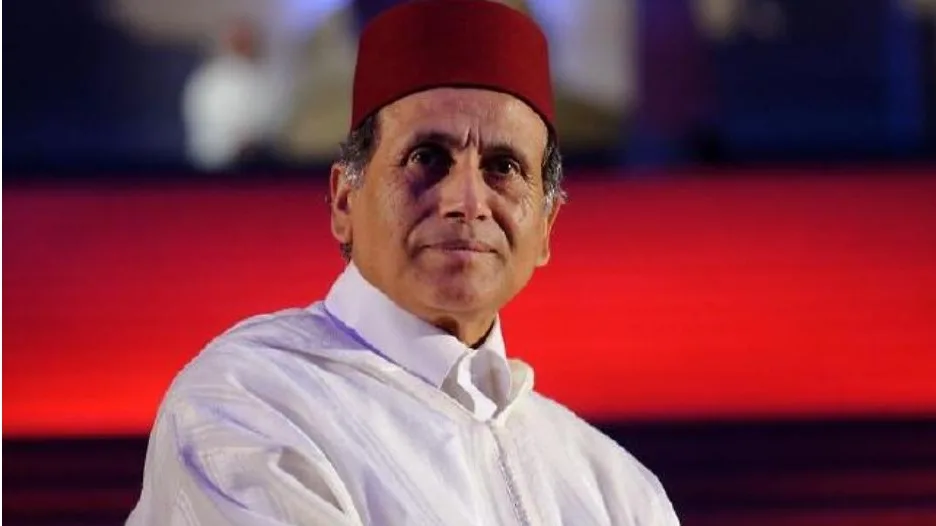
Fez — Fez, Morocco’s spiritual capital, hosted a grand evening of Andalusian music that doubled as the official launch of the Mohammed Briouel Foundation for Art and Heritage. Maestro Mohammed Briouel led an orchestra of more than 70 musicians from cities across the Kingdom and presented a refined program that underscored the genre’s roots in Morocco’s collective imagination.
The repertoire showcased the form’s tonal and rhythmic variety, including Mizan Darj al Hajar, Tab’ al-Hijaz al Mashriqi, and a series of sanat suites — Tawshih, Hazaj, Basit, and Zajal. The performance drew a full house of cultural figures, artists, and public officials who came to hear a living tradition rendered with precision and warmth.
A roster of renowned voices anchored the night. Zainab Afailal, Mohamed Bajdoub, Abeer Al Abed, Abdelrahim Souiri, Saïd Belkadi, and Omar Metoui joined the ensemble, each bringing a distinctive timbre to classic modes and poems. One segment blended Andalusian tarab with samaa, the spiritual chant tradition, creating a contemplative interlude that allowed for focused listening.
The event’s centerpiece honored Briouel himself: a short documentary traced the maestro’s artistic journey, his decades of teaching and conducting, and his role in modernizing pedagogy while preserving the canon. The tribute framed him as a pillar of Morocco’s musical heritage and a mentor whose influence spans generations of players and singers.
Abdelatif Louchi, president of the Mohammed Briouel Foundation, described the launch as a decisive step in safeguarding one of Morocco’s oldest arts and elevating it to its rightful stature. He outlined a mission to serve Andalusian music, reinforce its place in Moroccan memory, and open it to younger generations so they can discover its treasures and draw on its aesthetic and intellectual richness.
A matter of identity
Louchi noted that Andalusian music functions as more than a performance genre. In his view it is an essential element of Moroccan identity, reflecting refinement, continuity, and a civilizational imprint carried through history. The evening’s disciplined phrasing and lyrical ornamentation made that point audible.
Artists echoed the sense of occasion through their performances. Saïd Belkadi highlighted the gathering of leading talents and conductors who offered audiences a selection that reflects the Moroccan character of this repertoire. Abeer Al Abed expressed joy at honoring Briouel alongside figures who have shaped the contemporary Andalusian scene.
Idriss Berrada, the foundation’s artistic director, said the tribute extends to all pioneers of Moroccan Andalusian music through the figure of Briouel. He announced an initial calendar that includes a spiritual Ramadan evening in March 2026 and a major artistic night in June to mark World Music Day.
Beyond concerts, the foundation will pursue a comprehensive approach that combines training, research, creation, and cooperation. The goal is to protect Morocco’s musical and artistic heritage from erosion while expanding its international reach through partnerships and cultural exchanges. That mission mirrors the educational legacy of the maestro at its center, codifying methods, transmitting knowledge, and renewing repertoire in dialogue with today’s audiences.
Saturday’s program ultimately illustrated why Andalusian tarab endures in Morocco: it balances scholarship and soul. In Fez, where memory moves through melodies as much as manuscripts, the new foundation begins its work with a clear charge to keep the music alive, teach it rigorously, and invite the next generation to make it their own.