Fez — Two contemporary African artists have turned the Embassy and High Representation of the Gabonese Republic in Morocco into a space of quiet confrontation, where bodies, symbols, and memories are pushed to the surface.
A two-voice exhibition at the Gabonese Embassy
“The Ideologies — une traversée à deux voix” brings together Moroccan artist Ines-Noor Chaqroun and Gabonese painter Isham Delberg for a focused, two-person exhibition that feels more like a conversation than a diplomatic gesture.
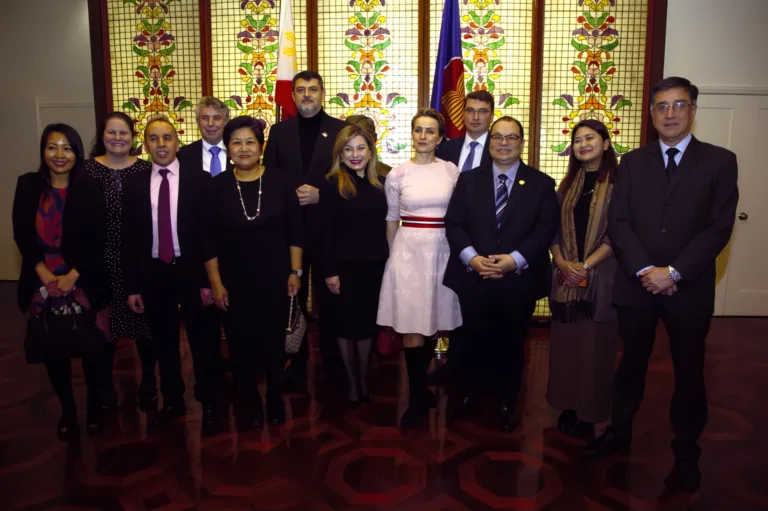
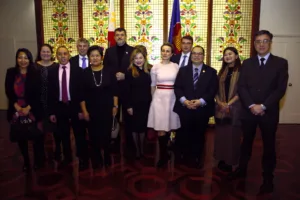
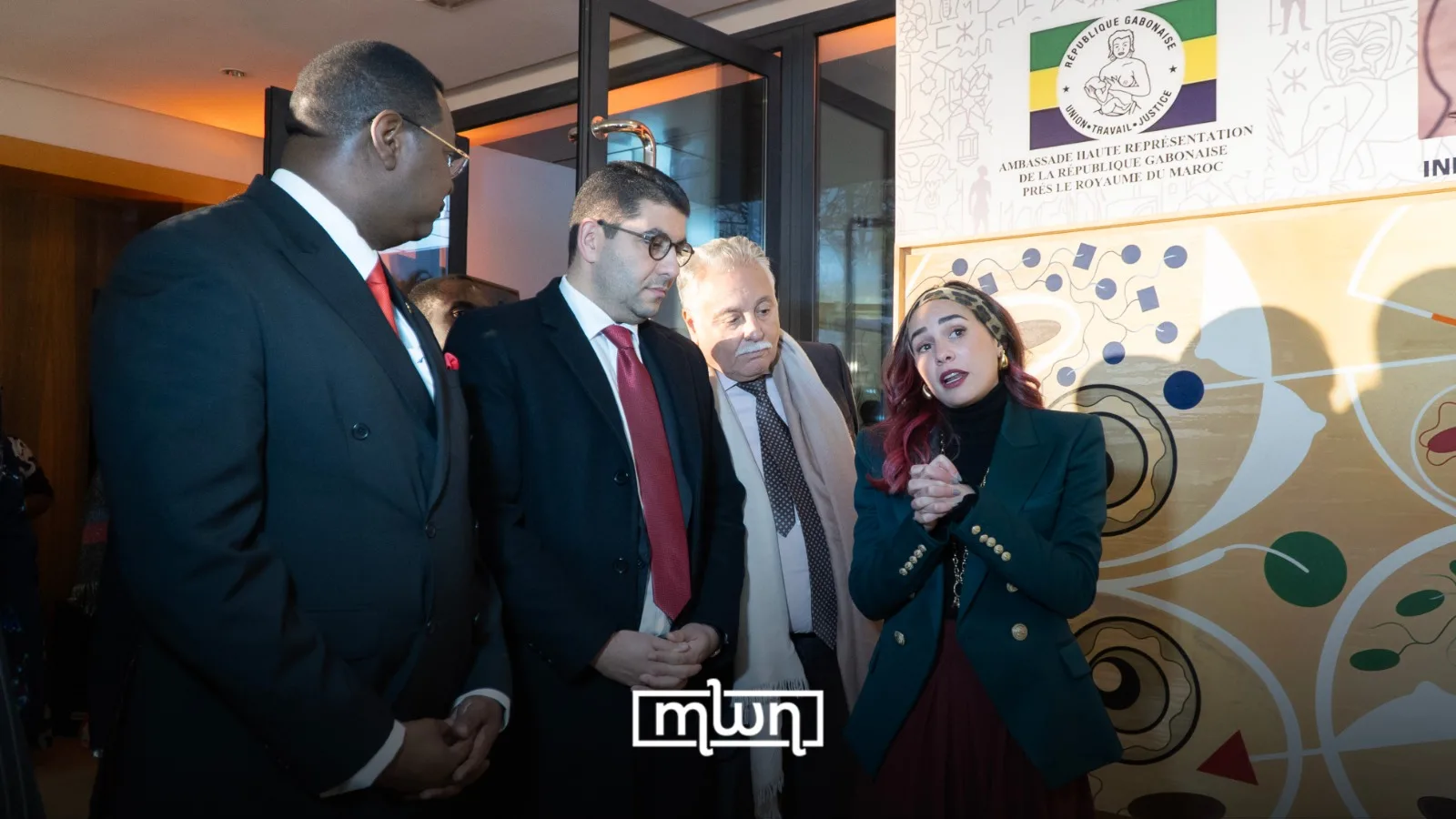
If protocol framed the opening — with Minister of Culture, Youth, and Communication Mehdi Bensaid among the guests — it quickly faded behind the canvases. What remains is a show that treats painting as a way of thinking out loud about Africa’s identities, tensions, and futures.
The embassy setting gives the project an added charge. Visitors step into a formal diplomatic space and find, instead of framed agreements, works that question power, belonging, gender, and representation.
Ines-Noor Chaqroun: inner landscapes and women’s growth
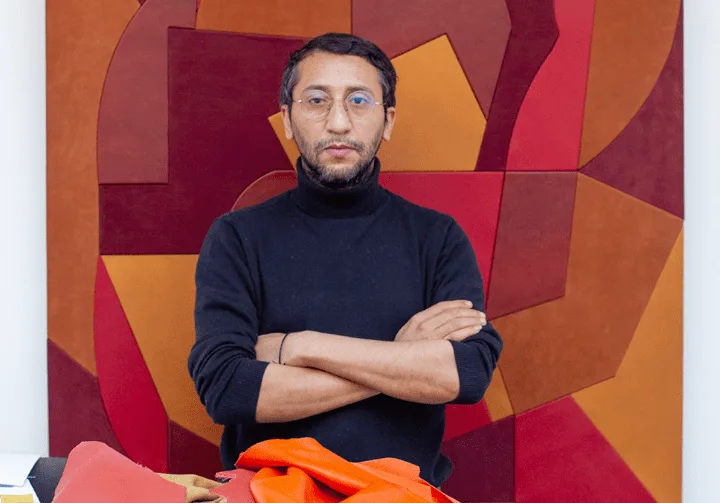
Born in Casablanca in 1992, Ines-Noor Chaqroun is part of a generation of Moroccan artists who move easily between local roots and international training. After early academic painting lessons in Morocco, she studied at the École nationale supérieure des Beaux-Arts in Paris, the Academia del Arte in Florence, and the Berlin Art Institute, before earning a certificate in art and design criticism in Toronto.

Her work often turns around organic, circular forms and the idea of origin — ovaries, seeds, cycles. In previous exhibitions in Casablanca and Geneva, she has explored themes of birth, loss, and the intimate spaces of the body, building a visual language that is both instinctive and meticulously layered.
At “The Ideologies,” she takes on the theme from the inside out. Her contribution moves through interior territories: the body, memory, and the quiet revolutions of women in African societies.
Speaking to MWN, she drew a clear contrast between her focus and that of the other artists around her, noting: “…for the other artists, I think it’s the outside, all the culture, et cetera. And me, more like how (…) woman grows inside Africa.”
Her canvases feel like suspended moments, where figures and fragments emerge and dissolve. The compositions suggest women in transition, caught between inherited expectations and a desire to redraw their own outlines. Instead of slogans, Chaqroun uses gesture and color to speak about constraint, resilience, and the slow work of self-definition.
There is an almost diaristic quality to the way shapes and motifs repeat, shift, and insist. The “ideology” here is not a manifesto pinned to the wall; it is the interior process by which a person decides who she wants to become, under pressure and in her own time.
Isham Delberg: symbols, fractures, and a wider gaze
Opposite Chaqroun’s introspective paintings, Isham Delberg offers a more outward-facing, centrifugal gaze.
Born in 1976 and based in Gabon, Delberg is largely self-taught. His practice has developed around extreme precision, fine lines, and a restrained palette, often in black and white. He is known for pyrography on wood and ink drawings made with a metal nib, building portraits and landscapes where every detail is pushed to the limit.

His work is rooted in Gabonese symbols and spirituality, anchored in what he calls “deep Africa” as a source of creative power.
In “The Ideologies,” that vocabulary expands to absorb the noise of contemporary life: masks, signs, urban textures, and fragments of writing crowd his surfaces. Where Chaqroun’s pieces move inward, Delberg’s canvases feel almost cartographic. They trace how identities are shaped and pressured by external forces — history, media, cultural imports — and how these forces leave marks on bodies and cities.

The tension between both practices is deliberate. One voice speaks from within, the other from the surrounding landscape. Together, they suggest that “ideology” is not a fixed doctrine but a constant back-and-forth between inner life and external narratives.
A bridge between Morocco and Gabon
For the Gabonese Embassy, the exhibition is as much a cultural project as a diplomatic initiative. Led by Ambassador Branly Martial Oupolo, the project is presented as a step toward deeper South–South artistic cooperation between the two countries.
First Counsellor Maghouya Ida-IGa Tathiana Chimene told MWN that this first edition is intended as a beginning, not an isolated gesture. The aim is to make the embassy a recurring platform where artists from Gabon, Morocco, and the wider continent can meet, show work, and build connections.

In that sense, “The Ideologies — une traversée à deux voix” functions as a prototype. It tests what happens when two artists from different Atlantic shores of Africa are invited not just to hang work side by side, but to think together, title together, and let their canvases answer each other.
Painting as African thought
The exhibition is modest in scale but ambitious in what it asks of viewers. It invites them to see painting not only as decoration or illustration, but as a way of thinking about Africa from within Africa — with all the contradictions, fractures, and possibilities that implies.
“The Ideologies” reads as both an exhibition and a proposition: that cultural exchange between Morocco and Gabon can be built through the concrete work of painters and visual artists, not just through ceremonial speeches.
For now, the dialogue belongs to Ines-Noor Chaqroun and Isham Delberg. The hope, voiced quietly between opening remarks, is that future editions will expand that chorus — and that Rabat will become a regular stop for a generation of African artists who treat the canvas as a place where ideologies are not imposed, but negotiated.