Rabat – Visitors to Rabat will of course want to visit the big tourist attractions such as the Hassan Tower, the Mausoleum of Mohammed V, and the Kasbah des Oudayas. However, only a couple of minutes walk from Rabat Ville train station is one of the fourteen national foundation museums of Morocco. Opened in 2014, the Mohammed VI Museum of Modern and Contemporary Art is well worth the visit.
What’s on at the moment?
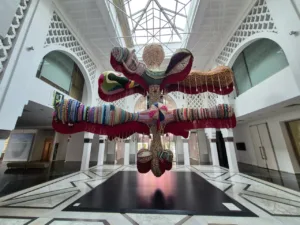
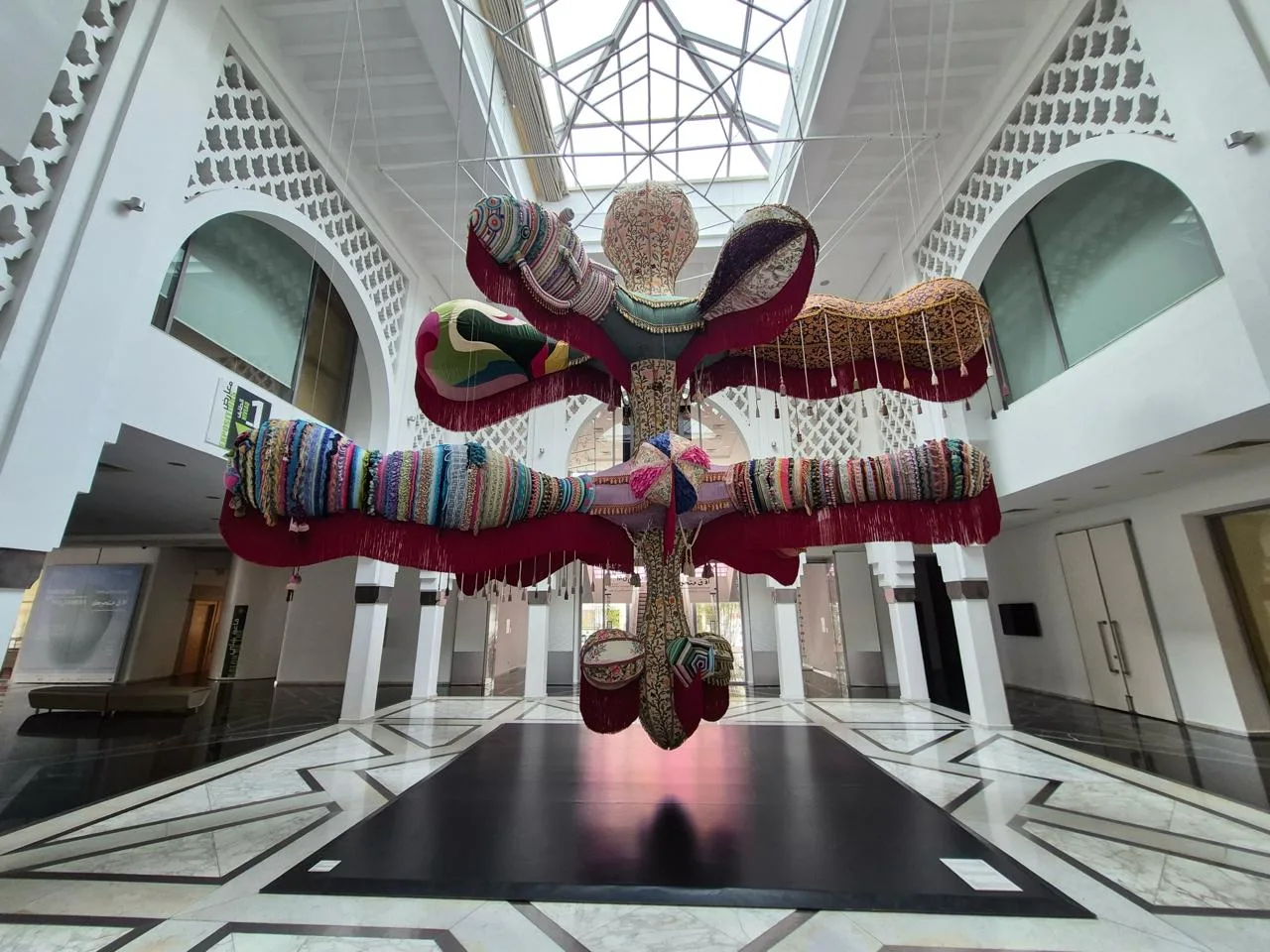
The museum holds a host of pieces in permanent and temporary exhibitions and you can easily spend half a day exploring the space. At present there are two large photography exhibits on the ground floor, while the entire upstairs level is dedicated to the “Shifting Horizon(s): A Hundred Years of Artistic Quests in Morocco (1920–2020)” featuring work by over 200 Moroccan artists. Two exhibitions of photography you must see are found on the entry level of the museum, off the central atrium – which in itself is a space housing an impressive multi-level mixed textiles sculpture “Royal Valkyrie.”

Photography
“50 years of the Green March – a memory in motion” celebrates the 1975 Green March in the Southern Provinces. The collection is a previously unseen archive of photos made from nationwide contributions.
The central themes of identity and territory not only capture the history of the event, but how the event has been remembered over the last 50 years.

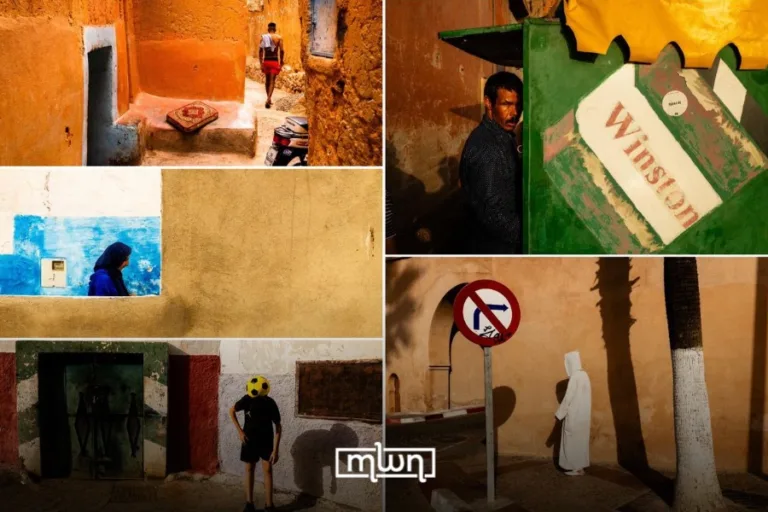
The second photographic exhibition not to be missed is a presentation of the works of Bruno Barbey and Marc Riboud, two photographers with strong ties to Morocco.
Riboud visited the country several times in 1966-1979, mainly photographing Fes. These photos are displayed within the context of his global travels to the USSR, Vietnam, Afghanistan, India, China, and Japan, where he photographed the painting of the Eiffel tower for Time magazine. Barbey’s color photos in the adjoining galleries give a striking contrast to Riboud’s black-and-white photos. Barbey is famous for photographing conflicts: civil war in Nigeria, student riots in Japan, the cultural revolution in China and the Vietnam war. However in 1972 he began a long-term project to photograph Morocco to preserve the fading memories of his childhood spent in the country (Barbey was born in Morocco and lived there for the first 18 years of his life) as well as his return in 1975 to document the Green March.
Both photographers’works are beautifully displayed at the Museum of Modern and Contemporary art, with detailed descriptions accompanying the pieces and a natural flow between rooms and spaces.

Modern art – temporary exhibit
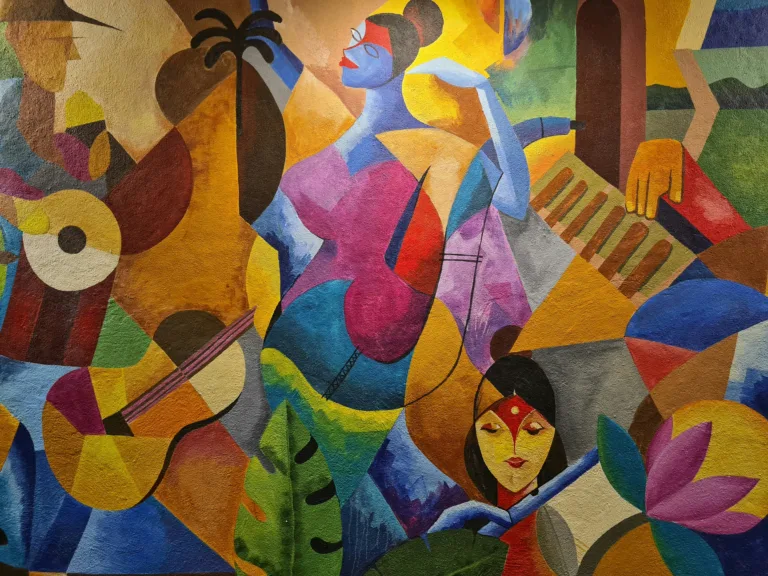
“Shifting Horizon(s): A Hundred Years of Artistic Quests in Morocco (1920–2020)” shows works by over 200 Moroccan artists spanning 100 years of the country’s art history. The works are varied in style and composition, and the use of space is particularly effective. The walls in the different rooms change from white, blue, yellow and green which gives striking contrasts to the works, as well as serves as a visual break as works from one era ends, and another begins. For example, regardless of a previous knowledge of modern art history, the change in colors on the walls marks the start of the Casablanca School is such a striking visual that it makes the change obvious, and as a viewer you are aware that you have walked into a different time and style. This thoughtful visual programming of the works makes the 100 years of history and style easy to digest and it’s a fun walk through time, weaving your way past the different paintings.

Make sure you check out what’s going on at the Mohammed VI Museum of Modern and Contemporary Art. Not only for the interesting pieces currently on display, but for the thoughtful presentation and use of space which makes the large volume of works highly accessible and enjoyable to experience.