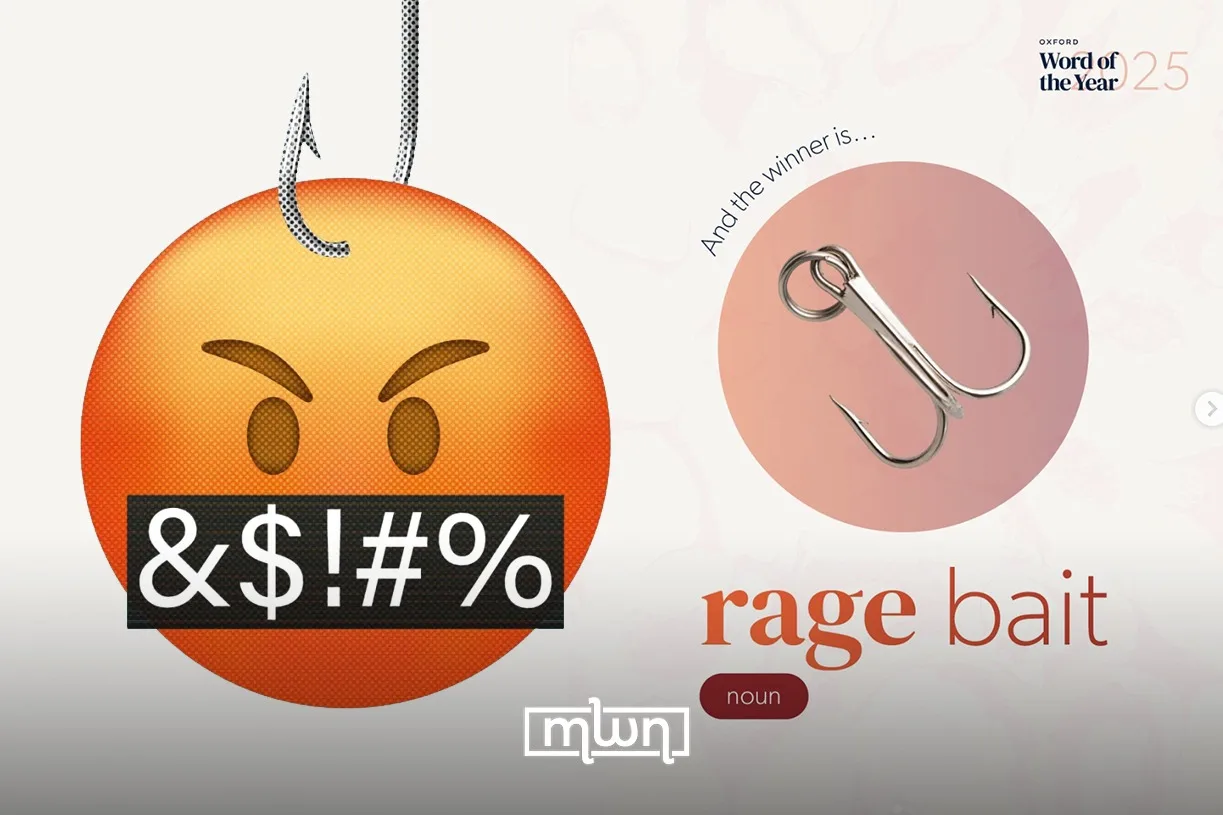
Fez — Oxford University Press has chosen “Rage Bait” as its word of the year for 2025.
The expression describes any post, video, or comment designed mainly to provoke anger, shock, or frustration.
It can be a deliberately absurd opinion, an exaggerated hot take, a TikTok cut to fuel controversy, or a reel that twists context just enough to push people to react. The goal is not to inform, but to attract attention and drive engagement.
Oxford University Press points to the way the term has spread over the past year, carried by platforms where content that shocks often circulates faster than content that explains.
The logic is simple. The more a post makes people comment, argue, or share, the more the algorithm pushes it to new feeds. Some creators now build their strategy around this cycle, betting on divisive or irritating statements to increase their reach and gain followers.
For users, “Rage bait” has become a way to name something many already feel. It captures the experience of clicking on a video, knowing it will probably be annoying, but watching it anyway, then reading or writing comments that keep the loop going. It also underlines how hard it can be to separate genuine debate from content engineered to keep people angry and online.
By choosing this term, Oxford University Press is not only describing a trend in English, but also pointing to a wider digital culture. The word speaks to the tension at the heart of today’s platforms, where emotions, visibility, and business models are tightly linked.
It also raises a question for 2025 and beyond: how do we stay informed without becoming permanent targets for content that exists first and foremost to make us lose our calm.