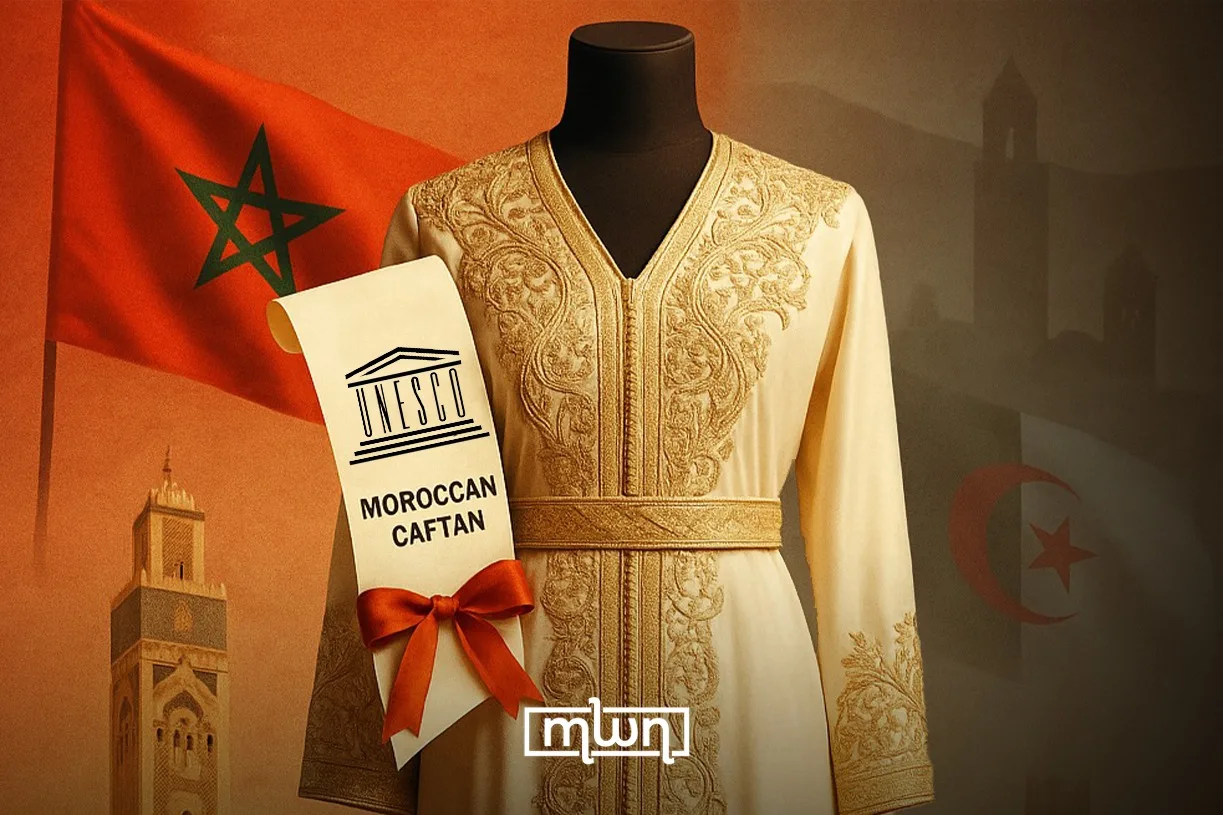
Fez — For months, the Moroccan caftan was at the center of a quiet but intense cultural standoff. On one side, Morocco sought to register the caftan as part of its intangible cultural heritage at UNESCO.
On the other, Algeria tried to blur the lines by pushing to adjust files on regional dress and shared practices.
In the end, it was Morocco’s long-term work, detailed documentation, and legal strategy that helped it lock in the caftan as a distinctly Moroccan reference on the international stage.
A garment with a clear identity
The caftan has existed in different forms across the Mediterranean and the Middle East for centuries. But the “caftan marocain” that Morocco presented to UNESCO is not a generic robe. It is a specific cultural system: a cut, a way of layering, a suite of accessories, and a whole network of artisans, from fabric weavers and tailors to embroiderers and belt makers.
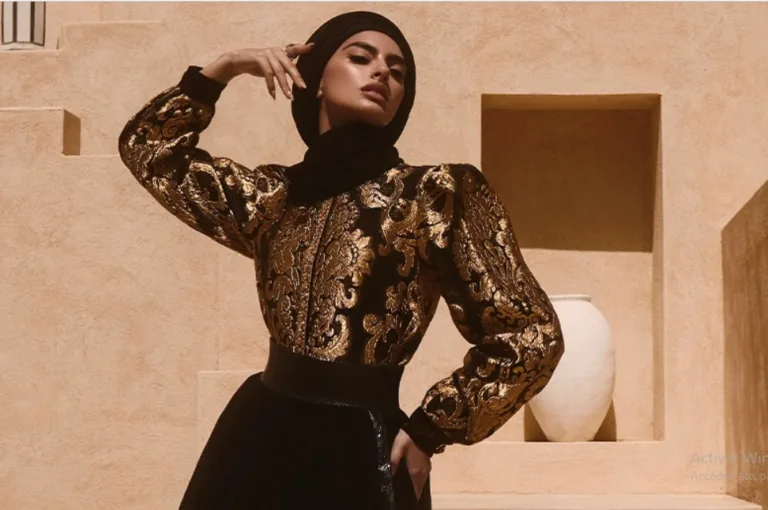
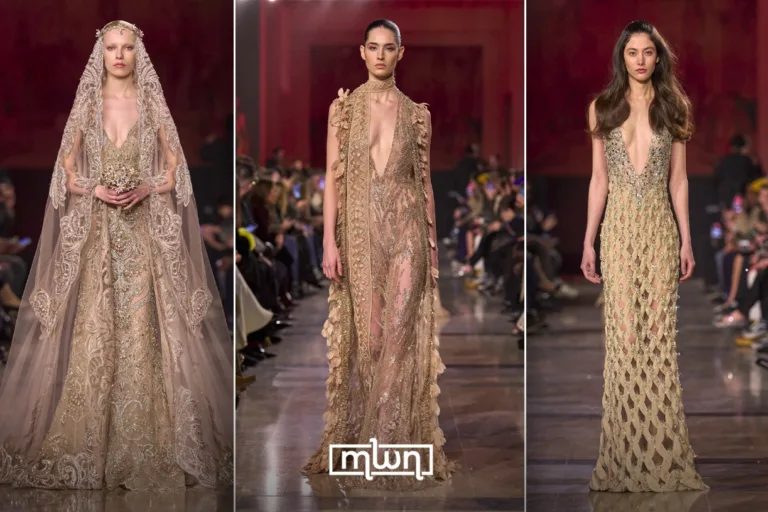
In Morocco, the caftan is tied to major life events. It appears at weddings, religious celebrations, family ceremonies, official receptions, and on red carpets at home and abroad. The way it is worn changes from region to region, but the codes remain recognizable: the sfifa and aâkad trimmings, the taillored silhouette, the way the belt structures the body.
This is what Morocco chose to highlight. Rather than present the caftan as a vague, shared legacy, the file focused on the Moroccan evolution of the garment: how it absorbed Andalusian, Amazigh, Arab, Jewish, Ottoman, and later European influences to become something identifiable and distinct.
Building a solid UNESCO file
To reach UNESCO’s Intergovernmental Committee for the Safeguarding of Intangible Cultural Heritage, a country cannot simply “claim” an element. It has to submit a dense file that proves three things: historical depth, community ownership, and active safeguarding.
Morocco’s dossier on the caftan was built around those pillars. Researchers traced visual, textual, and oral sources across dynasties. Artisans and designers were consulted to document current practices, from workshops in Fez and Salé to fashion houses in Casablanca, Rabat, and Marrakech. The file also underlined the role of women as transmitters of know-how, whether through family tradition or formal training.
The state, for its part, pointed to concrete safeguarding measures: support for traditional crafts, training centers, festivals and fashion events focused on caftan, and efforts to protect patterns and designs in intellectual property frameworks.
That level of detail matters. At UNESCO, committees are wary of files that look like branding exercises. Morocco’s strategy was to show that the caftan is first and foremost a living practice anchored in communities, not just a glamorous image used in magazines.
Algeria’s interference and its limits
As the Moroccan file moved through UNESCO’s process, Algerian officials reportedly tried to intervene, not by submitting a joint request on caftan, but by seeking to tweak other registered elements related to dress and textile traditions. Their aim was to suggest that certain garments and techniques were “shared” and could not be exclusively associated with Morocco.
The move echoed previous tensions between the two countries over couscous, raï, and other cultural elements. But this time, UNESCO experts were looking at a specific definition: the Moroccan caftan as described in the file, not every long robe in the region.
Because the Moroccan submission clearly framed the caftan in its national context — its cut, its ceremonial uses, its craft chain, its terminology — the committee considered it an “original element” rooted in Morocco, not a vague, overlapping category that needed to be shared.
In other words, the problem for Algeria was not that it has no traditional dress. It was that the object under review was a precisely defined Moroccan practice, and that the counter-arguments arrived late and without an alternative, structured file.
Legal tools and soft power
The caftan case did not happen in a vacuum. Morocco has been strengthening its legal and diplomatic tools around cultural heritage for years.
The country signed a memorandum of understanding with the World Intellectual Property Organization (WIPO) in July 2025 to better protect traditional cultural expressions and crafts. Ministries have pushed to register more elements on UNESCO lists, from gnawa and tbourida to couscous as part of a multistate file.
In the caftan dossier, these efforts converged. Morocco framed the garment not only as a symbol of identity, but also as an economic ecosystem that deserves protection: thousands of artisans, workshops, stylists, and small businesses whose livelihoods depend on the visibility and authenticity of their know-how.
This combination of cultural diplomacy and economic argument helped convince UNESCO that recognizing the Moroccan caftan was also a way of supporting a living craft, not just settling a symbolic rivalry.
A symbolic win with broader meaning
For many Moroccans, the caftan discussion with Algeria was never just about fabric. It touched on deeper questions: who gets to tell the story of North African heritage, how global institutions classify culture, and how far a neighboring state can go in stretching “shared” traditions to dilute Morocco’s image.
By pushing early, assembling a robust file, and aligning its cultural, legal, and economic narratives, Morocco managed to place the caftan firmly under its name in the international arena. Algerian attempts to blur that line may have created noise on social networks, but they did not change the outcome in expert circles.
In the end, Morocco won this “battle” over the caftan ended with archives, artisan testimonies, and months of quiet lobbying in meeting rooms. Morocco’s triumph was the result of slow, unglamorous work that heritage bodies actually listen to. Ultimately, Morocco’s UNESCO file treated the caftan as what it is at home: a serious part of everyday culture, not just a costume for the cameras.