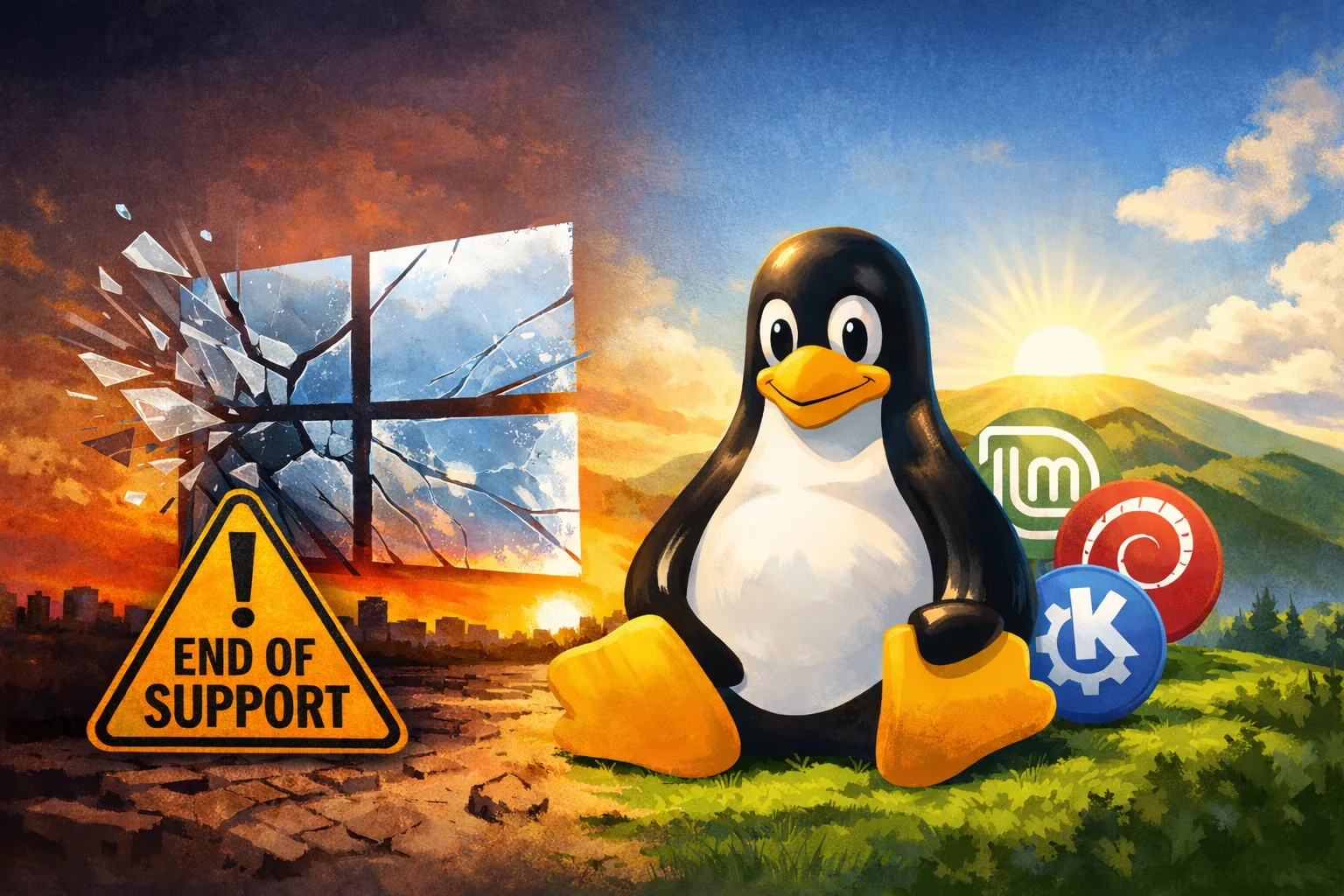
Fez — Microsoft’s decision to end support for Windows 10 has exposed a hard truth about modern operating systems.
Yet the issue is strategy, not technology. Millions of users own machines that work perfectly well, yet cannot officially upgrade to Windows 11 due to artificial hardware requirements.
They are thus faced with the dilemma of either replacing your computer or accepting security risks. This is forced consumption, not innovation.
How Microsoft turns software into a hardware tax
Windows 11 does not fail because older machines are weak. Many run fast CPUs, solid-state drives, and sufficient memory. They fail because Microsoft decided to require specific chips like TPM 2.0 and newer processors. These requirements offer marginal real-world benefits for most users.
The outcome is predictable. Users feel pressured to buy new hardware. Perfectly usable computers become electronic waste, which is part of their preying planned obsolescence schemes. This benefits manufacturers and software vendors, not users.
The cost of closed ecosystems
Microsoft and Apple both operate closed ecosystems that limit control. Users cannot fully customize their systems. Background services run without consent. Data collection is embedded into the operating system. Disabling it requires effort, workarounds, or paid versions.
Modern operating systems increasingly treat users as products. Telemetry, tracking, and cloud dependency are default features. Performance suffers. Privacy erodes. Choice disappears.
Apple follows a similar path. Hardware and software are tightly locked. Repairs are restricted. Customization is minimal. Upgrades are tied to buying new devices. The model rewards control, not longevity.
Linux offers a real alternative, not a compromise
Linux exists outside this model. It does not require new hardware to justify software updates. It does not force upgrades. It does not monetize user data.
Distributions like Linux Mint are designed for everyday users. The interface feels familiar. Installation is straightforward. Most tasks work out of the box. Web browsing, office work, media, and development are all supported.
Older machines often run faster on Linux. There is no bloatware. No hidden telemetry. No unnecessary background processes consuming resources. The system does only what you ask it to do.
Freedom, performance, and respect for users
Linux respects hardware longevity. A ten-year-old laptop can remain secure and fast. Updates focus on stability, not marketing. Users decide when and how to upgrade.
Customization is not a gimmick. It is core to the system. You control the desktop, services, and behavior. Nothing is forced. Nothing is hidden.
This matters as computing becomes essential to work, education, and communication. Users deserve systems that serve them, not extract value from them.
A practical moment to switch
The end of Windows 10 support is not just a deadline. It is an opportunity. Users can either accept forced upgrades and shrinking control or choose an operating system built around openness and efficiency.
Linux is no longer a niche. It is mature, stable, and user-friendly. Switching does not mean giving up productivity. For many, it means getting it back.
As companies push planned obsolescence, Linux offers something rare in modern technology. Respect for users, respect for hardware, and freedom by design.