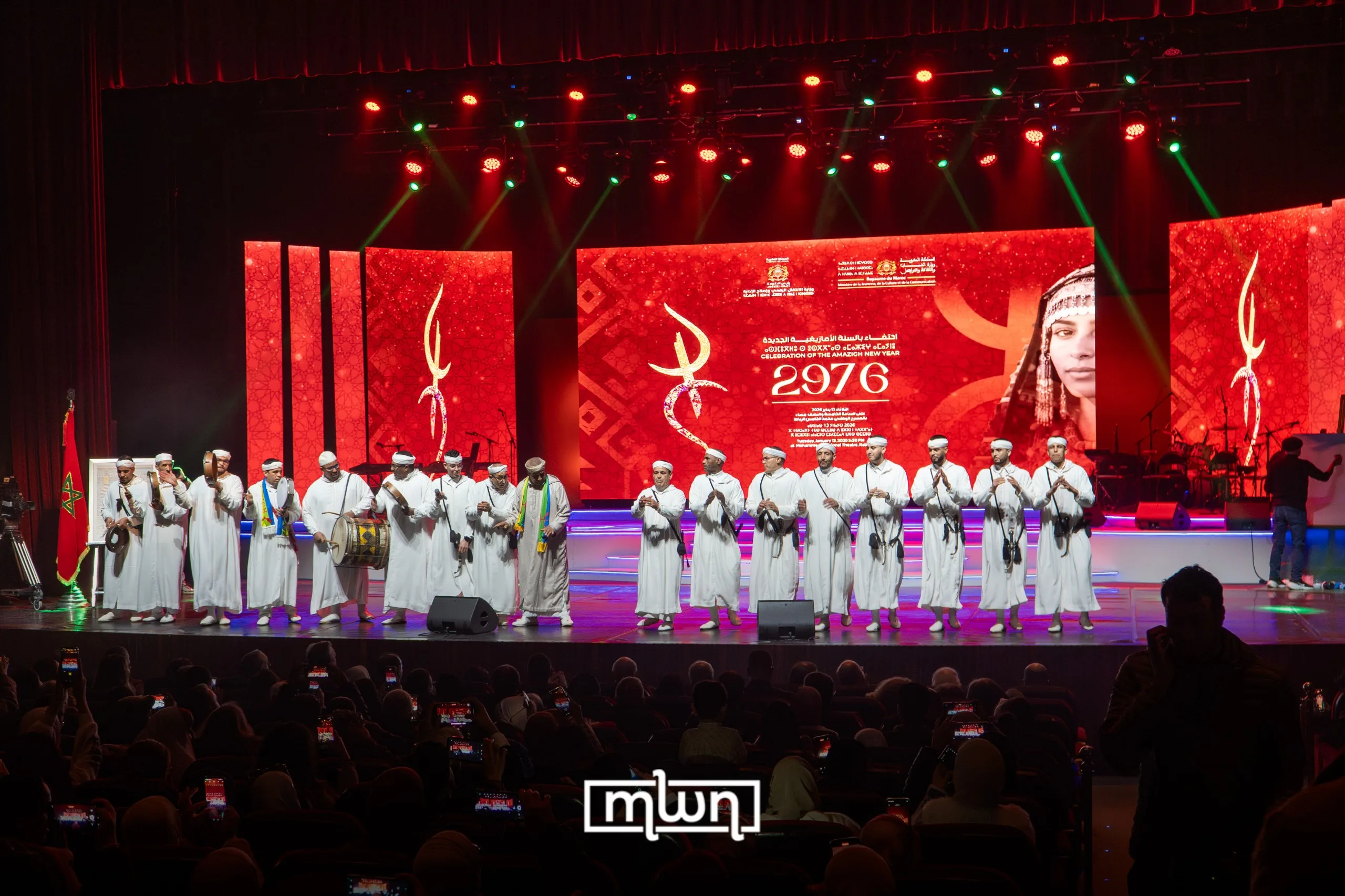
Marrakech – The Mohammed V National Theater in Rabat hosted an exhibition on Tuesday to mark the 2976 Amazigh New Year, highlighting Morocco’s Amazigh heritage and reaffirming the country’s commitment to cultural diversity and linguistic inclusion.
The event brought together cultural, artistic, and institutional elements, offering visitors Amazigh music performances, traditional clothing, cultural exhibitions, and artistic shows reflecting Amazigh identity and ancestral traditions.
One of the exhibition’s key features was the display of official vehicles, including those belonging to police and public services, bearing Amazigh-language signage, an illustration of ongoing efforts to promote the language’s official use in public life.
The exhibition served as a platform to highlight Morocco’s ongoing institutional reforms aimed at strengthening the use of Amazigh across public services.
Amal El Fallah Seghrouchni, Minister of Digital Transition and Administrative Reform, said Morocco is continuing to integrate the Amazigh language into public institutions, administration, and daily services in line with its constitutional status.
“Morocco is continuing to strengthen the official use of the Amazigh language by integrating it into public institutions, administration, and daily public services,” the minister said.
She outlined several efforts being made, including the expansion of Amazigh-language signage in public spaces and state transport, plans to introduce Arabic-Amazigh translation during parliamentary sessions, and mechanisms allowing citizens to communicate in Amazigh within public administrations and through dedicated phone services.
“These initiatives reflect Morocco’s commitment to preserving Amazigh culture and ensuring the practical implementation of its constitutional status,” Seghrouchni added.
Speaking on the occasion, Amina Benchikh, the government official in charge of the Amazigh dossier, stressed the historical significance of the celebration. She said the Amazigh New Year connects Moroccans to the country’s deep-rooted history and identity.
She says the Amazigh year 2976 reflects a long-standing civilization grounded in agriculture, culture, and identity.
She added that Amazigh history is a major part of Morocco’s ancient presence, from early human remains to farming traditions, while positioning the Amazigh language as a central component of the country’s cultural and visual identity.