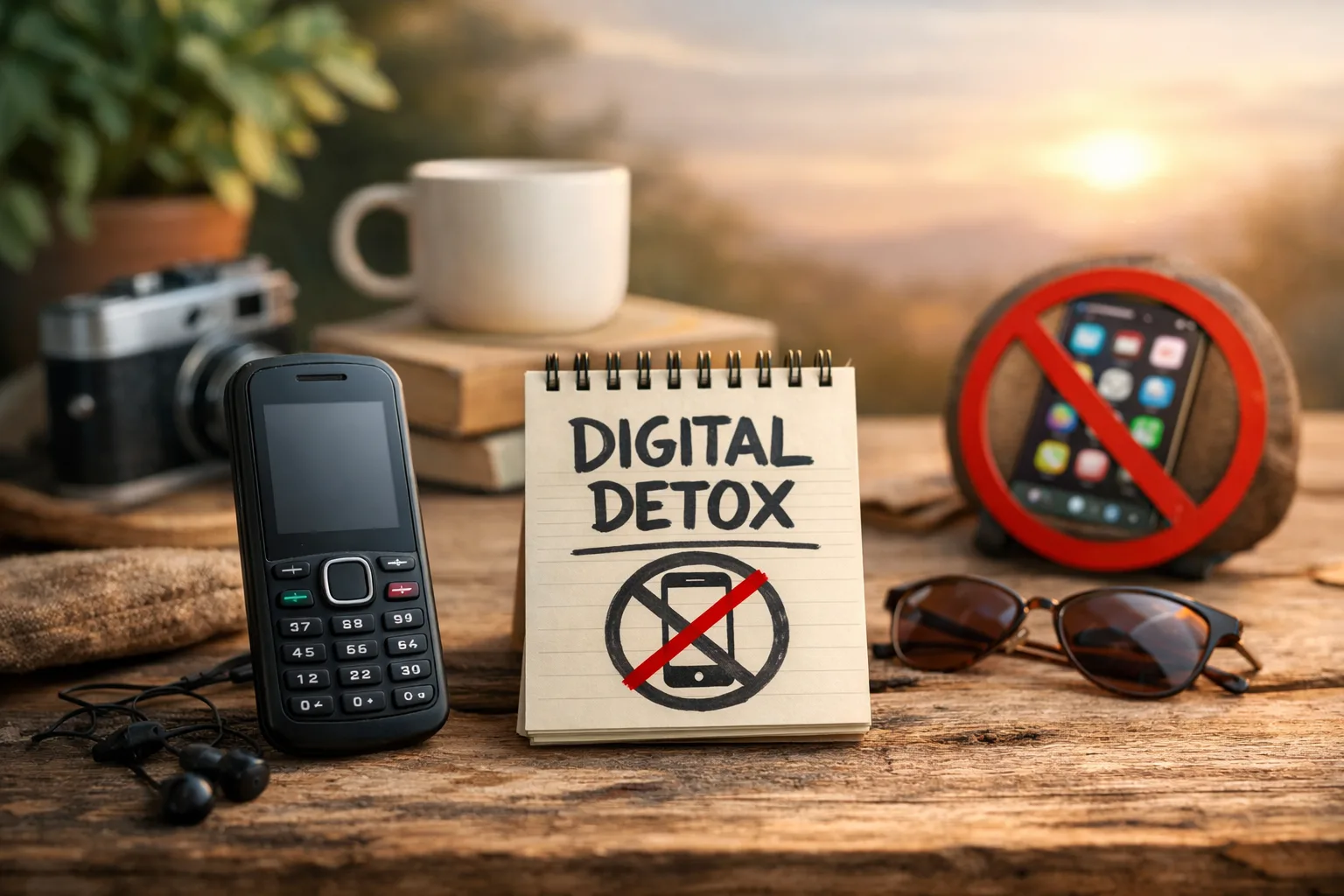
Fez — Digital detox is no longer just a wellness trend for weekend retreats. For many people, it is becoming a daily strategy, and one of the clearest signs is the quiet return of the “dumbphone,” a basic mobile designed for calls and texts rather than endless apps and access to the internet.
The shift is partly cultural. After years of doomscrolling, constant notifications, and algorithm-driven feeds, some users are choosing friction on purpose. Others are not giving up smartphones entirely, but are “dumbing down” their devices to strip away social media and distracting features. The common goal is the same: to regain time and attention.
A comeback fueled by online fatigue
Market signals suggest this is more than a niche idea. A Reuters Breakingviews analysis, citing consultancy CCS Insight, reported that around 450,000 feature phones were sold in the UK in 2024, up from about 400,000 the year before.
The trend has been closely tied to younger users and parents. A widely shared Guardian report on the “boring phone” wave described Gen Z interest in flip phones and simplified devices, driven by stress, privacy concerns, and a desire to escape the attention economy.
Even outside the phone market, the mood is showing up in lifestyle trends. A recent Guardian piece on the “analogue bag” described a growing habit of replacing scrolling with offline objects like books, journals, and crafts, essentially building new routines that do not depend on screens.
What research says about cutting the connection
The strongest argument for digital detox is not nostalgia. It is measurable impact on focus and mental health.
A recent experiment published in PNAS Nexus found that blocking mobile internet on smartphones for two weeks reduced smartphone use and improved subjective well-being, mental health, and sustained attention. The study’s takeaway was blunt: cutting the always-online layer can produce meaningful benefits, even when people keep their phones.
Sleep is another key pressure point. A 2025 study in JAMA Network Open found associations between screen use before bed and poorer sleep outcomes among adults, reinforcing what many people already feel when their phones follow them into the bedroom.
Health authorities have also urged caution about how digital platforms affect young people. The American Psychological Association has warned that social media can pose risks for adolescents, especially depending on how much time is spent and what content is encountered.
Why a dumbphone works when settings do not
Many smartphone users already know about screen-time limits, focus modes, and notification controls. The problem is that self-control tools still live inside the same device designed to tempt you.
A dumbphone changes that equation. It removes the most addictive triggers: infinite feeds, short-form video loops, and the constant reward cycle of likes and replies. For people who need WhatsApp for family or maps for commuting, some are choosing a compromise: keeping a smartphone at home or in a bag for specific tasks, while using a basic phone as the default.
This is also why “dumbing down” a smartphone is taking off. Some users delete social apps, switch their screen to grayscale, and keep only essentials like calls, texts, banking, and ride-hailing. The point is not to reject technology, but to stop living inside it.
What a realistic digital detox looks like
A sustainable detox usually starts with boundaries rather than a dramatic disappearance. For many, the first changes are simple: no phone in bed, no social media before work, and one daily block of time where the device is physically out of reach. The dumbphone becomes a tool to make those boundaries stick.
People who switch often describe the same surprise. The first days feel uncomfortable, but then the mind quiets.
Boredom returns, and with it, deeper focus and more patience. The phone becomes a tool again, not a place to live.