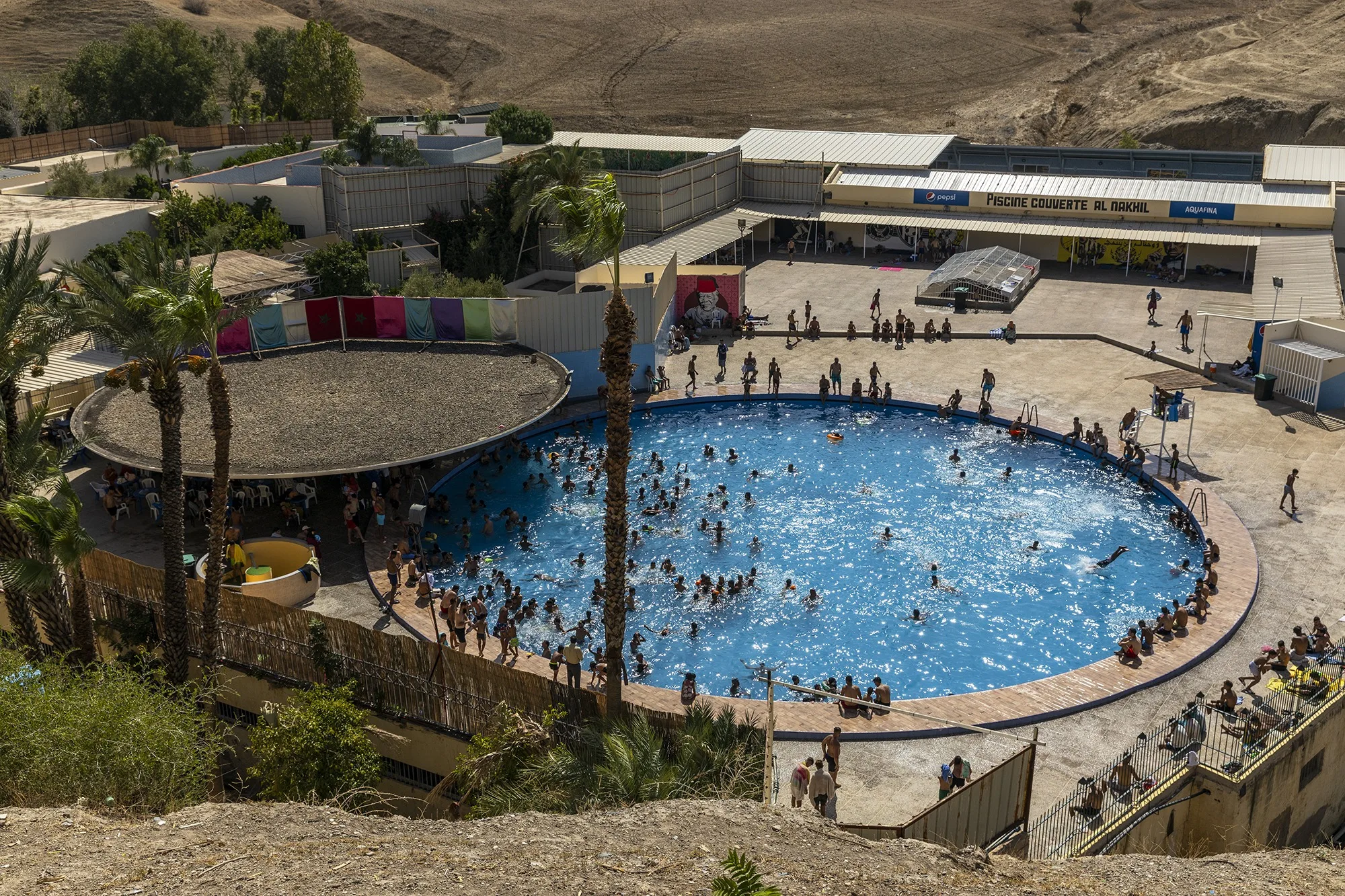
Fez — Located about 15 kilometers south of Fez, Sidi Hrazem occupies a singular place in Morocco’s cultural and social landscape. Known for its naturally carbonated mineral water, the site has long been associated with health, rest, and collective memory, bridging ancient therapeutic traditions with modern lifestyles.
The reputation of Sidi Hrazem is rooted in its thermal spring, whose mineral-rich water has been valued for centuries for its digestive and therapeutic properties.
The spring became a destination for locals seeking treatment and relaxation well before it entered the national imagination as a leisure resort. Over time, the name Sidi Hrazem came to represent both a place and a ritual: traveling to the source, drinking directly from the spring, and taking time away from urban life.
From local spring to national symbol
In the mid-20th century, Sidi Hrazem underwent a major transformation that elevated it beyond a regional site. During the 1950s and 1960s, the area was developed into a modern spa complex, reflecting Morocco’s post-independence ambition to combine tradition with architectural and social modernity.
The project famously involved Jean-François Zevaco, one of Morocco’s leading modernist architects. His design for Sidi Hrazem introduced clean lines, open structures, and a strong relationship between architecture and landscape. The result was a forward-looking space that positioned wellness as a collective, accessible experience rather than a luxury reserved for elites.
Water, memory, and everyday Morocco
Beyond architecture, Sidi Hrazem entered Moroccan daily life through its bottled mineral water, which became widely distributed across the country. For generations, the green glass bottle has been a familiar presence on family tables, cafés, and celebrations, embedding the spring into everyday routines far beyond Fez.
This dual existence — as a physical place and as a household product — has made Sidi Hrazem a rare example of how a natural resource can shape both spatial culture and consumer habits while retaining symbolic value.
Between heritage and renewal
In recent years, Sidi Hrazem has been at the center of renewed reflection about heritage preservation and adaptive reuse. Its modernist complex, once a beacon of progress, has faced periods of decline. This in turn has sparked debates about how to protect 20th-century architectural heritage while responding to contemporary expectations.
Such discussions mirror broader questions in Morocco about how to sustain historical sites without freezing them in time. At Sidi Hrazem, the challenge lies in preserving the spirit of openness, health, and social encounter that defined the site, while allowing it to evolve for new generations.
Today, Sidi Hrazem stands as more than a spa town. It is a layered landscape where water, architecture, and collective memory intersect — a reminder that heritage can be both lived and renewed, flowing continuously like the spring that gave the place its name.