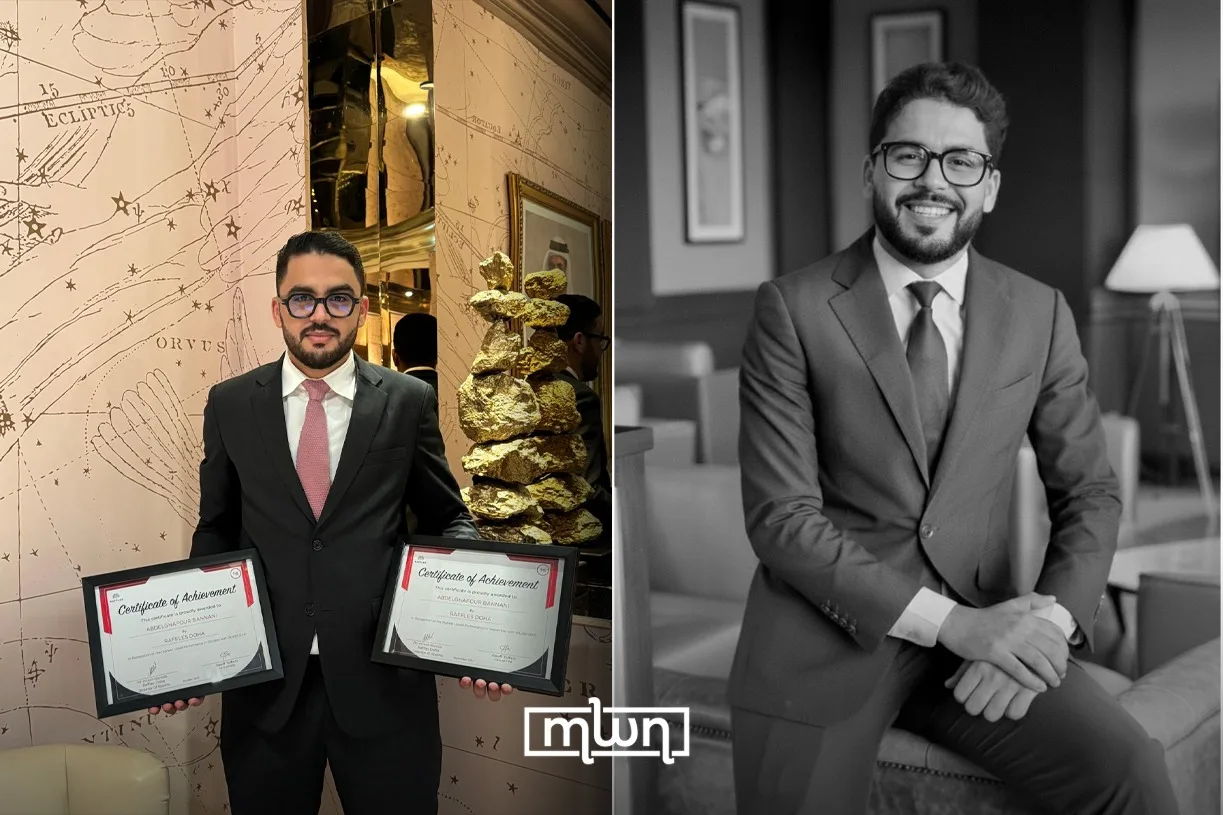
Marrakech – Luxury hospitality likes to sell perfection. Marble lobbies, flawless smiles, seamless service. But for Abdelghafour Bannani, a Moroccan front-office leader who has built his career across Raffles, Fairmont, and The Ritz-Carlton, true luxury begins long before the guest arrives, and often long after they leave.
“My journey started in Morocco, where hospitality is not a profession, it’s a reflex,” Bannani highlighted. “I grew up watching how guests are treated with dignity, generosity, and pride.”
Representing Morocco
That reflex, rooted in Moroccan culture, became the foundation of an international career that now spans Doha and Rabat, some of the most competitive luxury hospitality markets in the world.
While global brands taught him systems and standards, Bannani insists the essence of his craft was already ingrained.
“When I entered luxury hospitality, I realized that the world’s finest hotels simply formalize what we already live naturally: attention, respect, and anticipation.”
Working for names like Raffles, Fairmont, and The Ritz-Carlton places professionals under constant scrutiny. For Bannani, the pressure went beyond performance metrics.
“When you work abroad, you’re never just representing a brand,” he said. “Brands change; values don’t,” he explains. “My discipline, warmth, and adaptability shape how Moroccan professionals are perceived. In that sense, every shift becomes representation.”
This subtle representation of Moroccan values and culture is a quiet but powerful responsibility, and it is shared by a growing generation of Moroccans building careers outside the country. Luxury hospitality often appears effortless from the outside. But Bannani is quick to dismantle that illusion.
Care and respect when no one is watching
“The invisible work is where excellence is built,” he explains. “Night audits, operational decisions at 3 a.m., conflict resolution without escalation, protecting guest dignity while safeguarding the business.”
It’s not glamorous, but it’s decisive.
“Excellence is built when no one is watching,” he says. “That’s where luxury truly lives.”
Bannani’s progression from Front Desk Agent to Front Office Supervisor was neither accidental nor rushed.
“I planned the direction, but I never waited for comfort,” he explains. “Growth doesn’t happen by staying visible, it happens by being useful.”
Each role added layers: systems, emotional intelligence, leadership under pressure. That pressure peaked during one of the world’s most demanding hospitality moments, the 2022 FIFA World Cup in Qatar.
“Leadership meant clarity over authority,” Bannani emphasizes. “When stakes are extreme, teams don’t need louder managers, they need calmer ones.”
Upselling, VIP handling, service recovery, these are often treated as technical skills. Bannani frames them differently.
“Upselling isn’t persuasion, it’s alignment,” he argues. “When guests feel understood, the upgrade feels like care, not sales.”
It’s a philosophy rooted in emotional intelligence, something he considers a defining strength of Moroccan professionals abroad.
“In a globalized industry, technical skills can be taught quickly,” he notes. “Emotional fluency cannot.”
Having worked across Doha and Rabat, Bannani has learned that luxury speaks different languages.
“In Doha, precision and consistency define luxury,” he said. “In Rabat, heritage and emotion do.”
The lesson wasn’t to choose between the two, but to balance them.
“Guests remember how smoothly things worked,” he reflects, “but they return because of how they felt.”
Some of the most critical decisions in luxury hospitality are never noticed, and never should they be.
“Sometimes excellence means the hotel takes responsibility quietly,” Bannani says, recalling difficult Duty Manager calls. “You absorb operational loss to protect a guest’s dignity.”
That discretion, he believes, is the true mark of leadership.
“Silence during chaos is the loudest success.”
Pre-opening experiences, particularly at the pre-opening of the Ritz Carlton Rabat Dar es Salam, offered Bannani a rare opportunity: building culture from scratch.
“You don’t inherit habits, you build them,” he says. “Training simulations, SOP development, stress-testing systems, aligning hundreds of colleagues to one service language.”
It’s work guests will never see, but always feel.
Internationally, Bannani says Moroccan professionals earn trust quickly.
“We’re perceived as reliable, warm, and fast-learning,” he notes. “Once proven, we’re trusted deeply.”
Read also: Marrakech’s La Mamounia Ranked 4th Best Luxury Hotel Worldwide
That trust comes with a responsibility he embraces.
“Visibility creates permission,” he highlights. “If my journey makes the path clearer for someone else, then it matters beyond me.”
Bannani is clear-eyed about the future of hospitality which, as he explains, “belongs to hotels that prioritize personalization over performance theatre.”
Meanwhile, he believes that success is not about titles or visibility.
“When colleagues start seeking your judgment, not your availability, that’s when you know your value is trusted.”
At the core of it all, one value travels with Bannani everywhere: “Respect for guests, colleagues, and the craft itself, even when no one notices.”