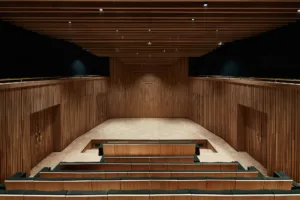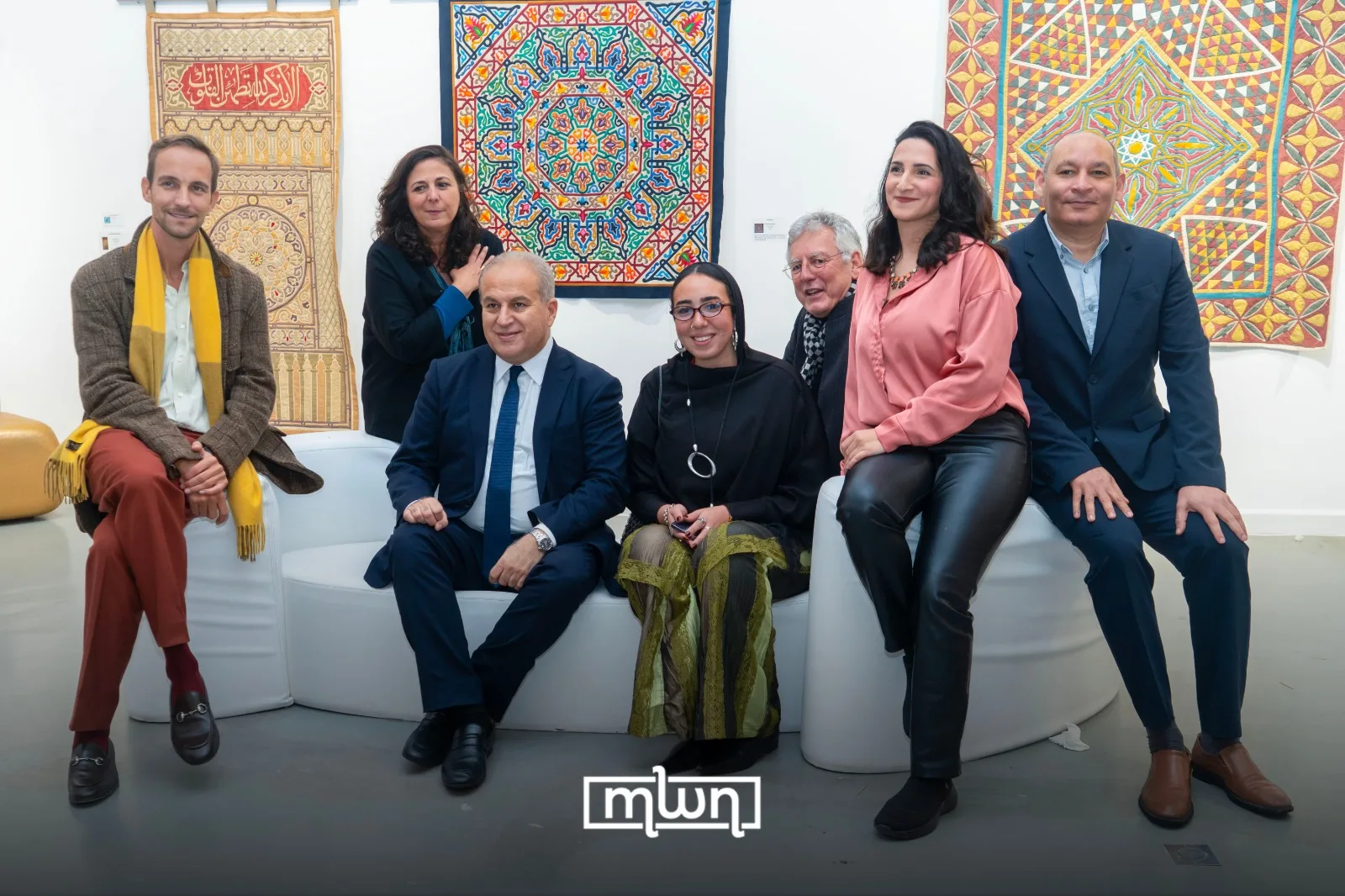
Marrakech – Abla Ababou Gallery in Rabat is crossing North African borders January 29 to March 17, as it partners with the Embassy of Egypt in Morocco, to host the group exhibition “Dialogue Under the Tent.”
This initiative celebrates the intersection of Egyptian and Moroccan cultures and craftmanship, reimagining the tent as a powerful space of encounter, transmission, and creative expression.
The choice of the tent is not a coincidence. More than a tent, it has historically served as a social and symbolic space, richly decorated to host and honor key moments of life.
The exhibition shines a spotlight on “khayamiyya,” the Egyptian tradition of hand-sewn decorative textile panels used in tent-making, and showcases its echoes in Moroccan textile arts.
By bridging heritage and contemporary creation, the artworks explore themes of memory, transmission, and the reinvention of traditional know-how.
Through the collaboration of Egyptian, Moroccan, and French artists and designers, the exhibition demonstrates how art can transcend borders and serve as a universal language connecting cultures.
Combining the old and new
Talking to MWN, Ahmed Abdel-Latif, Ambassador of Egypt to Morocco, welcomed guests to an exhibition that brings together Egyptian and Moroccan textile traditions through the art of khayyameya.
“The idea of this exhibition is to combine traditional designs of the Khayyameya with modern ones and also highlighting the links of this form of art with Moroccan art, with Moroccan traditions and also with the art of making tents in Morocco,” he said.
The exhibition is curated by Seif El Rashidi, art historian and designer, who has long championed “khayamiyya.”
El Rashidi co-authored “The Tentmakers of Cairo,” a reference work that reflects his commitment to Cairo’s artisans.
Today, during the exhibition opening, El Rashidi spoke about the vision behind the exhibition and its cultural significance for Egypt and Morocco.
“One of the things that’s important about this exhibition is that the khayameya tradition is similar to textile traditions of Morocco, and it’s called the ‘Dialogue Under a Tent’ because we’re celebrating both the distinctiveness of Egypt and Morocco, but also their commonalities,” he told MWN.
“It’s also a way of celebrating how craft can be contemporary, because these are contemporary pieces inspired by an age-old practice of stitching, and it’s the first of its kind in Morocco,” he added.
The exhibition presents deeply personal interpretations of heritage, from Habiba Sawaf’s banners inspired by Egyptian moulids (festivals) to Louis Barthélemy’s textile narratives depicting the transport of the monumental Statue of Ramses II to the Grand Egyptian Museum.
El Rashidi’s own works focus on public, green, and leisure spaces in Cairo, both real and imagined.
For his part, Ahmed Abdel-Latif, Ambassador of the Arab Republic of Egypt to Morocco, commented that it is the first time presenting Egyptian textile artworks in the Morocco, and that the exhibition “reflects a desire to deepen cultural and artistic relations between two countries where culture is considered a fundamental driver of development.”
Artists from all origins
On the other hand, designer Habiba Sawaf emphasized that she is always “inspired by spaces where tradition and contemporary can coexist.”
“I’m constantly observing the streets, cultural celebrations, and everyday details, and these moments shape how I approach my work,” she told MWN.
Many of the designers and craftspeople involved followed unconventional paths into craftsmanship. Mohamed Abdel Wahed is both a financial auditor and a craftsman, while Tarek El Safty, now a master artisan, originally studied law.
After training at Central Saint Martins and working with major fashion houses such as Dior and Gucci, Louis Barthélemy shifted to a craft-centered practice.
“My work is born from encounters. With artisans, I create textile narratives that speak to our present, pieces that celebrate traditional craftsmanship as much as the stories these skills continue to tell today,” he explained to MWN.
“Each work begins with a human conversation. With artisans, we stitch stories that carry textile heritage into the present moment.”