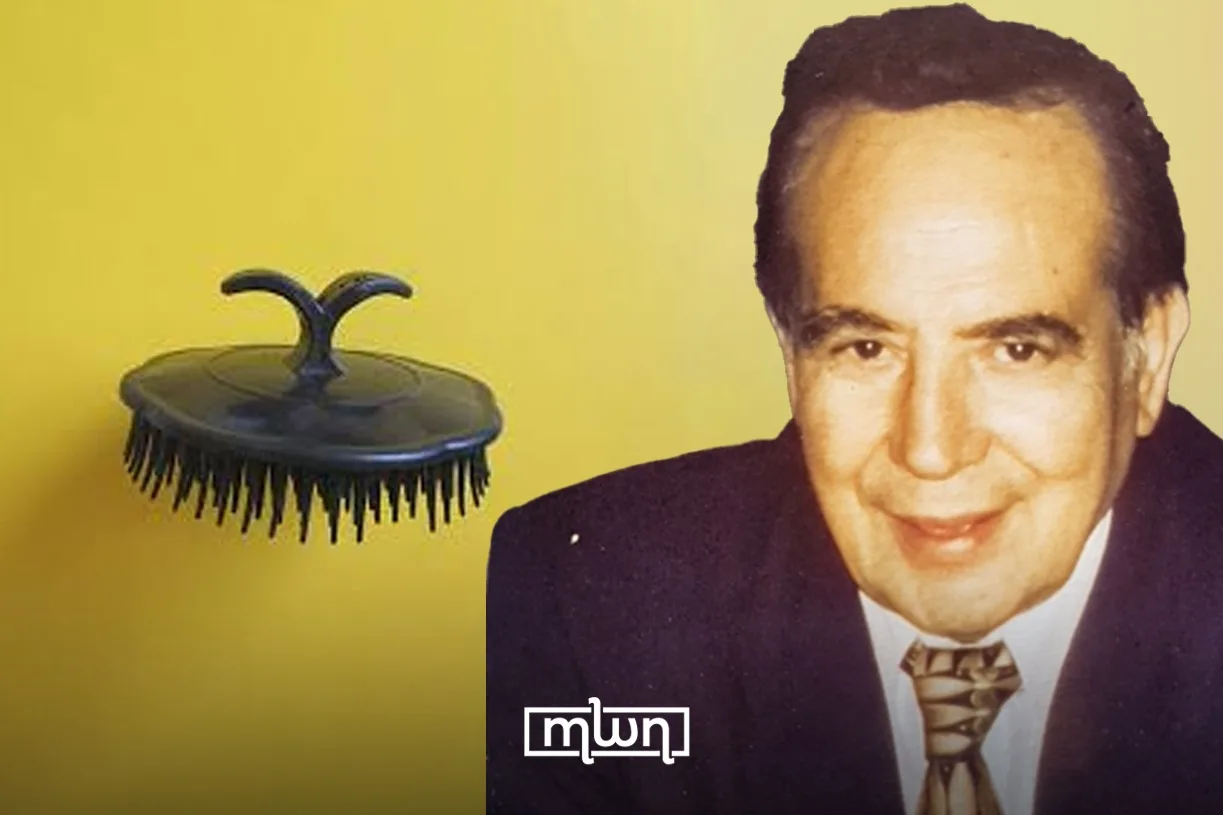
Fez — More than half a century after it first rolled off the mold, the Moroccan mechta — better known as the “Tazi brush” — remains one of the country’s most recognized everyday objects.
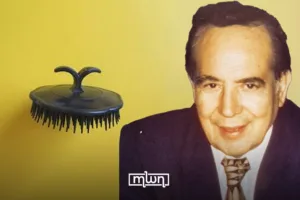
A lightweight plastic hair brush with short bristles and a characteristic little hook for gripping, it can be found in households across Morocco and, increasingly, around the world.
The birth of a household staple
The Tazi brush was created in 1954 by Moroccan entrepreneur Abdelaziz Tazi, a native of Fez who would later build one of the country’s most diversified industrial groups. At the time, Morocco had no domestically produced hairbrush suited to the needs of its population. Imported combs and flat peignes were ill-adapted to thick, curly, or frizzy hair and were often too expensive for many families.
Tazi recognized this gap in the market and invested in injection-molding technology to produce an affordable, durable plastic brush. He commissioned industrial molds in France and chose a distinctive rounded design with firm bristles and a small side hook that made it easy to grip and use. The resulting product was simple, functional, and affordable — priced at just a fraction of the cost of imported alternatives.
A cultural phenomenon
Once on the market, the brush sold rapidly. Distributed through traditional commercial circuits in cities and villages alike, it became ubiquitous. “Brosse Tazi” quickly entered the Moroccan vernacular, with people of all classes buying and carrying it everywhere — from city streets to rural markets.
By the 1970s it was no longer just a local product but a cultural touchstone. As of the early 2010s, more than 400 million mechta brushes had been sold, with around 12 million pieces still moving off shelves annually.
Despite its popularity, Tazi never patented the design, and by the 1970s the brush began to be produced by dozens of informal manufacturers competing in the Moroccan market. Still, the name “Tazi” stuck — a testament to its origin.
From Morocco to the world
The success of the mechta has spilled far beyond national borders. Its design has been copied in Mexico, Brazil, Africa, India — in any region with significant demand for a simple, firm brush suited to textured hair.
Today, it appears not only in Moroccan souks but also on e-commerce sites in Europe and North America, where sellers describe it as a cult comb for curls, waves, and afro-textured hair.
This global reach was not the result of a deliberate export strategy, but rather organic adoption: a functional, inexpensive product that meets a universal need found its users wherever there were similar hair types and similar price expectations.
More than a brush
Abdelaziz Tazi did not stop at the mechta. He went on to expand into many other plastic products — toys, household goods, and furniture — laying the foundations for what would become the Richbond group, a diversified industrial enterprise that today generates significant annual revenue and employs thousands.
But the mechta remains his most iconic invention — a humble tool that transformed everyday life in Morocco, created a manufacturing success story, and gradually made its way into global popular usage. It stands as a reminder that sometimes the most ordinary objects can have the broadest impact, crossing continents and cultures while remaining rooted in practical needs.