Fez — Across Morocco, sellou stands as one of Ramadan’s most defining culinary traditions. Known regionally as sfouf, slilo, or zmita, this roasted flour and nut blend has anchored the Moroccan iftar table for generations, prized as much for its sustenance as for its symbolism.
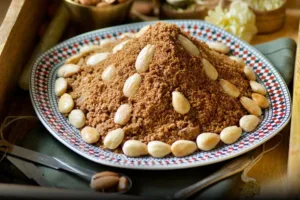
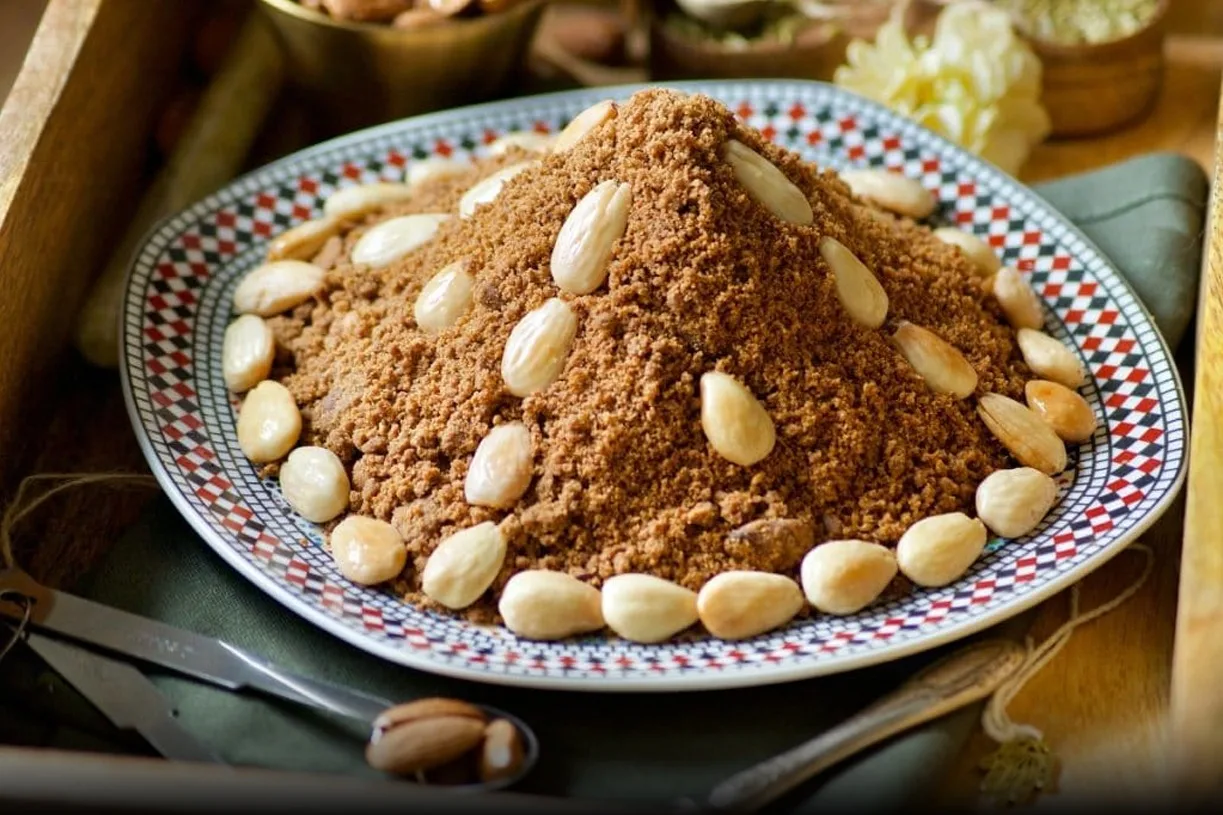
Unlike syrup-soaked pastries, sellou is unbaked and dense. Its base is roasted wheat flour, traditionally browned slowly in large pans or ovens until golden.
The flour is then mixed with toasted sesame seeds, roasted peanuts, fried almonds, and spices such as cinnamon, anise, and fennel. Warmed butter, olive or vegetable oil, and honey bind the mixture into a crumbly mass that can be shaped or served loose.
Documented historical roots
Sellou’s history stretches deep into Morocco’s medieval past. The 12th-century geographer Abu Abdullah al-Idrisi described a flour-and-nut preparation consumed by Amazigh tribes in his work “Nuzhat al-Mushtaq fi’khtiraq al-Afaq.” His account refers to a nourishing blend capable of sustaining travelers for long periods, a detail that aligns with sellou’s modern nutritional profile.
The Almoravid dynasty, founded by Sanhaja Amazigh tribes in the 11th century, ruled Morocco and parts of present-day Spain. Historical references suggest similar grain-and-seed mixtures were part of desert survival diets during that era. Though recipes evolved, the concept of roasted flour combined with fat and nuts remained central.
The name “sellou” itself is widely believed to derive from the Amazigh word “islli,” meaning to toast or heat over fire, reflecting the essential step of browning flour.
A food built for endurance
From a nutritional perspective, sellou functions as an energy-dense food. Roasted flour provides complex carbohydrates. Almonds and sesame seeds contribute protein, fiber, calcium, magnesium, and healthy fats. Sesame seeds alone contain high levels of iron and zinc, minerals especially valuable during fasting periods.
Because sellou contains little moisture, it has a long shelf life when stored properly in airtight containers. Historically, this made it practical for travelers and pilgrims undertaking long journeys, including those traveling to Mecca for Hajj. Its durability and caloric density explain why it became associated with Ramadan fasting.
Today, nutritionists often note that a small serving of sellou delivers sustained energy compared to refined sweets, due to its fat-and-fiber composition slowing sugar absorption.
Regional variations across Morocco
While core ingredients remain consistent, regional interpretations differ.
In the Souss region, barley flour may replace wheat flour, and argan oil often substitutes butter. In parts of eastern Morocco such as Oujda, a simplified variation known locally as taqenta relies heavily on browned flour and honey. In Meknes and Taza, peanuts sometimes join almonds.
Some households reduce sugar or use whole wheat flour in modern adaptations. Some like to add extra ingredients like linseed and black seed. Others maintain strict family recipes passed down through generations, often measured by feel rather than exact weight.
Beyond Ramadan
Though most strongly linked to Ramadan, sellou also appears at weddings, Eid celebrations, and aqiqah ceremonies marking childbirth. In many Moroccan households, it is believed to help new mothers regain strength due to its high caloric value.
During Ramadan, sellou is typically served alongside mint tea after breaking the fast with dates and harira. Some families reserve it for suhoor, the pre-dawn meal, relying on its dense composition to sustain them throughout the day.
Its preparation often becomes a communal event. Large quantities — sometimes exceeding 10 kilograms in extended families — are made ahead of Ramadan and shared with neighbors, reinforcing social bonds central to the holy month.
A culinary emblem of continuity
Sellou’s endurance reflects Morocco’s layered cultural identity. It connects Amazigh culinary practices, Islamic ritual life, and regional agricultural traditions centered on wheat, sesame, and almonds.
In an era of industrial sweets and imported desserts, sellou remains largely homemade. Its preparation demands patience, technique, and collective effort — qualities that mirror Ramadan’s emphasis on discipline and reflection.
As Moroccan families gather each evening during Ramadan, sellou continues to symbolize more than nourishment. It represents memory, resilience, and the quiet continuity of tradition across centuries.
In every spoonful lies a story of adaptation and endurance — proof that some recipes outlast empires, seasons, and trends, sustained by the communities that keep preparing them.