Fez — More than two decades after its release, “Donnie Darko” remains one of the most discussed and dissected films of the early 2000s. Directed by Richard Kelly and released in 2001, the film did not dominate the box office at first. Instead, it grew slowly into a cult phenomenon, fueled by word of mouth, midnight screenings, and online fan theories.
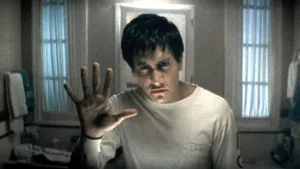
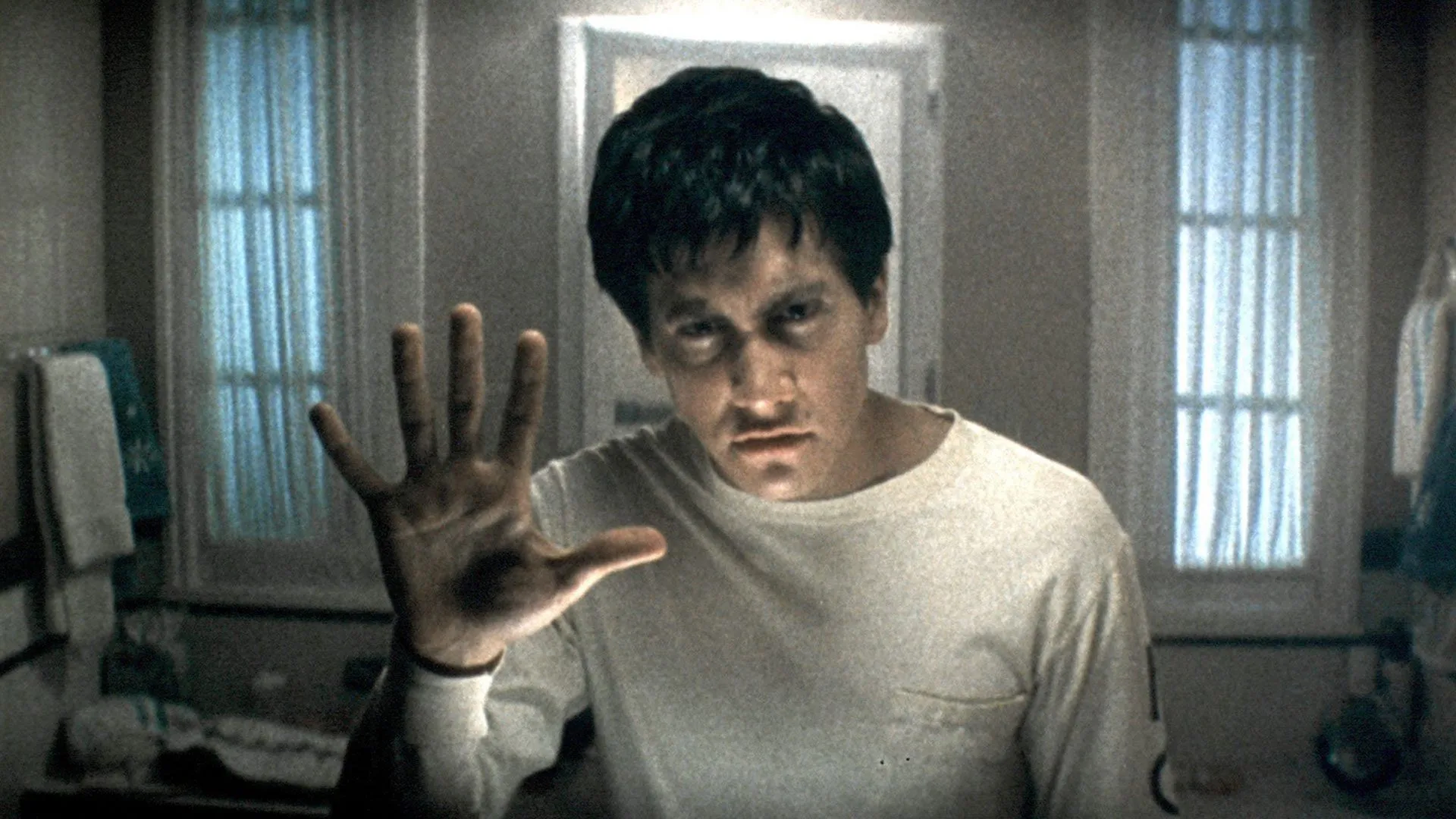
At its core, “Donnie Darko” blends psychological drama, science fiction, and suburban satire. Set in 1988, the story follows troubled teenager Donnie, played by Jake Gyllenhaal, who survives a bizarre accident when a jet engine crashes into his bedroom. Soon after, he begins seeing a mysterious figure in a grotesque rabbit costume named Frank. Frank tells Donnie that the world will end in 28 days, 6 hours, 42 minutes, and 12 seconds.
What unfolds is not a straightforward apocalypse story, but a layered exploration of time travel, fate, mental health, and teenage alienation. The film refuses to offer easy answers. Instead, it invites viewers to question reality alongside its protagonist.
A plot built on mystery and meaning
One reason “Donnie Darko” remains iconic is its intricate narrative structure. The film introduces the concept of a “tangent universe,” a temporary alternate reality that threatens to collapse. Donnie appears to be chosen to restore balance by sending a displaced object, the jet engine, back to its origin.
The mechanics of time travel are explained through a fictional book, “The Philosophy of Time Travel,” written by the character Roberta Sparrow. Yet the explanations are deliberately incomplete. This ambiguity has kept audiences debating the film’s meaning for years.
Beyond its science fiction elements, the movie offers sharp commentary on suburban life. It critiques superficial self-help culture, rigid school authority, and moral panic. Donnie’s clashes with motivational speaker Jim Cunningham and his teachers highlight a society that struggles to understand complexity.
The film’s emotional weight, however, rests on Donnie’s internal battle. He is intelligent, sensitive, and deeply isolated. His journey feels both cosmic and intensely personal.
The power of the score and soundtrack
Music plays a crucial role in shaping the film’s atmosphere. Composer Michael Andrews created a haunting, minimalist score that amplifies the story’s melancholy tone. The instrumental theme “Mad World,” performed by Gary Jules, became inseparable from the film’s legacy.
The use of 1980s tracks also grounds the story in a specific cultural moment. Songs like “Head Over Heels” by Tears for Fears and “The Killing Moon” by Echo & the Bunnymen add emotional texture. The opening sequence, set to “The Killing Moon,” immediately establishes a sense of mystery and inevitability.
The soundtrack does not simply accompany scenes. It deepens them. The music lingers in the mind long after the credits roll.
A breakout performance from Jake Gyllenhaal
Jake Gyllenhaal’s performance is central to the film’s enduring appeal. At the time, he was a young actor still finding his footing in Hollywood. In “Donnie Darko,” he delivers a performance that feels raw and restrained at once. He often employs the unsettling “Kubrick Stare,” adding to the film’s atmosphere of dread and psychological instability.

He captures Donnie’s intelligence, sarcasm, vulnerability, and quiet despair with remarkable precision. His interactions with Frank oscillate between fear and acceptance, making the supernatural elements feel grounded in emotional truth.
The supporting cast also contributes significantly. Jena Malone brings warmth and sincerity to Gretchen Ross, Donnie’s love interest. Maggie Gyllenhaal, playing Donnie’s sister, adds authenticity to the family dynamic. Veteran actors like Mary McDonnell, Holmes Osborne, and Patrick Swayze round out a cast that balances satire and sincerity.
Still, it is Gyllenhaal who anchors the film. His portrayal of a teenager grappling with destiny and mental instability helped define his career and signaled his arrival as a serious dramatic actor.
A legacy that refuses to fade
“Donnie Darko” endures because it respects its audience. It does not simplify its ideas or over-explain its mysteries. Instead, it trusts viewers to interpret, revisit, and reconsider.
The film arrived in a pre-social media era, yet it found a second life online. Forums and essays dissected its timeline, symbols, and philosophical references. This participatory culture strengthened its cult status.
Today, its themes feel as relevant as ever. Questions about mental health, identity, conformity, and fate continue to resonate with new generations. The film’s blend of teenage vulnerability and cosmic stakes remains rare.