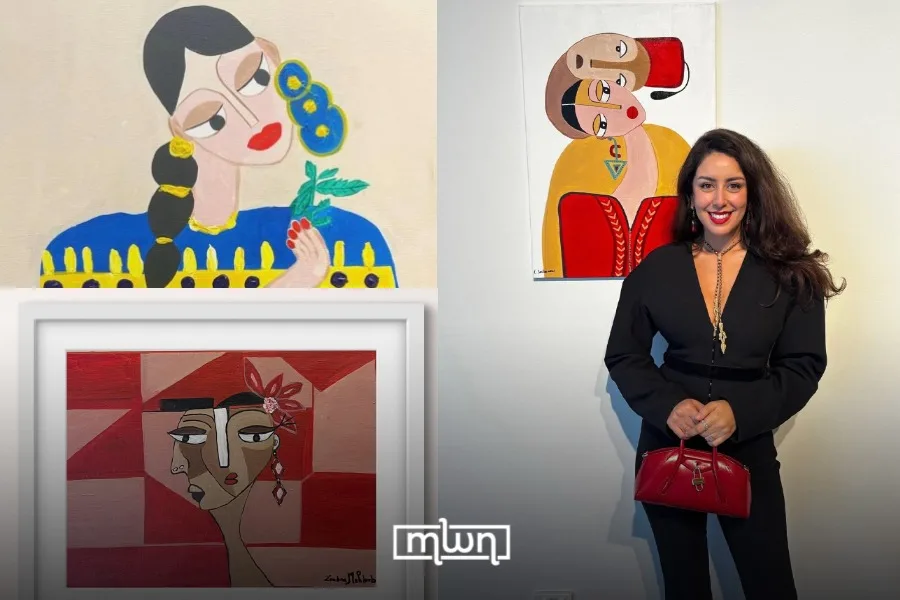
Rabat – Moroccan-born artist Loubna Soulaimani is quietly making her mark in the Australian art scene, bringing with her a deeply personal vision rooted in heritage, memory, and the untold stories of women in her family.
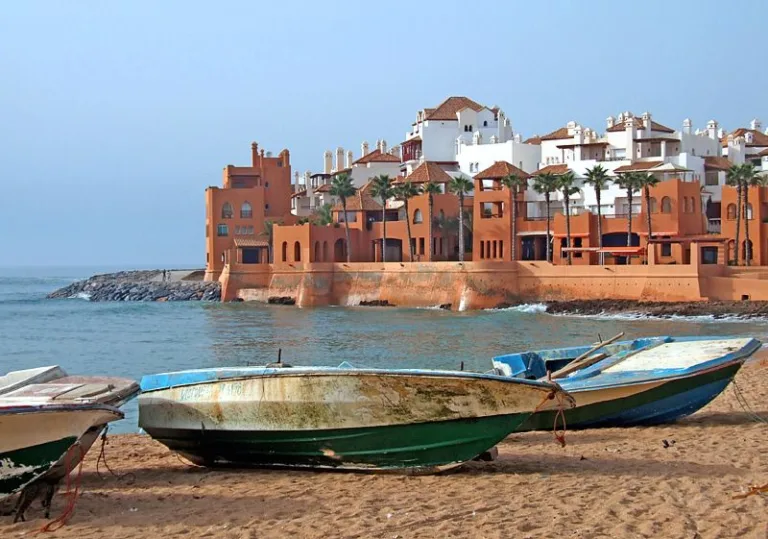
Born in 1993 in Safi, a coastal Moroccan city known for its craftsmanship and artistic traditions, Loubna grew up surrounded by creativity.
Her grandmother, a passionate painter who never studied art formally or showed her works publicly, became Loubna’s greatest inspiration.
Using improvised tools , her grandmother painted instinctively, turning everyday objects into a canvas for self-expression.
“Painting for her was never about recognition,” Loubna said in a press statement to MWN. “It was instinct, a form of freedom.”
Despite this artistic environment, Loubna initially pursued a structured academic path, earning a Master’s degree in Human Resources.
It wasn’t until years later, after her grandmother’s death, that Loubna discovered the hidden paintings left behind.
The revelation felt like reconnecting with a language she had always known, quietly awakening her own creative voice.
Her artistic journey continued in Paris, where immersion in museums, galleries, and the city’s rich art history shaped her approach while she maintained her Moroccan identity.
Loubna’s work moves between two complementary styles. One embraces abstract and cubist influences with layered colors and fragmented shapes.
The other draws from post-impressionist impasto techniques, building thick, sculptural textures with a palette knife.
Her art explores cultural memory, ancestral legacy, and the resilience of women whose stories were rarely recorded. Through her paintings, she opens a dialogue between past and present, silence and expression.
In less than two months, Loubna has already presented her work in two exhibitions in Canberra: Q Gallery last December and Belco Arts Centre, which started on February 6, running until March 22.
She is now preparing for her first solo exhibition later in 2026, marking another important step in her artistic journey.
“Art for me is more than creation,” Loubna explained.
“It is transmission. It is giving voice to stories that were never told aloud and honoring the women who created without recognition. Every canvas continues the voice my grandmother never had the space to share.”
Through this intimate connection to the past and her Moroccan roots, Loubna Soulaimani’s art transforms memory into living expression, ensuring that what was once hidden can now be seen, felt, and celebrated.