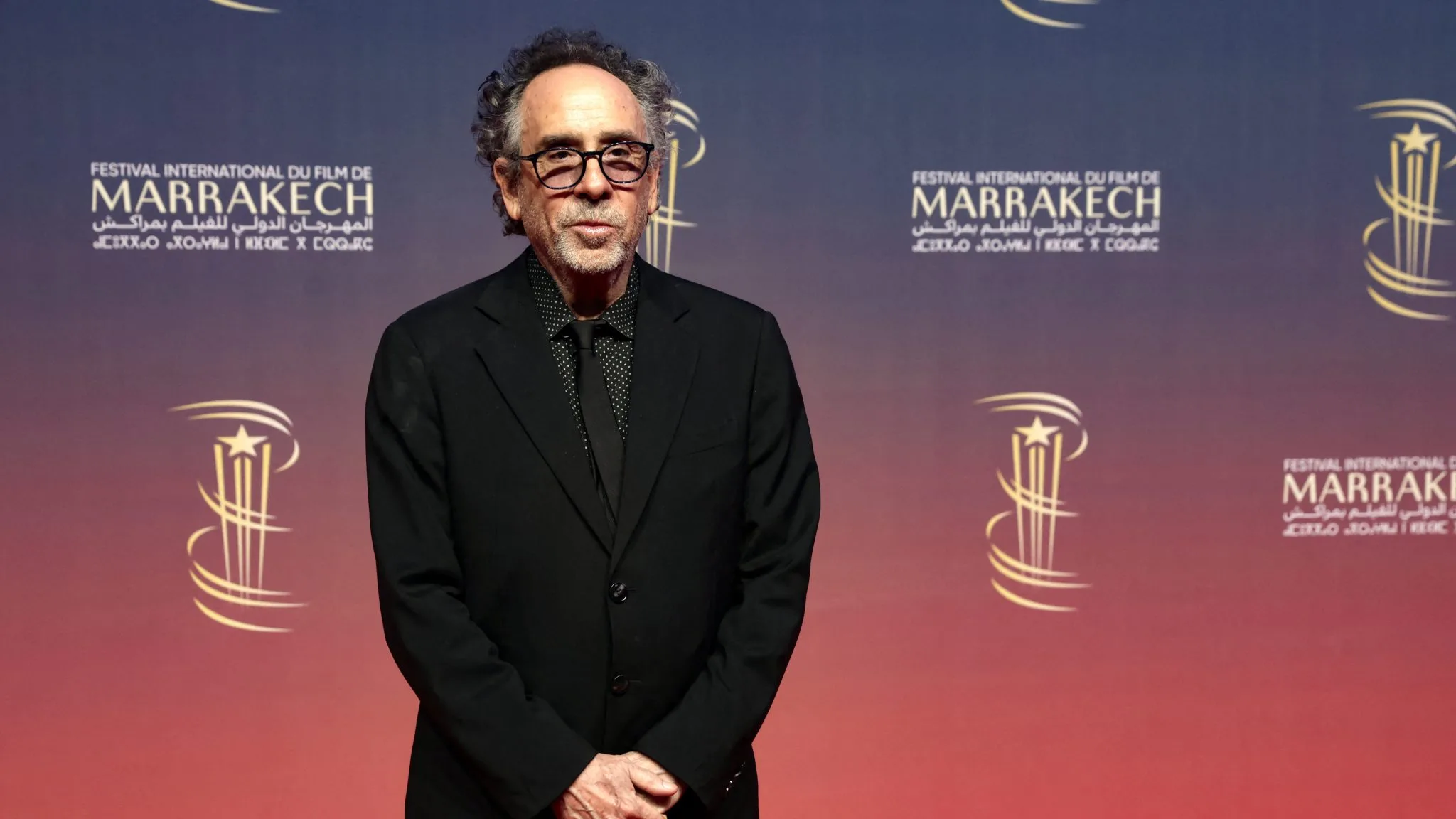
Fez — Tim Burton has spent more than four decades reshaping modern fantasy cinema, turning alienation, eccentricity, and gothic imagery into a global visual language that remains instantly identifiable.
Born in 1958 in Burbank, California, Burton grew up feeling disconnected from the bright suburban culture surrounding him.
He gravitated toward horror films, classic monster movies, and the performances of Vincent Price. Drawing became both escape and expression. That sensibility would later define his filmmaking.
After studying animation at the California Institute of the Arts, Burton joined Disney in the early 1980s. His early short films, “Vincent” (1982) and “Frankenweenie” (1984), already displayed hallmarks of his style: elongated silhouettes, stark shadows, and characters who feel emotionally displaced from their environment.
The birth of “Burtonesque”
Burton’s feature breakthrough came with “Beetlejuice” (1988), a dark comedy that balanced absurd humor with gothic theatricality. The film’s commercial success paved the way for “Batman” (1989), which redefined superhero cinema with operatic gloom and stylized production design.
However, it was “Edward Scissorhands” (1990) that crystallized Burton’s emotional philosophy. The film tells the story of an artificial man with blades for hands navigating pastel suburbia. It is less horror than modern fairy tales — a meditation on conformity, vulnerability, and social exclusion.
Throughout the 1990s and 2000s, Burton expanded this thematic universe with films including “The Nightmare Before Christmas” (1993), “Ed Wood” (1994), “Sleepy Hollow” (1999), “Big Fish” (2003), “Corpse Bride” (2005), and “Sweeney Todd: The Demon Barber of Fleet Street” (2007).
Across genres, one constant remained: the outsider is rarely the villain. Society often is.
The Johnny Depp collaborations
A defining chapter of Burton’s career is his long creative partnership with Johnny Depp. Their collaboration began with “Edward Scissorhands” (1990) and quickly became one of Hollywood’s most recognizable director-actor pairings.

Depp starred in “Ed Wood” (1994), portraying the famously optimistic filmmaker; “Sleepy Hollow” (1999); “Charlie and the Chocolate Factory” (2005); “Sweeney Todd” (2007); “Alice in Wonderland” (2010); and “Dark Shadows” (2012).

Together, Burton and Depp constructed characters who were eccentric yet emotionally grounded. “Sweeney Todd” (2007) stands as a critical high point, earning multiple Academy Award nominations and winning for Best Art Direction. The film demonstrated Burton’s ability to merge gothic spectacle with tragic operatic weight.

Over time, however, critics argued that Burton’s increasing reliance on digital effects, particularly in “Alice in Wonderland” (2010), softened the tactile, handmade quality that defined his earlier work. The Burton-Depp era gradually slowed after 2012, marking the end of a distinctive cinematic partnership.
Reinvention in the streaming age
Rather than fade, Burton adapted. In 2022, he entered long-form television with Netflix’s “Wednesday” (2022), centered on Wednesday Addams. The series became a global phenomenon and introduced Burton’s gothic sensibility to a new generation.
The show’s second season further cemented its popularity, proving Burton’s visual language remains commercially and culturally viable. Notably, “Wednesday” reflects a more restrained Burton — one focused on atmosphere and character psychology rather than maximalist spectacle.
Burton today and what lies ahead
In 2024, Burton returned to theaters with “Beetlejuice Beetlejuice” (2024), revisiting one of his earliest successes while blending legacy characters with contemporary pacing. The film’s strong box-office performance reaffirmed his enduring audience appeal.
Beyond cinema, Burton’s artwork continues to tour internationally in major exhibitions showcasing his original sketches, sculptures, and concept designs. These exhibitions highlight that his films begin with drawing — with pen, ink, and imagination — rather than corporate franchise strategy.
Looking ahead, Burton has expressed interest in returning to animation, the medium that shaped his early career. Industry reports suggest he is developing new animated material, though details remain undisclosed. He has also signaled a preference for more personal, character-driven projects rather than large franchise expansions.
Now in his late sixties, Burton occupies a rare position in Hollywood: not merely a director, but a brand of aesthetic storytelling.
From “Edward Scissorhands” (1990) to “Sweeney Todd” (2007) to “Wednesday” (2022), Tim Burton has consistently built worlds where the strange are central, not peripheral.
And as long as audiences continue to identify with outsiders, Burton’s shadowed fairy tales will remain relevant.