Fez — A healthy Moroccan iftar does not require complicated nutrition rules or trendy ingredients. It requires balance, pacing, and a bit of common sense.
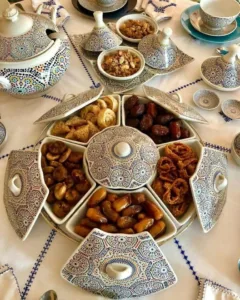
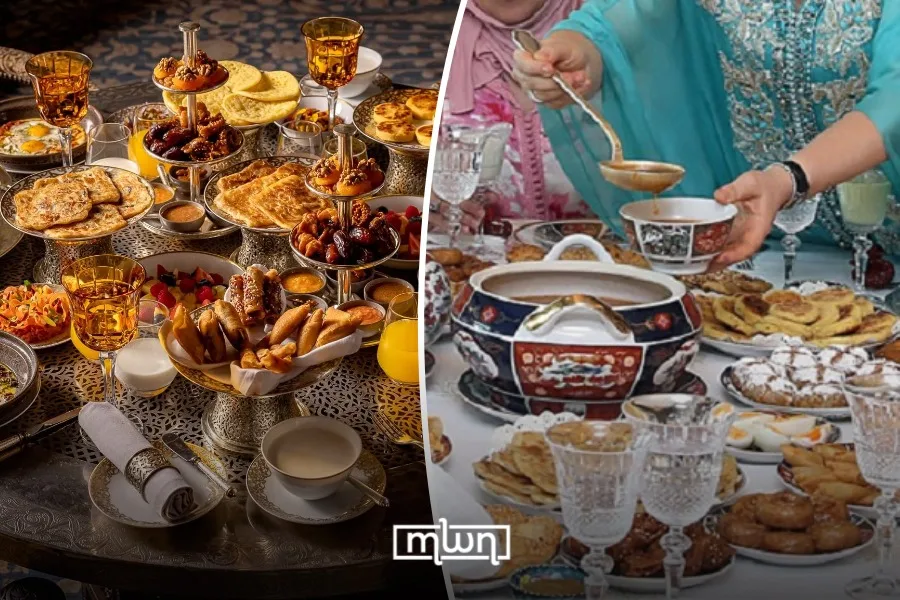
During Ramadan, Muslims in Morocco gather around generous tables filled with dates, harira, chebakia, juices, breads, and savory dishes. The variety is beautiful. The challenge is knowing how to eat it without regret an hour later during late evening Taraweeh prayers.
The goal of a balanced Moroccan iftar is simple: break the fast gently, avoid overwhelming the stomach, and go to the mosque feeling light rather than bloated.
Start light, not heavy
After a full day of fasting, the body needs a calm restart. Traditionally, we begin iftar with dates and water. That tradition works for a reason. A couple of dates and a glass of water or milk are enough to wake up the digestive system without shocking it.
Harira, Morocco’s classic Ramadan soup, is also a smart early choice. It is warm, hydrating, and filling without being heavy if the portion is reasonable. The mistake many people make is turning the first ten minutes into a race. Eating too fast or too much immediately often leads to heartburn and discomfort later.
A short pause after the first bites can make a big difference. Pray Maghrib, step away from the table, and let the body adjust.
Build a balanced plate
When returning to the table, balance matters more than quantity. A healthy Moroccan iftar plate can include a mix of protein, vegetables, and moderate carbohydrates. Grilled chicken or fish, a small portion of meat, cooked vegetables, salads, and a modest piece of bread are usually enough.
Fried foods, while tempting, are often the main cause of feeling heavy during Taraweeh. Briouats, fried chebakia, and oily pastries are delicious, but large portions can sit heavily in the stomach. Choosing one sweet instead of three can prevent bloating and discomfort later in the mosque.
Juices and smoothies are another hidden issue. Sweetened drinks and multiple glasses of sugary juice can quickly lead to a swollen, uneasy feeling. Water remains the safest and most reliable option throughout the evening.
Eat slowly, pray comfortably
One of the simplest ways to avoid heartburn and bloating during Ramadan in Morocco is to slow down. Chewing properly and spacing out portions allows the stomach to keep up. Overeating in a short time forces the body to work harder, often resulting in gas, reflux, and restlessness during prayer.
It also helps to avoid lying down immediately after eating. A short walk or light movement before heading to the mosque can ease digestion. Maybe go to a mosque that is a little bit far away.
Tight clothing can also make discomfort worse, so comfort matters as much as food choices.
A balanced Moroccan iftar is not about restriction. It’s about awareness. Ramadan evenings should feel spiritual and calm, not physically exhausting.
In the end, the spirit of Ramadan in Morocco is about reflection, gratitude, and community. Eating with moderation honors that spirit. A table can remain generous without leaving us struggling through taraweeh. A thoughtful iftar allows the night to be about prayer and peace rather than heartburn and regret.