Casablanca – Ordering that combo meal, or opening that family sized bag of chips might not feel unusual to you. It could be one of your daily routines or the reason your swimming suit was off limits last summer.
And no, the reason is not entirely due to calories.
Imagine looking at photos of people in the 70s or 80s and wondering, “how did they stay so effortlessly in shape, while fast food chains were rising unexpectedly?”
Until the 90s, the global age standardized prevalence of obesity was roughly 6.6%, while in 2022, the obesity rate of adults, aged 18 years and older, grew to over 15.8%, according to the World Health Organization.
The rise of bigger portions
As global economies grew in the late 20th century, so did the size of servings in fast food and packaged snacks.
Large scale studies showed that portions have gradually increased over the past decades, reflecting industry standards.
Other research materials revealed that repeated exposure to supersized meals and servings larger than recommended, driven by the desire to get “value for money,” is linked to an increase in energy intake and shifting the sense of fullness.
This means that more food is required to feel satisfied, which quietly contributes to gradual and often unrecognised weight gain.
The ‘portion distortion:’ a historical shift
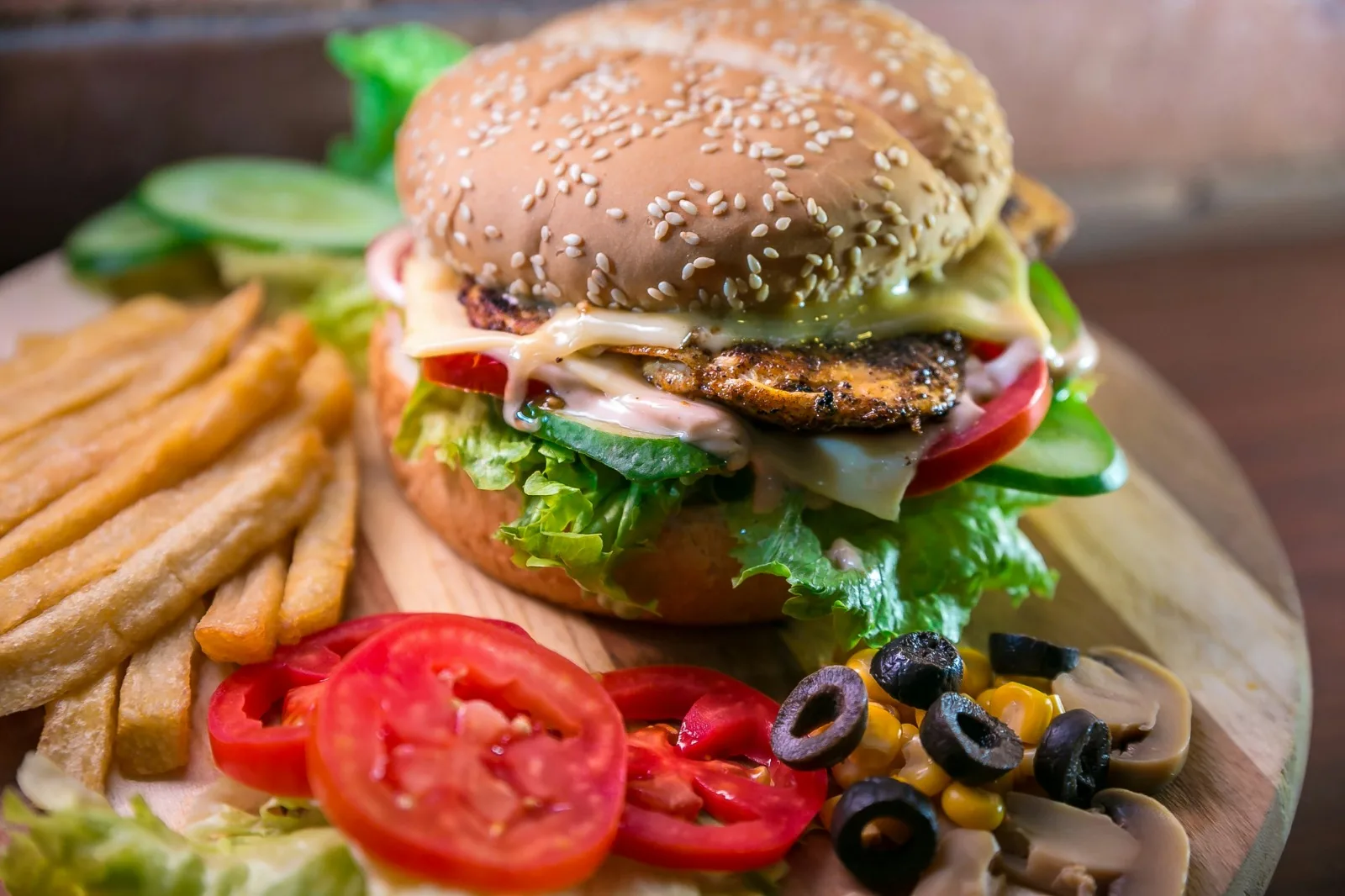
To understand the scale of this “quiet” gain, you only need to look at the evolution of the American fast food icon: the hamburger.
In the 1950s, a standard burger from a popular chain weighed roughly 3.9 ounces. Today, that same item has ballooned to an average of 12 ounces in many “premium” outlets, a threefold increase in caloric density marketed as a standard lunch.
The transformation is even more dramatic in beverages. The classic contour bottle of Coca-Cola, which defined a generation of refreshment, held just 6.5 ounces.
Today, the “child” size at many fast-food fountains is often 12 to 16 ounces, which means that a modern toddler is served double the sugar that an adult was expected to consume in the 1970s.
This phenomenon, often termed “portion distortion,” has recalibrated the public’s perception of what a normal meal looks like.
We have moved from the era of the “treat” to the era of the “combo,” where adding a few cents to “super-size” a meal triggers a logical consumer response.
It’s a better deal while overriding the biological signal that says, “this is too much fuel.”
From the Tagine to the ‘Tacos’: The Moroccan Shift
This shift is not exclusive to the West. It found fertile ground in emerging economies like Morocco, where the culinary landscape has undergone a radical transformation in just two decades.
Historically, traditional Moroccan meals cleverly balanced healthy portion sizes while giving the appearance of indulgent, shared feasts.
Eating from a central Tagine meant sharing a finite amount of food.
The pace was dictated by the group; you ate slowly, using bread as a utensil, and the meal ended when the platter was cleared. There was a natural, social limit to consumption.
However, the rapid urbanization of cities like Casablanca and Tangier has introduced a hybrid fast-food culture that rivals, and sometimes exceeds American excesses.
We see this most clearly in the explosion of the “French Tacos” craze—a calorie-dense brick of tortilla, fries, meat, and cheese sauce that is often marketed by its sheer weight and size (M, L, XL).
It is the ultimate manifestation of the “value for money” ethos: maximum caloric density for a fixed price.
Furthermore, the “snack” culture in Morocco has shifted. In the 80s, a street snack might have been a small dairy drink or a simple sandwich.
Today, international franchises and local imitators push “Family Packs” and “Mega Menus” as the new standard.
A teenager in Maârif is now exposed to the same industrial portion sizing as a teenager in New York, normalizing a caloric intake that fits a lifestyle of heavy manual labor, yet is consumed in a lifestyle of increasing sedentarism.
The psychology of the empty plate
The danger of this trend lies in the “completion compulsion”—the human tendency to finish whatever is put in front of us to avoid waste.
When the “unit” of food—be it a muffin, a bagel, or a bowl of pasta is 300% larger than it was thirty years ago, our “clean plate club” mentality forces us to ignore our satiety cues.
We are no longer stopping when we are no longer hungry; we are stopping when the food is gone. When the definition of “gone” has expanded so drastically, the body is forced to process a surplus of energy it didn’t ask for.
This creates the paradox of the modern diet: we are eating for “value,” but paying the price with our health. Reclaiming the “effortless” shape of the 70s may not require a new diet, but simply a return to the old definition of “enough.”