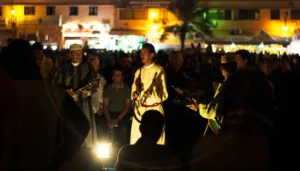
Casablanca – Moroccan music is rapidly cementing itself as one of the most explosive and dynamic cultural forces on the global stage today.
This rise is driven by the country’s rich and overlapping diversity of regional genres, which have evolved over centuries and moved far beyond local celebrations to break modern streaming records worldwide, achieving unprecedented metrics.
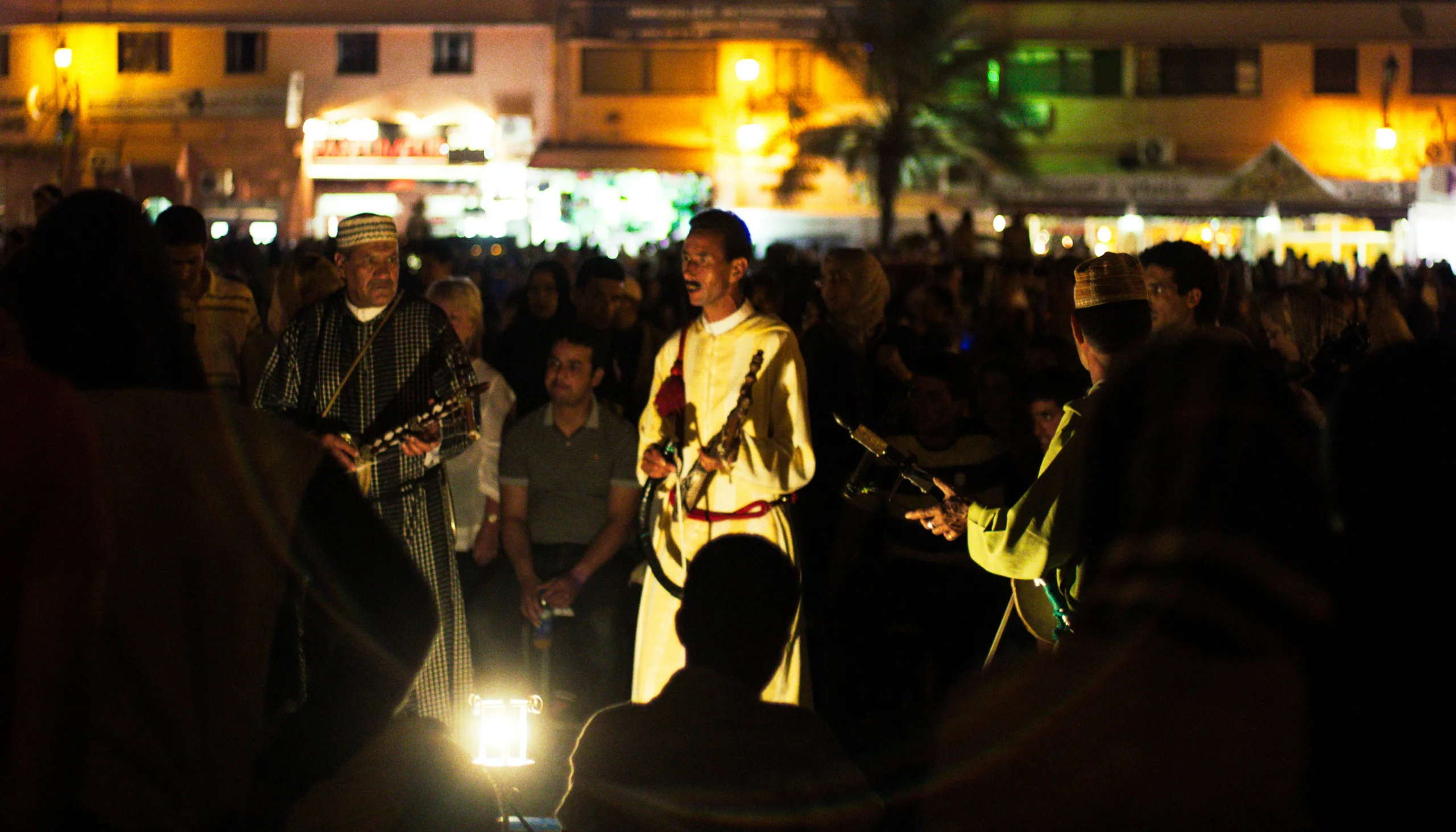
The Moroccan music scene is deeply rooted in its extraordinary diversity of genres, shaped by centuries of cultural exchange and regional identity.
“Chaabi”
Developing primarily in bustling urban centers and coastal cities like Casablanca during the mid-20th century, “Chaabi” became the definitive, beating heart of the working class.
Originating from rural folk traditions brought to the cities by migrating workers, this genre transformed in the vibrant street markets and neighborhood weddings.
Its infectious, fast-paced rhythms and socially relatable lyrics drove billions of streams to traditional back catalogs, reigniting global conversations about its foundational eras.
“Ahwach”
High in the rugged peaks of the High Atlas and Anti-Atlas mountains, Amazigh communities developed “Ahwach,” a profound community expression of poetry, percussion, and collective dance.
This genre was never simply about entertainment. It served as a vital social registry and community gathering mechanism for centuries. Today, the hypnotic, collective chanting of “Ahwach” serves as a massive cultural export. Global music institutions calculate this cultural reach by tallying worldwide consumption metrics, proving this mountain tradition brings a highly specific, metrics-driven engagement to the global stage.
The Borderless Beat: “Rai”
While traditionally rooted in the western Algerian city of Oran, “Rai” music fluidly transferred across the border into Eastern Morocco, finding a fiercely passionate second home and unique evolution in cities like Oujda.
In recent years, rival regional genres simply couldn’t match this cumulative output and borderless appeal. For the sixth time in a decade, the top spot in regional cultural influence was never truly contested.
The global music industry must now accept an irrefutable truth: it is Moroccan music’s world. Its unprecedented historical depth and modern resurgence are the definitive markers of a cultural and commercial era shaped entirely by its influence.