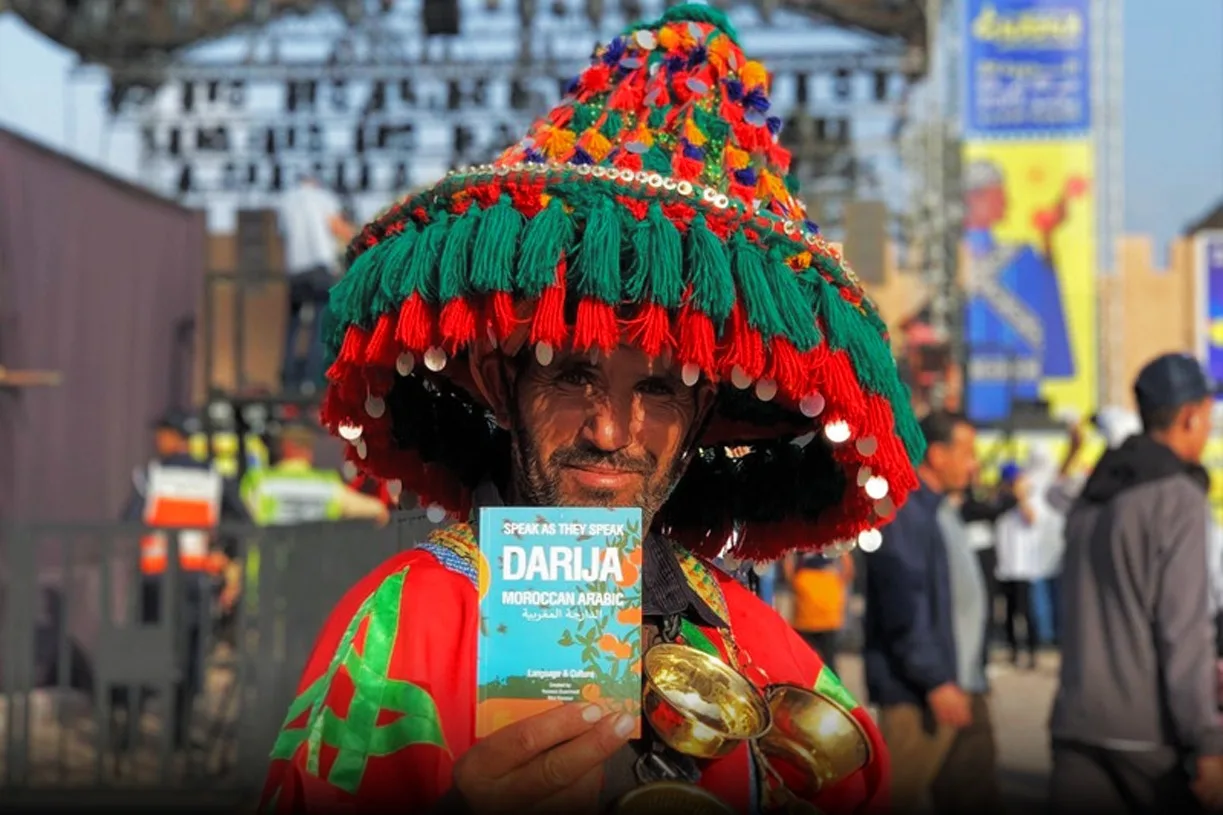
Rabat – As a Chinese, the first time a Moroccan friend texted me “koulchi dial Allah,” I paused. What does this mean? They look like letters, but they form words and sentences that I can’t understand.
What confused me even more was how the sentences sometimes looked like a math problem. You often see numbers like 3, 7, 9, and Latin alphabet mixed together, making already incomprehensible sentences even more difficult to understand.
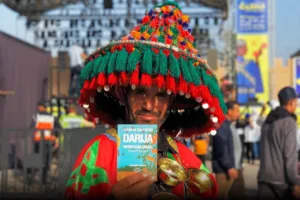
This is Darija, the Moroccan Arabic. It is based on sound-letter correspondences adapted to the alphabet, and they use numbers in text to represent sounds not found in French or English.
This is why I felt daily conversations in Morocco were like a mystic code.
The sentence my friend texted me means “everything belongs to God,” literally.
In daily life, it often signals acceptance of fate, of financial stress, of delays, of things beyond one’s control.
Darija carries a rich tradition of idioms and proverbs, which are many short, sharp and often witty.
“Jame3 li 9riti fih, ana li bnitou”
Imagine a younger colleague trying to explain something obvious to an older leader. With a raised eyebrow and a half-smile, the reply might be this.
The direct translation of this sentence is, “The mosque in which you studied, I’m the one who built it.”
This proverb is always used in situations where someone wants to say, “Don’t try to manipulate me, because I invented the game you’re trying to play.”
“Koun kan lkhoukh ydawi, koun dawa rasou”
This proverb in English is, “If peaches were meds, they would heal themselves.”
We all know peaches rot easily. They don’t fix themselves. The proverb gently mocks those who give advice they don’t follow.
If there is someone lecturing everyone about discipline, while their own life is visibly chaotic, people might mutter this under their breath. It’s also a reminder that credibility matters.
“Lssan mafih 3dam”
This idiom means “the tongue doesn’t have bones” in English.
The deep meaning is vividly illustrated in this sentence, which is that the words are easy to say, but its impact can be solid and it may cause irreparable pain, sometimes hard to take back.
This proverb is used when someone speaks too quickly or says something hurtful without thinking.
“Li bgha l3ssal isbar l9riss n7al”
The translation is, “Whoever wants honey must endure the sting of bees.”
This proverb can be used for everyone who wants to achieve their goals. Nothing good comes without effort and sacrifice.
In other words, anything worthwhile requires patience and resilience. You have to accept temporary discomfort, trusting that the reward at the end will be sweet.
There also is a similar meaning poem in China, “Without enduring the cold, how can plum blossoms smell so sweet?”
It is clear that this lesson transcends borders, and people actually recognize the importance of overcoming difficulties through hard work.
“Li zerbo matou”
The translation in English sounds amazing: “Those who rushed, are dead.”
Actually it is a dramatic way to advise you to slow down, and consider carefully before you act.
It’s often said with a smile to someone driving too fast, stressing over a minor delay, or reacting impulsively. The exaggeration is intentional that life is not a race, as the proverb suggests.
This idiom inspires me to recall an ancient Chinese saying, “Nature does not hurry, yet everything is accomplished.”
They all explain the idea that letting things take their natural course will lead to good results.
“Derti liya tiyarra”
This playful expression comes out when someone talks non-stop, sends ten voice notes in a row, or overexplains a simple story. It’s the Darija equivalent of “You’re giving me a headache,” but with more humor.
The “tiyara” is the plane in Darija, and the complete translation is “You made a plane in my head.”
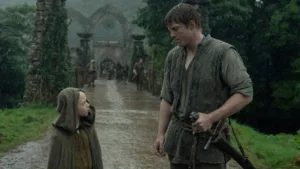
If you have watched the movie “Shrek”, you’d relate to how Donkey was constantly talking to Shrek.
In Darija, Shrek might say, “Skout chwiya, derti liya tiyara!” This means “Be quiet for a bit, you’re making my head spin!”
Are you intrigued?
Beyond these expressions, there are more other idioms in Darija, which reflect Moroccan everyday wisdom and emotion.
“Lkhawa 7adha denia” (Brotherhood lasts only as long as life does) reminds us that the bond between siblings belongs to this life only, urging us to treasure it with love and passion while we still can.
“Wrih wrih, wla 3ma sir w khellih” (Show him, but if he chooses to stay blind, let him be) refers to the fact that we could offer guidance to people, but if they keep ignoring advice, we should let them suffer the consequences.
It brings to mind the English proverb, “You can lead a horse to water, but you can’t make it drink.”
“Almzoweq men berra ach khbarek men ldakhel” (You look so good on the outside, but what’s going on inside?) warns us not to be deceived by appearances, because what shines on the outside may hide a very different reality within.
Do you have any more favorite idioms and proverbs? Share them with us!