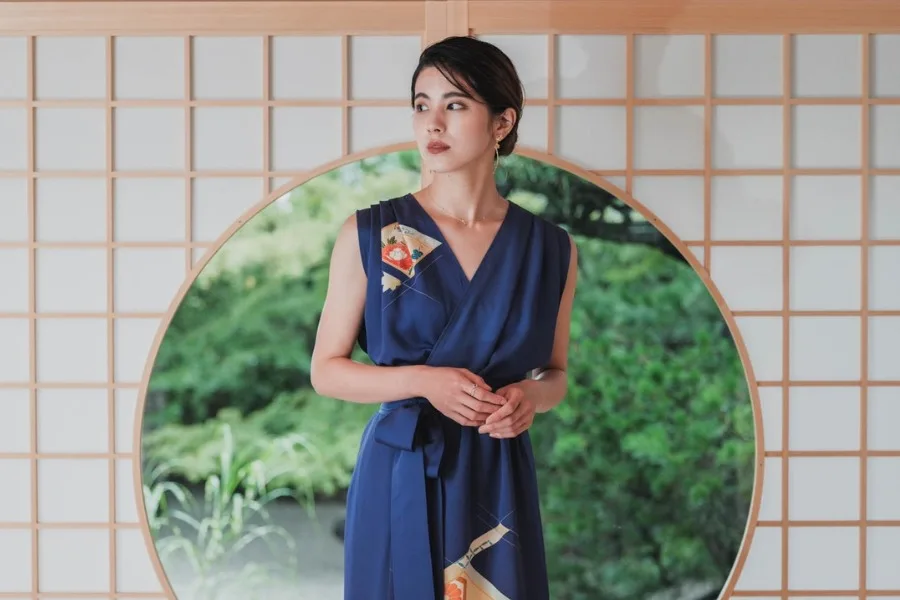
Nador – Once a symbol of timeless Japanese tradition, the kimono is now being reimagined through sustainable fashion, as designers and artisans across Japan breathe new life into it.
The industry of these vintage garments is now being transformed into a fashion statement, with a cause that preserves cultural heritage and raises environmental awareness.
Kimonos are crafted carefully from silk and decorated with patterns often inspired by nature, and mostly passed down through generations.

However, since Western clothing is now the norm in modern Japan, many kimonos are stored away in closets or worn only at special events.

Today, we witness a new movement that challenges that reality. Designers, craftsmen, and small business owners across Japan started repurposing old kimonos into modern clothing.

Instead of letting these artistic clothes fade, they are transforming into jackets, dresses, bags, and scarves, bringing back the practical side of these garments.
This new challenge is not only about beauty, but also about sustainability. Overproduction and waste are two negative sides of the fashion industry, so reusing and recycling offer an environmentally conscious alternative and reduce waste while preserving traditional techniques and craftsmanship that might disappear.

The younger Japanese generations are now discovering the emotional value of their traditional clothing.
Wearing and reimagining kimonos gives people a chance to reconnect with their cultural roots while preserving individuality in a modern way.
In many ways, the renewed interest in the Kimono reflects how people see fashion today.

Rather than chasing fast-changing trends, both designers and consumers are drawn to clothes that carry meaning, history, and social responsibility.

By transforming vintage kimonos into modern pieces, Japan shows that tradition can adapt without losing its cultural value
This movement encourages more conscious consumption, hoping it will inspire other designers around the world to rediscover and reimagine what already exists instead of producing more.