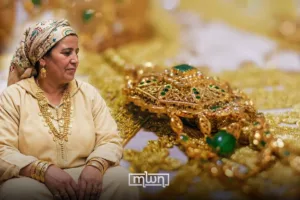
Nador – Beyond mere decoration, jewellery holds deep cultural significance in Morocco.
Among Amazigh and rural communities, pieces, such as fibulas, necklaces, and bracelets, are visual languages, telling stories of identity, belonging, and protection.
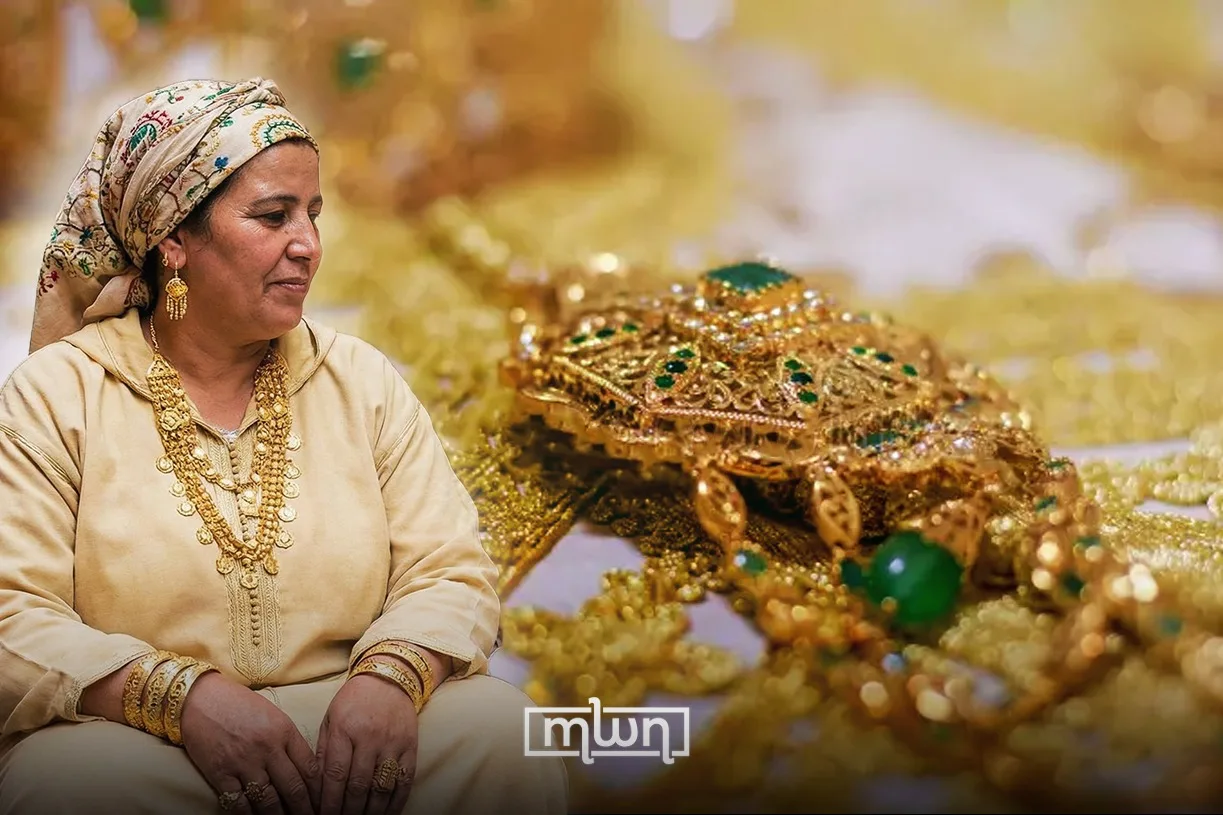
While much of the traditional focus is on silver, it sheds light on women’s use of gold as portable wealth.
According to Iwziwn, Jewellery is a form of speech, visible and enduring, allowing women to declare strength, independence, and faith in ways words could not.
Historically, Moroccan women lived in a society where banks, credit, and property ownership were dominated by men.
In this context, jewellery became a personal treasury. Gold pieces, often given during weddings or inherited from mothers and grandmothers, could be worn, hidden, sold, or pawned in times of need.
This allowed women to maintain financial autonomy, ensuring survival during hardship such as widowhood, divorce, or economic instability.
Beyond material value, jewellery often carried protective symbols, geometric patterns, the Khamsa (Hand of Fatima), and other amuletic designs, reinforcing a woman’s security and resilience.
By combining aesthetic beauty with economic and spiritual functions, Moroccan women transformed jewellery into a tool for empowerment and survival.
Gold and silver alike have thus served as both cultural expression and financial security, helping women navigate a world where formal institutions rarely offered them independent control over wealth.