Lugano – Morocco is advancing plans to expand its high-speed rail network as part of broader preparations for the 2030 FIFA World Cup.
The initiative aims to strengthen national mobility while creating a lasting infrastructure legacy beyond the tournament.
At the center of the strategy is the extension of the existing high-speed line from Tangier to Casablanca, forming a continuous corridor linking the country’s main urban and economic hubs.
Building on Africa’s first high-speed rail
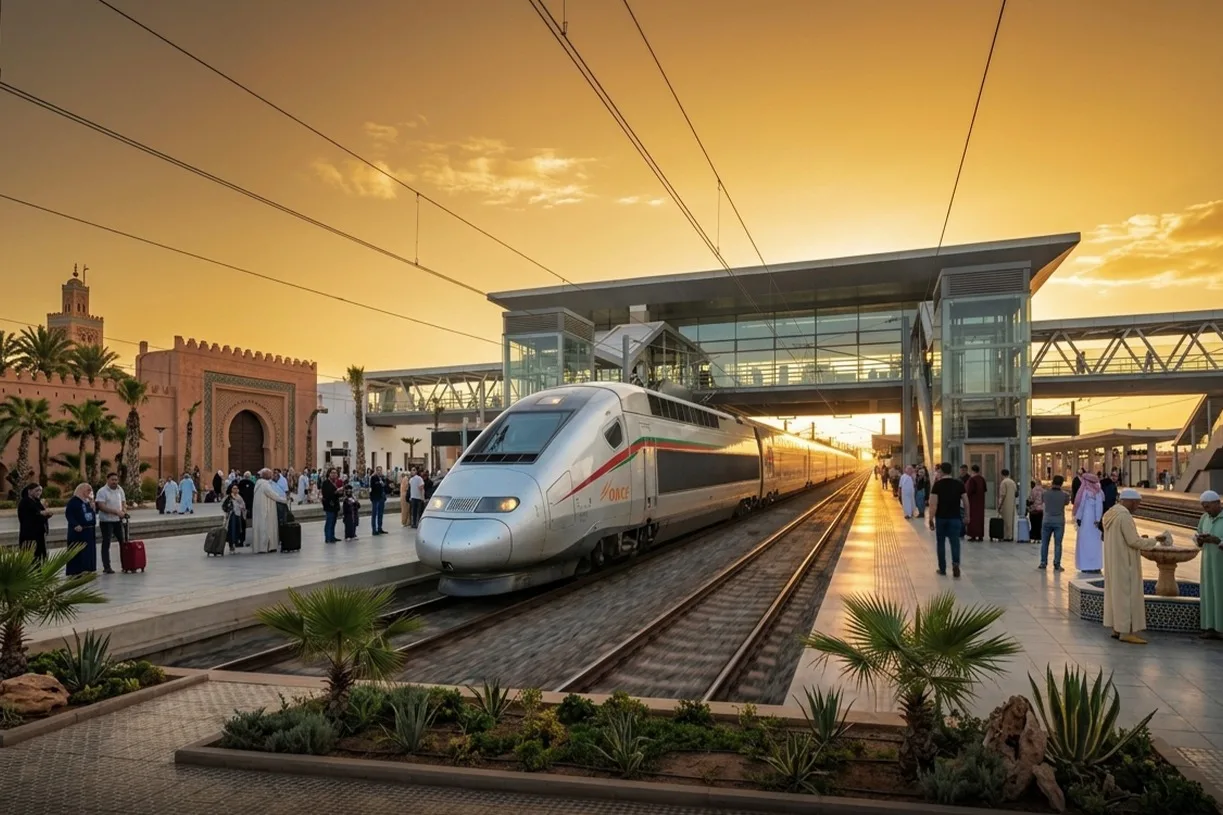
Morocco became the first African nation to launch a high-speed train in 2018 with the introduction of Al Boraq, connecting Tangier and Casablanca.
Operating at speeds of up to 320 km/h, the service has significantly reduced travel times and improved connectivity between key cities.
The next phase of the Al Boraq project focuses on extending the high-speed line to Marrakech, one of the country’s leading tourist destinations and a central hub for the 2030 World Cup.
The project is expected to enhance transport capacity, enabling efficient movement of visitors while reducing congestion and reliance on road and air travel.
It is designed to reshape the country by connecting its political, economic, and tourism hubs into a unified network, improving mobility, strengthening regional integration, and supporting more balanced national development.
Long-term development beyond the World Cup
While the 2030 FIFA World Cup has accelerated infrastructure development, Morocco’s high-speed rail expansion is designed with a much longer horizon in mind.
Morocco sees the high-speed rail project as a key tool for strengthening national integration, expanding labor mobility, and attracting investment across the network, while also allowing passengers to enjoy Morocco’s diverse landscapes along the journey.
In addition, it supports the country’s sustainability goals by offering a lower-emission alternative to road and air transport.
With continued expansion, Morocco aims to position high-speed rail as a central pillar of its transport system, delivering long-term benefits well beyond 2030.
Expanding aviation and road safety efforts
Beyond railway development, Morocco is advancing its aviation sector, upgrading airports in Marrakech and Agadir while developing a new terminal at Mohammed V Airport in Casablanca that blends modern design with traditional Moroccan elements.
The project also includes new runways and expanded infrastructure, with the Casablanca terminal expected to be operational by 2029, strengthening the country’s position as a major international hub ahead of the 2030 FIFA World Cup.
Morocco has also allocated over MAD 8 billion to a 2026–2030 road safety strategy aimed at reducing traffic accidents and improving protection for all road users.
The plan focuses on stricter enforcement, updated regulations, and awareness campaigns, with particular attention to vulnerable groups such as motorcyclists.