Casablanca – At Villa des Arts, families gathered today for Collectif 4.0’s “Colors of Morocco” event, a vibrant experience that invited them to discover the richness of the country through its colors.
Through this initiative, both adults and children were given the opportunity to experience it firsthand, through a series of creative and engaging activities.
Organized in partnership with Al Mada Foundation, the gathering aimed to highlight a distinct and often overlooked aspect of Moroccan culture: its natural color palette.
From North to South, these colors form a carefully woven visual identity, where each region stands out through shades that tell their own story.
In the north, Moroccan walls and landscapes are defined by white and blue tones, while the south evokes the ochre hues of desert lands.
Yet the spectrum goes further; saffron yellow, red and green also contribute to this living tapestry, adding depth to Morocco’s cultural and geographical identity.
Beyond architecture, clothing, and cuisine, this diversity of color stands as a cultural marker in its own right.
In an exclusive interview with MWN Lifestyle, Leila Loudghiri, co-founder of Collectif 4.0 talked about the theme and creative vision behind “Colors of Morocco.”
“This edition highlights the Colors of Morocco because each color of our country tells a story, reflects a territory, and embodies a culture,” she emphasized.
“The program includes creative workshops for parents and children, colorful discovery paths, a large collaborative canvas, and spaces designed to enjoy quality family time together.”
Art, culture & everything in between
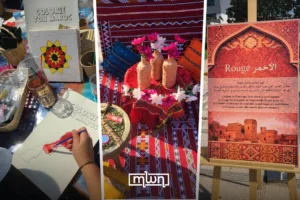
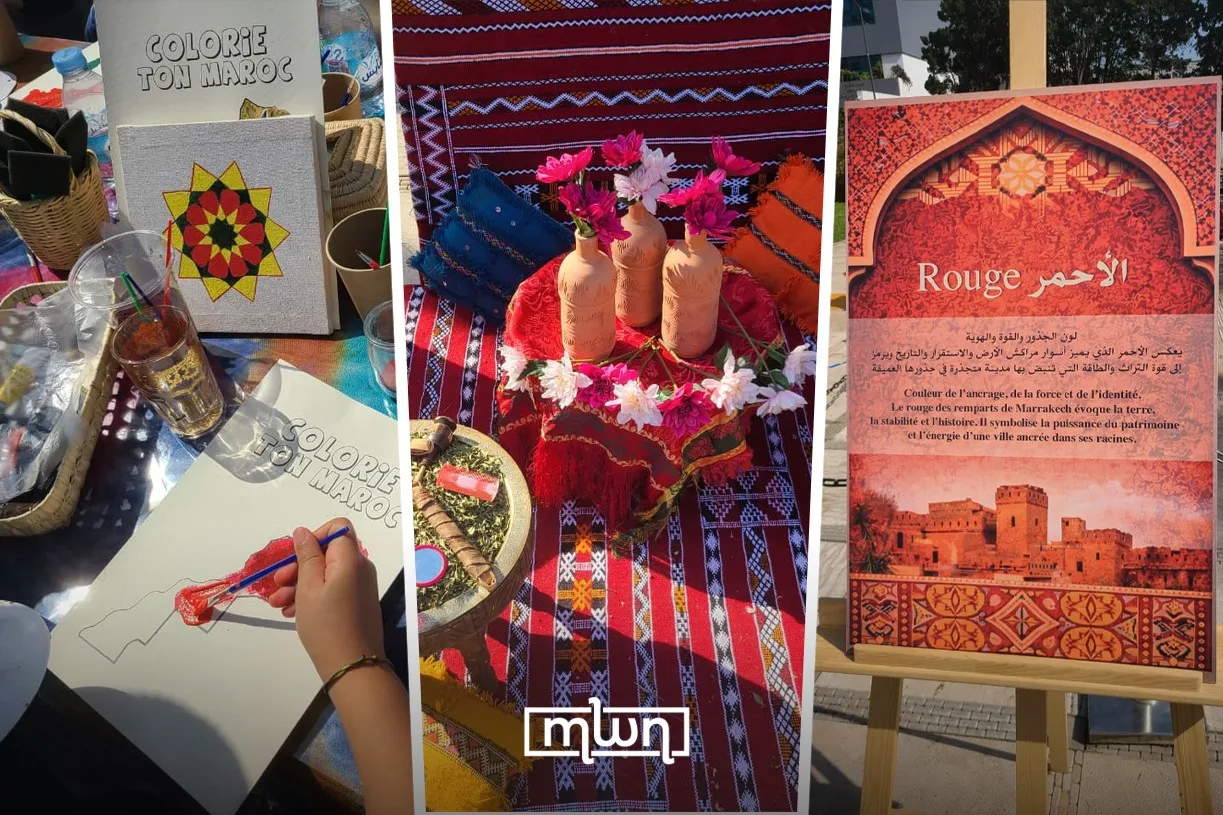
In the DIY workshops, participants worked with natural pigments and Morocco-inspired colors to create artistic pieces, each reflecting a fragment of the country’s cultural richness.
Some workshops focused on painting elements of Moroccan culture, including buildings, zellige, carpets, while others used natural materials to create the star of Morocco, using crafting sticks for the structure and wool for the final color and texture effect.
Think that’s all? Not quite. The space is already alive with different activities unfolding at once.
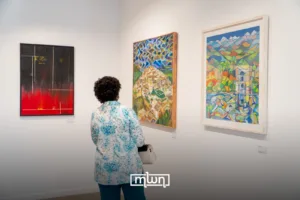
Families also explored an exhibition showcasing the colors of Morocco. Each space highlighted a distinct palette, offering children in particular an immersive way to engage with the country’s diverse cultural landscape.
Within the exhibition, red is presented as the color of roots, strength, and identity, widely present in Marrakech and reflecting the city’s deep historical and cultural heritage.
Violet is also featured, symbolizing innovation and creativity, as seen in certain textile traditions and artisanal dyeing practices.
And the list goes on. Yellow, green, and the remaining colors invite visitors to pause and reflect on the stories each shade tells about Morocco.
It encourages a closer look at where each color appears in everyday life, and how these tones quietly shape the country’s visual and cultural identity. Fascinating isn’t it?
Still centered around the theme of color, an interactive trail and games were also part of the program, allowing children to engage in movement-based activities that take them away from screens and into a more playful, physical way of exploring.
The experience also included a participatory giant fresco, where children came together to contribute to a collective artwork.
Even better, the final creation will be showcased at Villa des Arts, highlighting the result of this shared artistic moment.
Morocco: Land of cultures
“Colors of Morocco” is part of the broader “Morocco, Land of Cultures” program, a monthly cultural initiative held at Villa des Arts on the last Saturday of each month until June 2026.
Designed for families, the program offers a closer look at Morocco’s crafts and heritage through interactive and educational experiences.
By bringing together different generations, the initiative creates an intimate space for families not only to spend time together, but also to nurture curiosity and deepen their connection to the traditions and cultural elements that shape Moroccan identity.