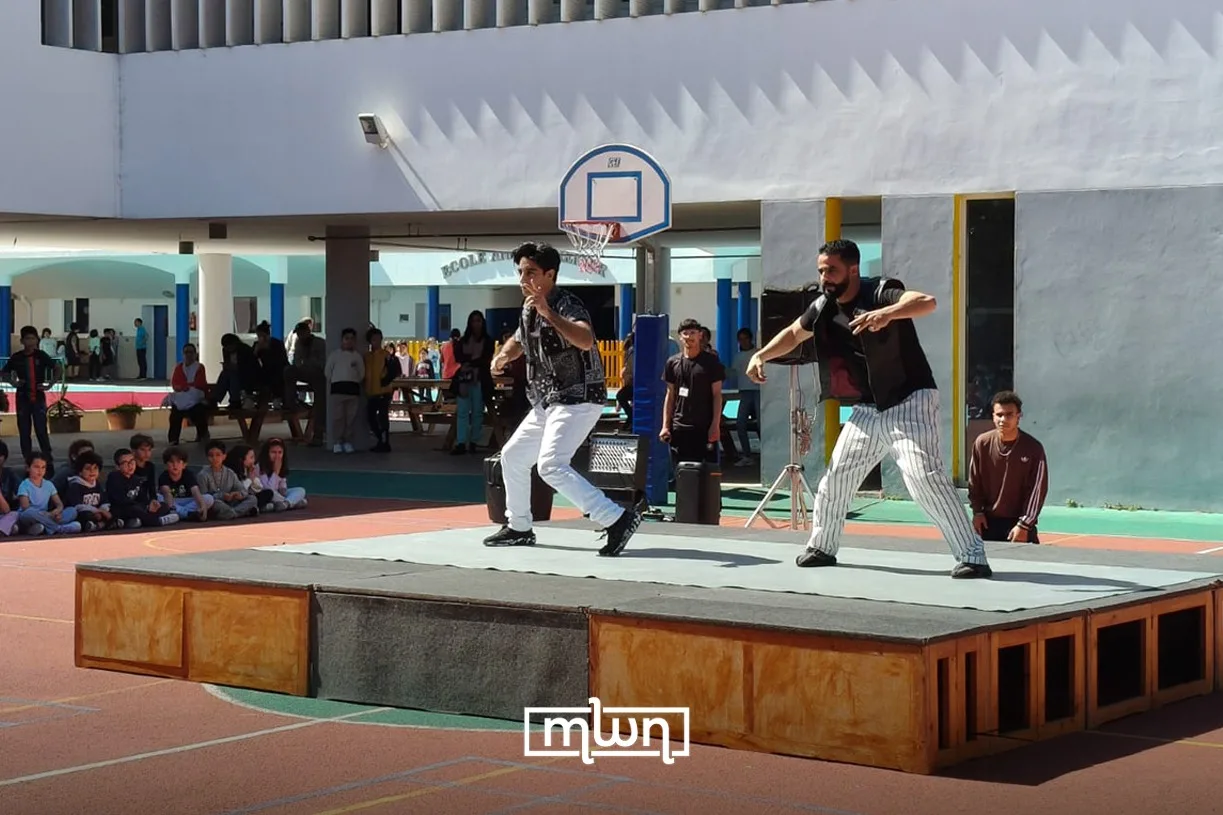
Fez — Through school-based training sessions, the Fédération Royale Marocaine des Sports Aérobics, Fitness, Hip Hop et Disciplines Assimilées is expanding its outreach to students across Morocco.
As part of this initiative, Morocco’s “Rencontres du Hip Hop” are bringing urban dance beyond the stage and into the classroom, integrating movement, creativity, and discipline into school environments.
The activities took place in late March and early April at the Institut Moulay Rachid in Salé and Lycée Descartes in Rabat.
The initiative reflects a broader effort to present hip hop and breaking not only as performance arts, but also as tools for education, discipline, and self-expression.
At the Institut Moulay Rachid, a first session ran from March 25-27, with 26 students introduced to the physical and creative demands of the two disciplines.
From classrooms to creative spaces
The second phase unfolded from March 30 to April 1 at Lycée Descartes in Rabat, where students joined workshops led by prominent figures from the breaking scene.
Among them were Olympic athletes B-Boy Billy and B-Girl Elmamouny, whose presence gave the sessions added visibility and credibility.
A parallel module on hip hop culture was led by Frieda Frost, described in event coverage as a choreographer, Olympic judge, and German vice-champion in breaking.
That combination of practice and cultural education matters. Hip hop in schools is not only about teaching students how to move. It is also about introducing them to a global culture rooted in rhythm, resistance, individuality, and community.
A wider push for youth engagement
The federation has framed these school encounters as part of its continuing work to anchor hip hop and breaking more firmly in Morocco’s youth landscape.
The message is that these disciplines can help cultivate confidence, creativity, and openness among younger generations.
The significance goes beyond dance. In a country where educational and cultural institutions are increasingly exploring new forms of engagement, bringing hip hop into schools signals a shift in what is considered valuable knowledge.
It suggests that movement, rhythm, and street-born creativity also deserve a place in Morocco’s educational conversation.
That is what makes these “Hip Hop Encounters” worth watching.
They are not just workshops. They are part of a larger attempt to connect Moroccan youth with forms of expression that are demanding, modern, and deeply communal.