Rabat – Morocco isn’t defined by a single identity; it’s a collection of many. Drive a few hours in any direction and the landscape shifts, the architecture takes on a new character, and even the rhythm of everyday life feels different.
That’s the real appeal of Morocco: you can cross one country and feel as though you’ve traveled through several.
Here’s what draws visitors to seven of its most compelling cities.
Casablanca
Casablanca isn’t trying to charm you with postcard alleys, it’s Morocco’s economic engine, and it feels like it.
Wide boulevards, French colonial-era Art Deco architecture, and a skyline that continues to evolve define the city’s character.
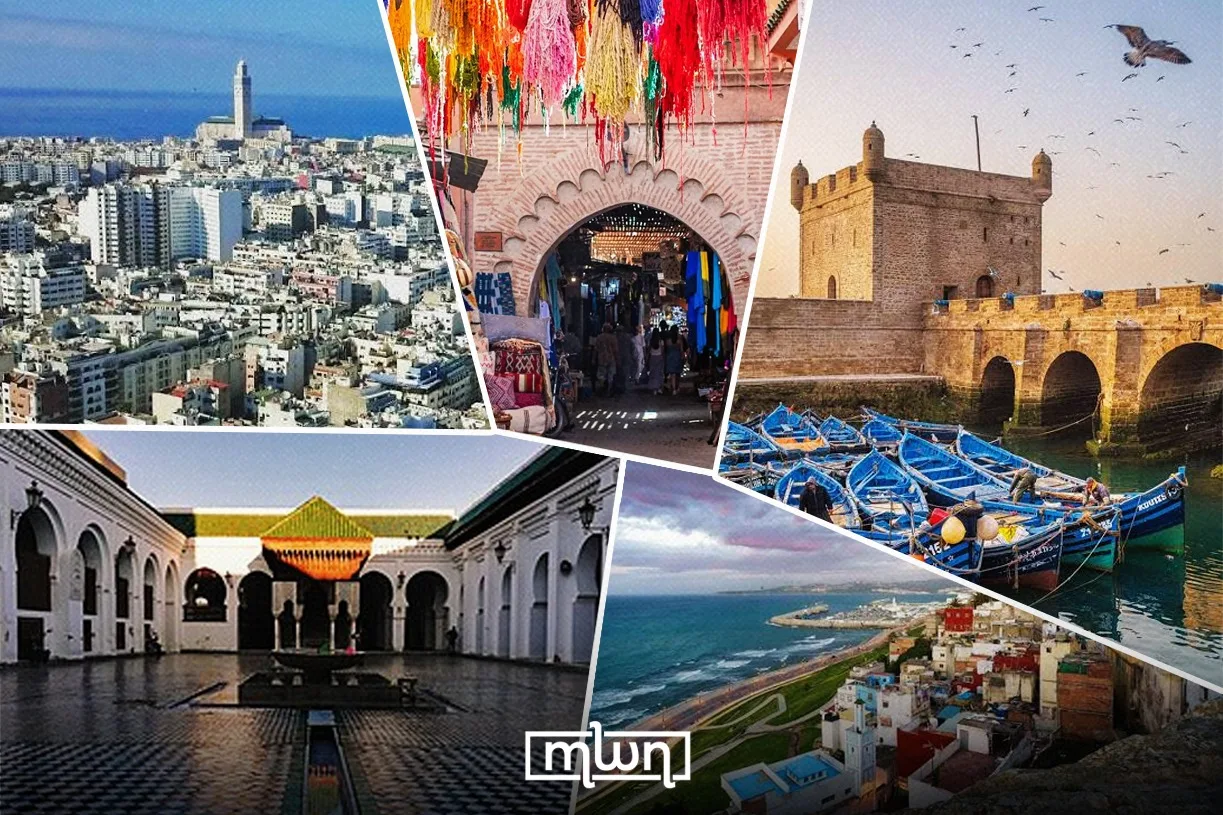
And there’s this building: Hassan II Mosque, its minaret towering over the Atlantic, with a prayer hall that can hold tens of thousands and a retractable roof that opens to the sky.
Beyond that, Casablanca rewards people who want to see how Moroccans actually live and work today, chic cafes, seafront corniches, and a nightlife scene unmatched elsewhere in the country.
Rabat
As Morocco’s capital, Rabat moves at its own pace. Cleaner, greener, and noticeably calmer than many of the country’s other major cities, it appeals to travelers looking for Morocco’s culture and history without the constant bustle.
The city’s postcard moment is the Kasbah of the Udayas, a blue-and-white fortress perched above the point where the Bou Regreg River flows into the Atlantic.
With the unfinished Hassan Tower, the grand Mausoleum of Mohammed V, and a UNESCO-listed medina that’s easy to explore on foot, Rabat offers many of Morocco’s defining sights without the intensity of its busier cities.
Fez
If Casablanca is Morocco’s present, Fez is its past, but still breathing. Fez el-Bali, the old city, is one of the largest car-free urban zones on earth, a labyrinth of over 9,000 alleys where donkeys still haul goods because nothing wider fits.
Visitors come for the iconic tanneries, where leather has been dyed by hand in stone vats for centuries, offering one of the city’s most enduring traditions.
They also come to see Al Quaraouiyine, often regarded as one of the oldest continuously operating universities in the world, a landmark that reflects the city’s centuries-old legacy of learning and scholarship.
Fez rewards travelers who like getting lost on purpose, because every wrong turn tends to lead somewhere worth photographing.
Marrakech
Marrakech is the city most people picture when they imagine Morocco, and it earns that reputation.
Jemaa el-Fnaa square shifts personality by the hour. Snake charmers and orange juice stalls by day, a sprawling open-air food festival by night.
The medina’s souks are a maze built for haggling, and just outside the chaos sit the Majorelle Garden and the grand riads that have made Marrakech a magnet for design lovers and luxury travelers alike.
People visit Marrakech for intensity. It’s the city that doesn’t let you sit still.
Tangier
Tangier sits at the Strait of Gibraltar, close enough to Spain that on a clear day you can see it.
That crossroads location shaped Tangier into an international, free-spirited port city, long attracting writers, artists, and even spies drawn to its unique blend of cultures.
The Kasbah looks out across the Strait of Gibraltar, the medina is compact enough to explore on foot, and the city’s cafes still echo the literary spirit that once drew some of the world’s most celebrated writers.
Tangier is the destination for travelers who like their history with a distinctly cosmopolitan edge.
Essaouira
Essaouira trades the intensity of Marrakech for salt air and slower mornings. Its fortified medina, with blue-shuttered white buildings and Portuguese-built ramparts, is a UNESCO World Heritage Site, and one of the most relaxed places to wander in the country.
The city is also one of the world’s best spots for windsurfing and kitesurfing, thanks to steady Atlantic winds.
Its harbor delivers some of Morocco’s freshest seafood straight off the boats.
Essaouira is where travelers go to decompress after the pace of Morocco’s bigger cities.
Welcome to Morocco
What ties these cities together isn’t a single identity but their remarkable diversity.
In one trip, travelers can stand beside a mosque overlooking the Atlantic, wander through a 1,200-year-old medina, haggle in a legendary square, and watch the sun set over dunes hundreds of miles to the south.
That range, packed into one relatively compact country, is why people keep coming back to Morocco, not for one city, but for all the different ways it lets them experience the same place.