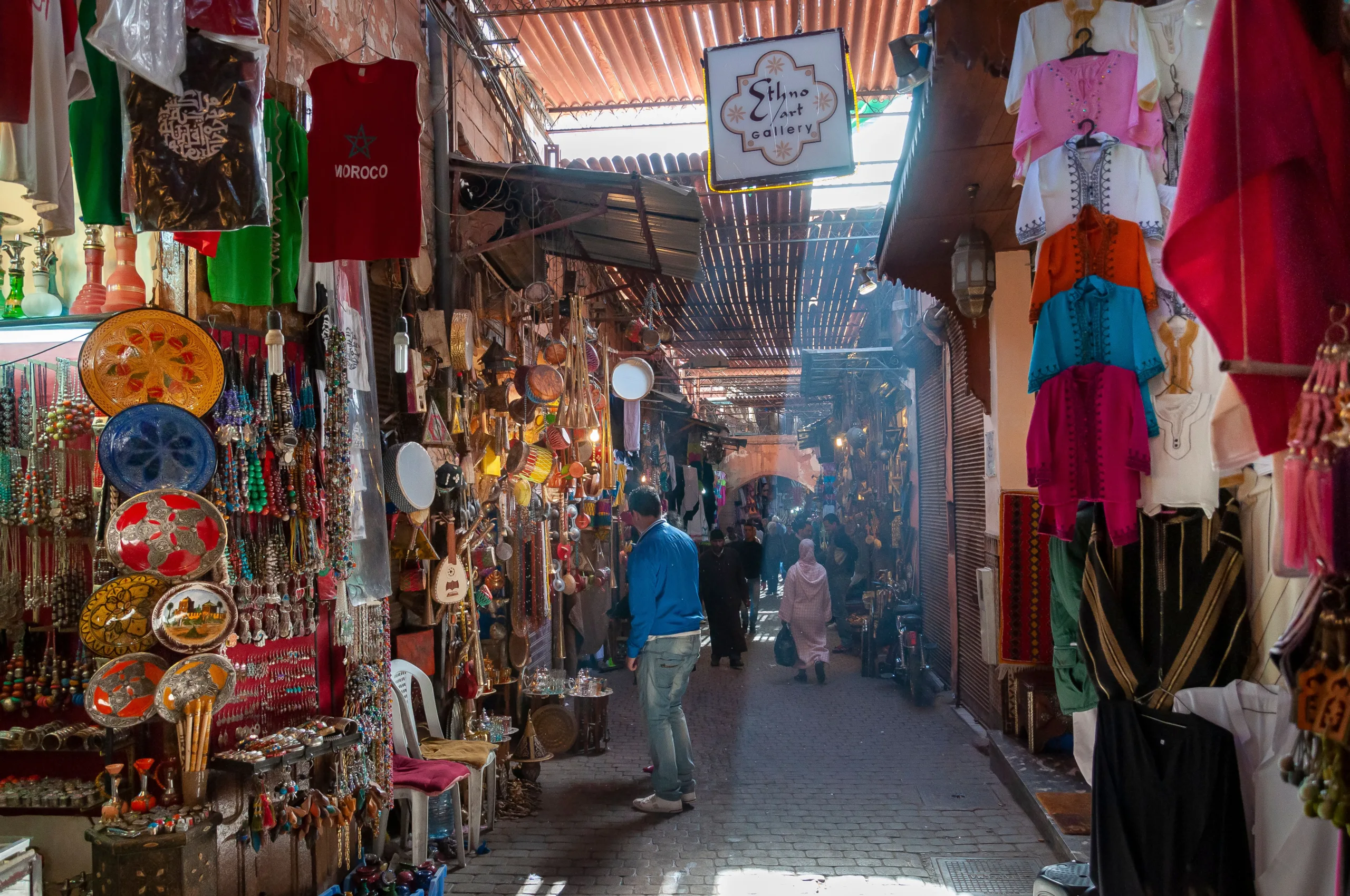
Rabat – A visit to a Moroccan souk can quickly turn into an unexpected shopping spree. With leather, spices, handwoven textiles, and hammered brass around every corner, knowing what’s truly worth your dirhams makes all the difference.
Consider this your “Confessions of a Shopaholic” survival guide. Here’s what to buy, and what to leave on the shelf.
Leather goods
Morocco’s leather industry, centered in Fez and Marrakech, is where the country’s craftsmanship makes its biggest statement.
Babouches (the pointed, backless slippers), bags, poufs, jackets, and belts are the classics.
Don’t let first impressions fool you. The best leather isn’t runway-perfect. It carries an earthy scent and subtle marks that tell its story.
If it looks like it rolled off an assembly line and smells like plastic, it’s probably not the real deal.
Pro tip: Expect to pay somewhere between MAD 150 and MAD 400 ($16.03 – $42.66) for a solid pair of babouches, and considerably more for a well-made bag or poufs.
Rugs and carpets
Keep an eye out for an Amazigh rug, especially the cream-and-black geometric Beni Ourain style.
It’s the souvenir travelers are proudest to bring home, and the one they’re most likely to overpay for.
Your shopping list should include vintage or older rugs, which cost more but tend to hold their value. New ones are cheaper and still handsome.
Cooperatives, particularly those from the Atlas Mountains, tend to have more transparent pricing than souvenir-heavy medina shops.
Most reputable sellers can arrange shipping, which solves the “how do I get this home” problem.
Ceramics and pottery
Fez is famed for its cobalt-blue hand-painted ceramics, while Safi is celebrated for its earthy tones and distinctive glazed pottery.
From hand-painted tagines and serving bowls to decorative plates and delicate tea glasses, Moroccan ceramics are as practical as they are beautiful.
Whether you’re hosting dinner or simply dressing up a shelf, they’re souvenirs you’ll use long after your trip.
Decorative tagines make a safer souvenir than cooking ones, which need proper cleaning before use.
Traditional beauty products
Every Moroccan souk has a beauty aisle, and like the perfect pair of Manolos, two icons always steal the scene: kohl and Aker Fassi.
One has been perfecting smoky eyes for centuries, the other delivers the kind of rosy flush that expensive makeup keeps trying to imitate.
They often share the same shelf, but they’re far from interchangeable.
Knowing the difference before you buy will save you from taking home the wrong beauty icon.
Kohl is the traditional black or dark blue eyeliner powder, typically made from a mix of antimony, ground date palm kernels, and olive kernels.
Aker Fassi, a natural rouge made traditionally from ingredients like poppy petals and pomegranate bark, used to tint lips and cheeks with a soft, long-lasting effect.
You can find them at the herbalist and beauty stalls found in most medinas, and they are usually easy to spot by the rows of small wooden and clay pots, and often sit near the spice sellers.
And guess what?
The fun part is that no matter how much you plan, the best souk captivating finds to you are usually the ones you weren’t looking for, so leave a little room in your bag, and a little room to be surprised.