Rabat – Love has been one of art’s greatest obsessions for centuries, but it has never been a single emotion.
From passionate romance to quiet devotion, family bonds, sibling connections, and lasting friendships, painters have captured the many ways love shapes human experience.
Here are some of the most iconic paintings in history, each capturing a different expression of love.
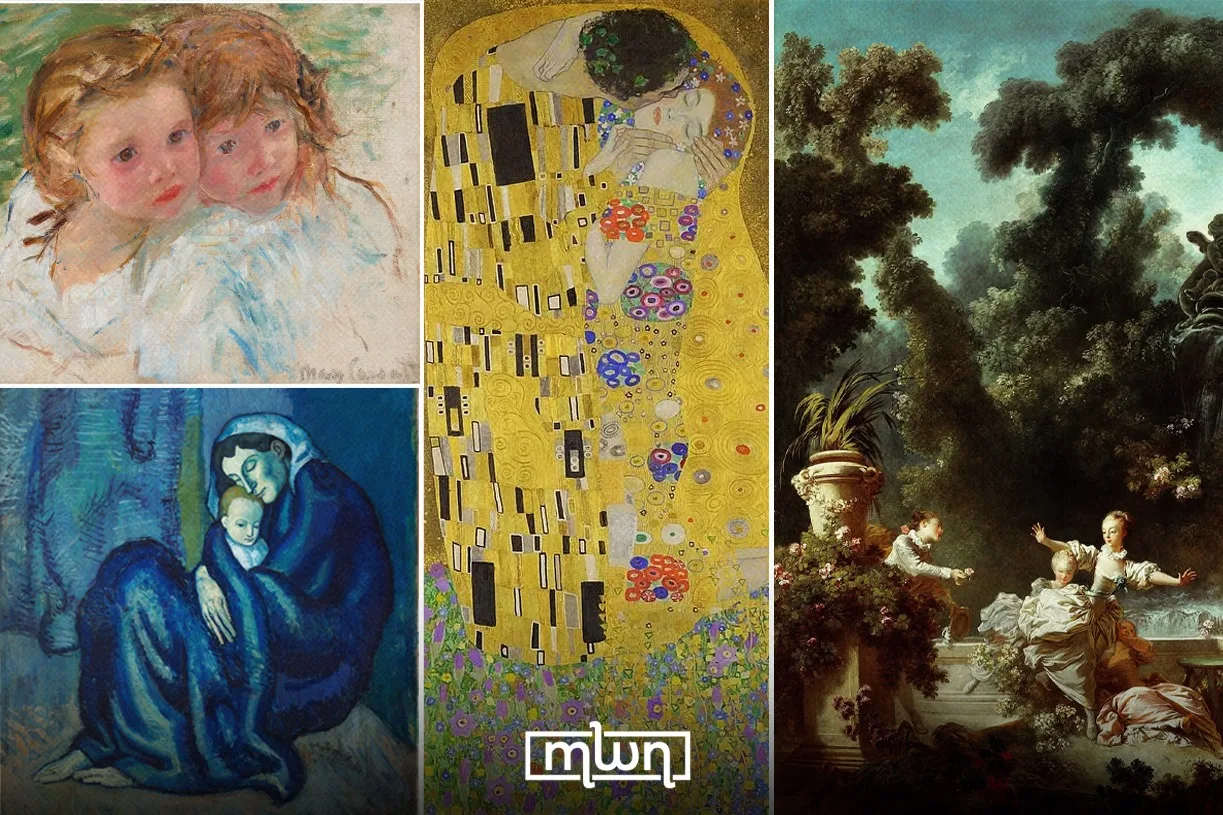
Romantic Love: Gustav Klimt, ‘The Kiss’
Klimt’s gold-leaf masterpiece shows a couple locked in an intimate embrace, their bodies blending into a mosaic of circular and rectangular patterns that symbolize unity, passion, and devotion.
The man’s robe is covered in bold rectangles, the woman’s in delicate circles and flowers, a visual code for masculine and feminine energy merging into one golden, kneeling form.
It is less a portrait of two people than a portrait of the feeling of being consumed by love.
Motherly Love: Pablo Picasso’s ‘Mother and Child’
Painted during Picasso’s “return to order” phase, this monumental image of a mother holding her child strips maternal love through simplified, powerful forms.
With heavy limbs, calm expressions, and restrained details, the painting conveys deep emotion, tenderness, and the quiet strength of the bond between mother and child.
Sibling Love: Mary Cassatt’s ‘Two Sisters’
Cassatt repeatedly explored the bond between sisters and young girls, capturing their relationships through moments of natural, unguarded intimacy.
Rather than staged portraits, her works show siblings leaning on one another, sharing private moments, and finding comfort in the quiet closeness of simply being together.
Friendship and Companionship: Jean Honoré Fragonard’s ‘The Progress of Love: The Pursuit’
While the series is largely centered on courtship and romance, several panels depict flirtation, conversation, and social exchanges among friends and companions in aristocratic garden settings.
Watteau’s scenes capture the delicate rituals of 18th-century social life, where romance often unfolded through gatherings, conversations, and shared moments in refined public spaces.
Why these paintings still resonate today
Love, when captured in paint, is rarely expressed through grand gestures alone. It appears in a hand placed gently over another, a father’s arms embracing a returning child, or two sisters sharing a quiet, knowing glance.
These paintings have endured because they portray emotions that remain unchanged across time.
While artistic styles, materials, and cultural traditions have evolved, the fundamental human experiences of maternal care, romantic devotion, and sibling connection continue to feel familiar and deeply recognizable.