

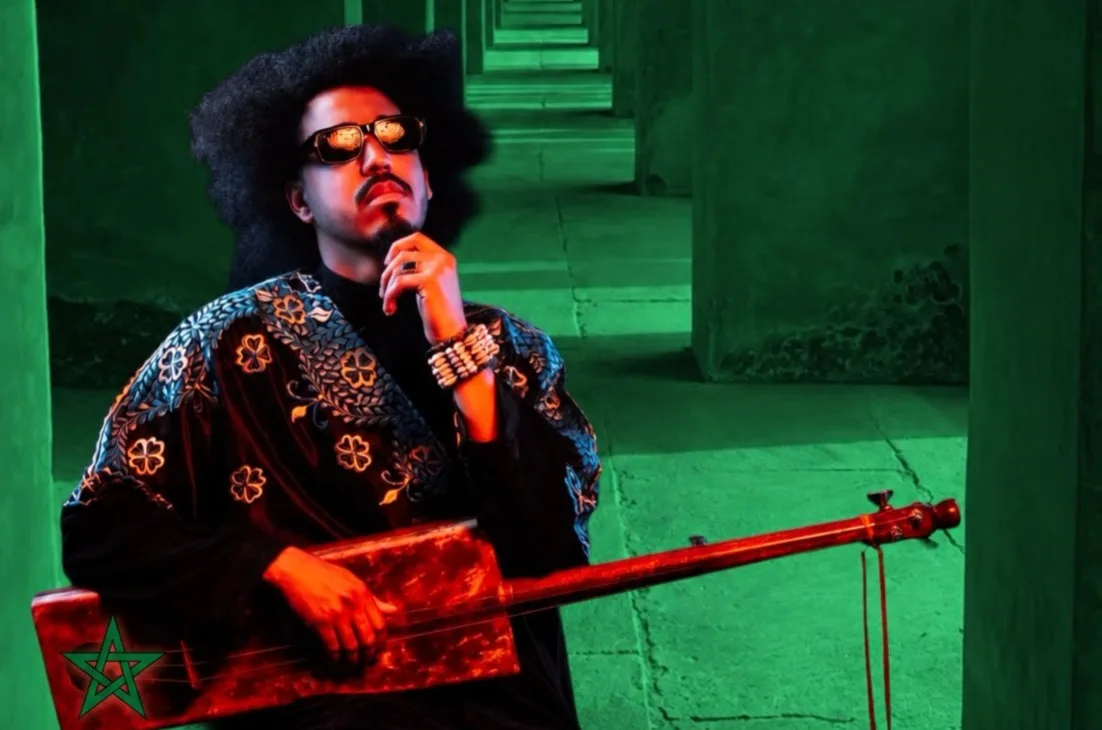
Fez — The sound of the sintir is about to travel from New York to Washington, Greensboro, and Richmond.
Moroccan musician Samir LanGus is preparing for a run of US performances beginning September 16, continuing his effort to place Gnawa music in conversation with jazz, electronic music, funk, and other contemporary sounds.
LanGus will perform at Nublu 151 in New York on September 16 before heading to Washington on September 17, Greensboro on September 18, and Richmond on September 20.
Carrying Gnawa to New York
LanGus grew up in Ait Melloul in southern Morocco and later established himself in New York.
His music centers the sintir and krakebs associated with Gnawa while creating space for other traditions to enter.
His latest album, “Gnawa Love,” was released in February and grew directly from the experience of living between Morocco and the United States.
On the album’s official page, LanGus explains that the record emerged from longing for home, healing, and connection. He describes Gnawa not simply as music, but as a spiritual language he carried with him after moving to the US.
The project brings together Moroccan and international collaborators, including renowned Gnawa musician Maalem Hamid El Kasri, jazz trumpeter Etienne Charles, and musicians working across samba, jazz, electronic music, and other forms.
LanGus is also a Grammy-nominated musician. The Recording Academy records his nomination for Best Dance Recording for “Bambro Koyo Ganda.”
Tradition that keeps moving
His upcoming New York performance at Nublu is billed as “Trance & Dance,” with DJ Omar Aena also appearing on the program. The venue confirms the September 16 show.
The following night, LanGus heads to Washington’s Takoma Station, where the venue lists a September 17 performance.
He will finish the run at Révéler in Richmond on September 20. The venue describes his music as maintaining Gnawa’s driving foundation while layering it with modern textures and international influences.
For LanGus, that movement does not require leaving tradition behind.
Instead, his career suggests another possibility for Moroccan heritage abroad: carry the roots intact, then allow them to encounter whatever sounds exist on the other side of the Atlantic.