Fez — Moroccan rugs are often discussed through the past. At Paris Design Week, Studio Sana Benzaitar is placing them firmly in a conversation about the future.
The Marrakech-based studio is participating in “Female Design Futures,” a Paris exhibition bringing together six women-led design practices from Morocco, Guatemala, South Africa, Australia, Singapore, and other international creative scenes.
White Label Project presents the exhibition from September 10 to 13 at CØR Studio in Paris, with work spanning furniture, textiles, ceramics, fragrance, and collectible objects.
For Studio Sana Benzaitar, the presentation brings contemporary Moroccan rug design into a wider discussion about how traditional techniques can survive without remaining visually fixed.
Women behind the rugs
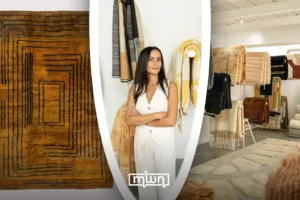
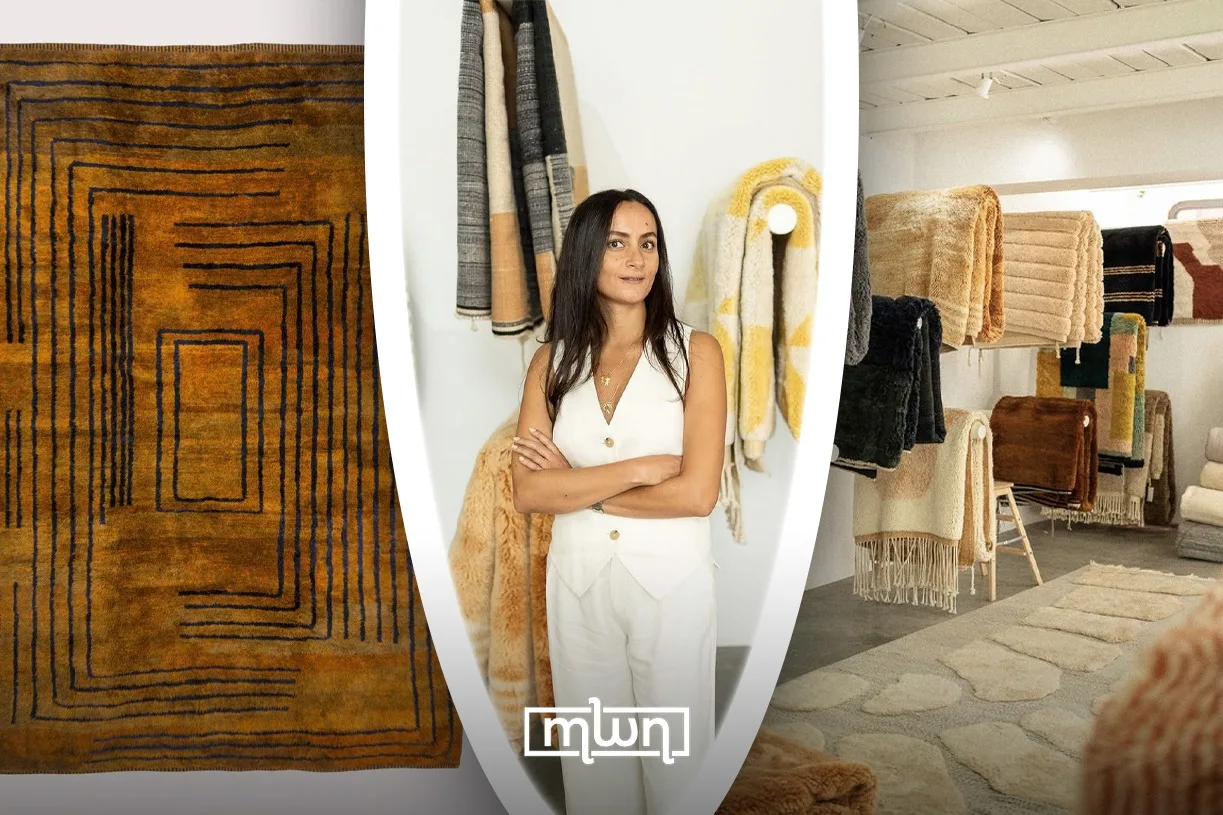
Studio Sana Benzaitar was founded in Marrakech by Sana Benzaitar and is run with her sister Raja.
Its workforce is entirely female, while its rugs are hand-knotted by families of women weavers across Morocco’s Middle Atlas Mountains.
White Label Project describes the studio’s Beni Mrirt rugs as handmade using locally sourced Moroccan wool and traditional vegetable dyes.
The designs themselves can be minimalist, abstract, or brightly colored, but the production remains tied to techniques passed between generations.
That relationship between inherited knowledge and contemporary aesthetics is precisely what “Female Design Futures” wants to examine.
The exhibition does not position traditional craft as the opposite of modern design.
Instead, it asks what happens when designers inherit a technique and decide they are free to change its visual language.
A different model for Moroccan craft
Studio Sana Benzaitar’s approach is also significant because Moroccan rug production has historically depended heavily on women’s labor while commercial visibility often belonged elsewhere.
The fair-trade organization Label STEP highlights the studio’s effort to support women weavers while preserving Mrirt’s ancestral weaving traditions.
The studio describes its practice as collaboration rather than simply production.
That matters in an international design market where Moroccan carpets are often separated from the people who made them.
At Paris Design Week, Studio Sana Benzaitar appears alongside other women designers similarly reworking inherited materials, stories, and techniques.
The result places Moroccan weaving within a broader global movement.
Traditional craft is no longer being asked only to prove that it can survive. Designers are increasingly asking what it can become next.