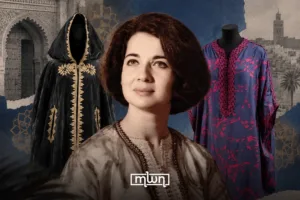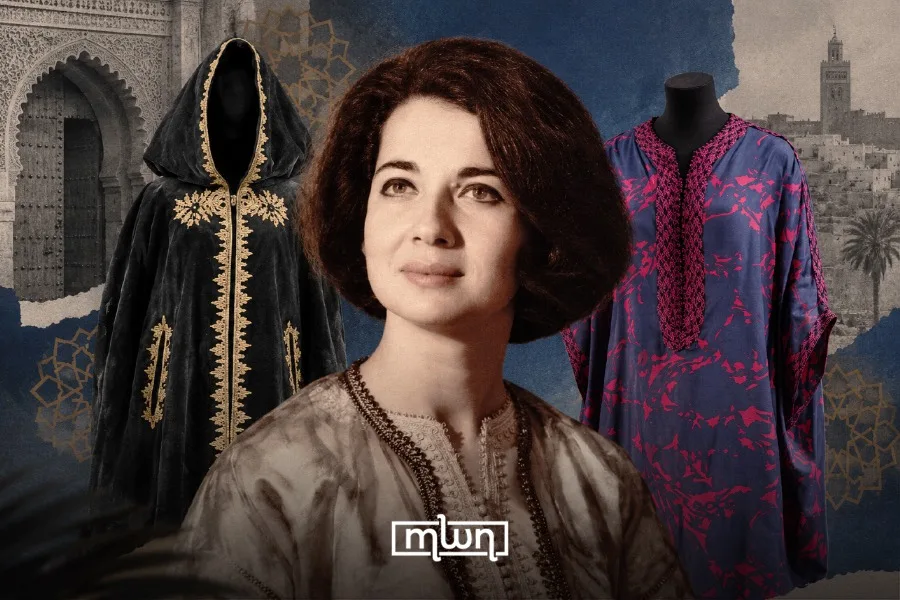
Rabat – When Morocco was entering a new era in the 1960s, Naïma Bennis was helping redefine what it meant to dress as a modern Moroccan woman.
Born in Casablanca in 1940, Bennis became one of the pioneering Moroccan fashion designers of the post-independence era.
In 1966, she opened her first boutique at the newly established Hilton Hotel in Rabat, building a fashion business that brought traditional Moroccan silhouettes into conversation with European couture.
Her work would later become part of the Victoria and Albert Museum’s research and collections on Moroccan fashion, placing her among the African designers whose work helped reshape the continent’s fashion history.
Designing for a changing Morocco
Bennis emerged at a time when Moroccan society was undergoing major social changes. Alongside designers including Zina Guessous, Zhor Sebti and Tamy Tazi, she helped introduce a new approach to Moroccan dress.
Rather than abandoning traditional clothing, these designers redesigned it.
The V&A describes how Morocco’s first generation of fashion designers combined lighter, more fluid European-style fabrics with traditional Moroccan craftsmanship.
They also reworked garments traditionally worn by men, including the jellaba, gandura and bernous, for women.
Bennis followed that approach closely.
Her designs brought Moroccan silhouettes together with French couture fabrics, creating lighter and more practical pieces suited to the changing lifestyles of women in Morocco’s cities.
Her atelier operated behind her boutique at the Hilton, where she worked with seamstresses and craftspeople to produce her designs.
Her business quickly expanded. She eventually operated several boutiques at the Hilton, selling clothing alongside jewellery and perfume, while attracting both local customers and the international clientele passing through Rabat.
From traditional dress to modern fashion
What made Bennis’ work significant was not simply that she designed caftans.
She helped change the way Moroccan traditional clothing could be worn.
Traditional forms were given lighter fabrics, simplified silhouettes and a more contemporary feel.
Moroccan craftsmanship remained central, but it was placed within a fashion language that also drew from European couture.
That balance became one of the defining characteristics of the generation of Moroccan designers that emerged during the 1960s.
The V&A notes that these designers were responding to the emancipation of Moroccan women, creating clothing that allowed them to remain connected to Moroccan identity while moving through increasingly active urban lives.
For Bennis, the boutique became more than a place to sell clothing. It became a space where Moroccan heritage could be presented as contemporary fashion.
A forgotten chapter of Moroccan fashion
Despite her influence, Bennis did not remain a household name.
She closed her business in 1987 after more than two decades in fashion and gradually disappeared from public view. By the time she died in 2008, much of her work had also disappeared.
That loss reflects a wider problem in documenting African fashion history.
The V&A has pointed out that very little research had been conducted on Morocco’s first generation of fashion designers, while many of their garments were disappearing and the people who had witnessed their careers were growing older.
The museum launched a research project specifically to document this largely overlooked period of Moroccan fashion.
Bennis became part of that recovery.
The rediscovery of Naïma Bennis
Researcher M. Angela Jansen played an important role in bringing Bennis’ work back into the fashion conversation.
Through research with Bennis’ family, the V&A was able to document her career and preserve surviving examples of her work.
Two of her creations became part of the museum’s collection, including a black velvet cape decorated with embroidery and metallic threads and a printed silk gandura featuring sfifa detailing.
The importance of those pieces extends beyond their design.
They offer physical evidence of a period when Moroccan designers were developing a distinctly modern fashion language, long before African fashion became a major subject of international fashion exhibitions.
The V&A later included Bennis among the pioneering African designers featured in its Africa Fashion exhibition, alongside names such as Chris Seydou, Kofi Ansah and Alphadi.
Why her legacy matters
Naïma Bennis did not invent the Moroccan caftan. Her contribution was different.
She helped push traditional Moroccan dress into a modern fashion context at a moment when the country was defining its identity after independence.
Her designs showed that Moroccan clothing could evolve without losing its cultural character.
Traditional silhouettes could become lighter. Historic techniques could meet contemporary fabrics. And garments rooted in Moroccan heritage could belong in an international fashion conversation.
Today, her surviving pieces serve as reminders of a generation of Moroccan women designers whose contributions were not always properly documented at the time.
Bennis died in 2008, but the work she left behind continues to tell a larger story: the story of a Morocco finding its modern identity, and of designers who turned that transformation into fashion.