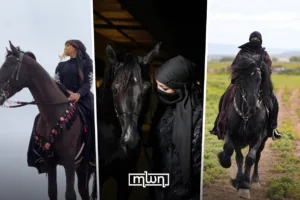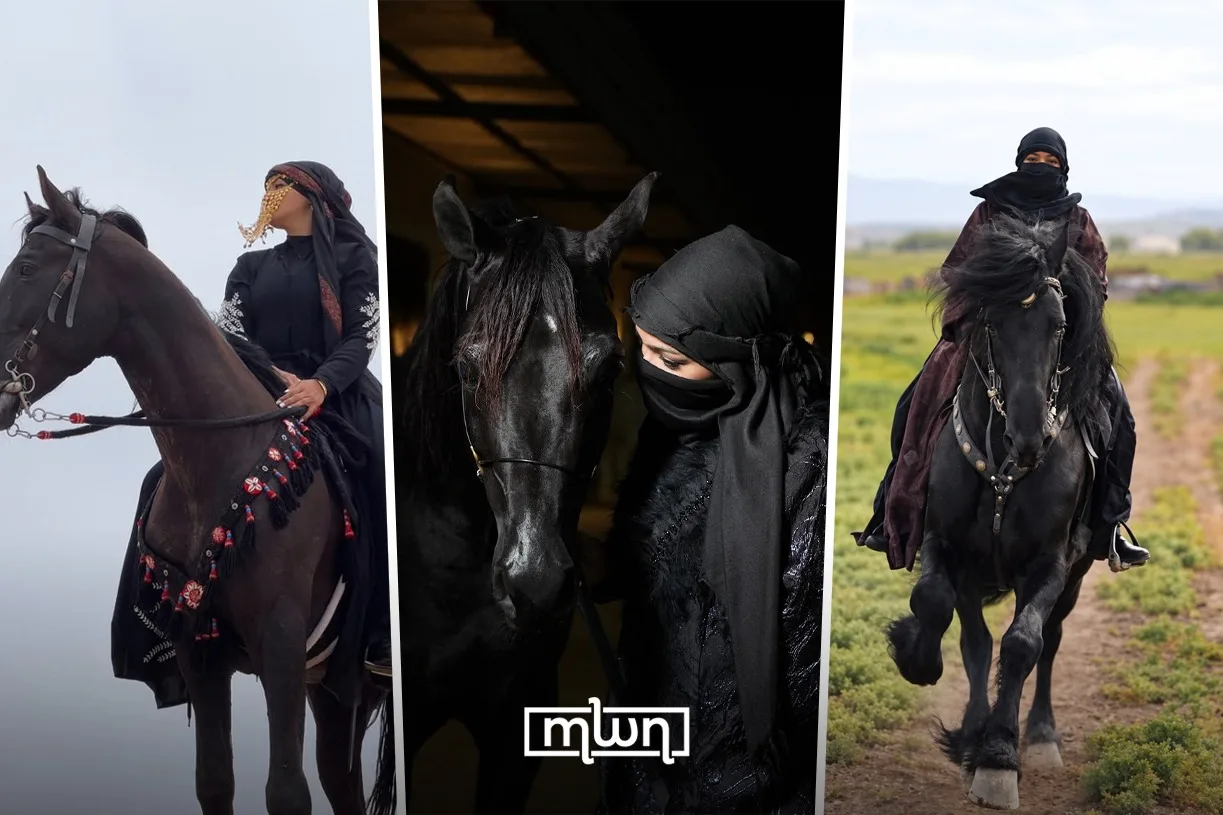
Rabat — Salma Tahri did not grow up knowing that horses were already part of her family story.
By the time she discovered that her grandfather had been involved in equestrian life, she had already developed her own relationship with horses. The revelation changed more than her understanding of where that passion might have come from. It also changed how she understood Morocco.
Tahri, known online as “La Cavalière Élégante,” was born and raised in France to Moroccan parents. Vogue Arabia recently profiled her journey through Arabian horsemanship, fashion, and Moroccan heritage.
Speaking to MWN Lifestyle magazine, Tahri went deeper into the parts of that story that cannot easily be captured in a photograph. She spoke about the grandfather she never knew, her changing relationship with Morocco, why she refuses to show her face online, and the woman who exists behind La Cavalière Élégante.
“I always felt more French than Moroccan every time I introduced myself,” she said. “I always mentioned that I am French, originally Moroccan, and never the other way around.”
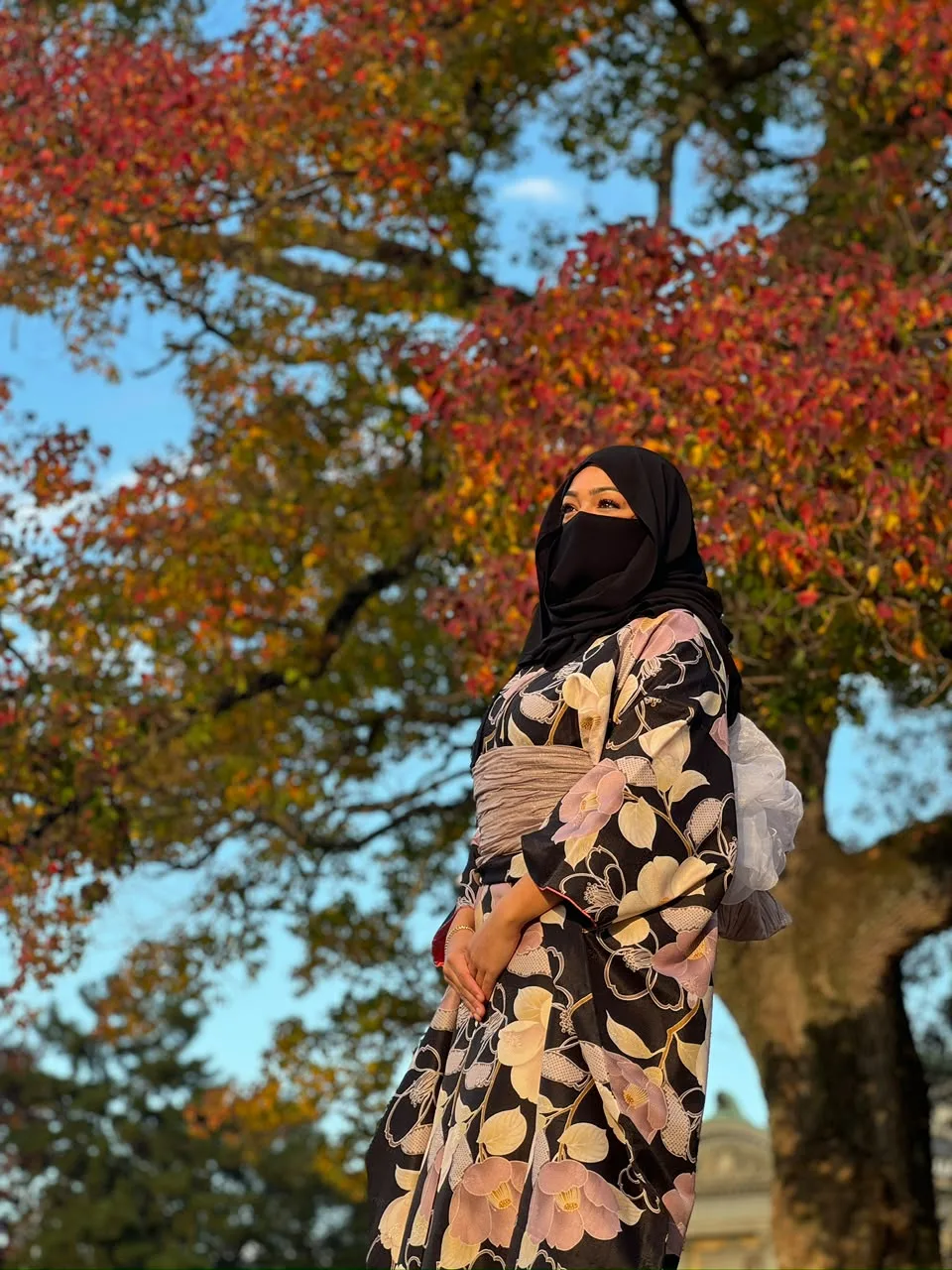
Morocco, for much of her childhood, was somewhere she visited during holidays. Horses eventually encouraged her to look beyond that relationship.
“I got really interested in my own culture and religion, and I started to learn about Morocco, the history of Morocco,” she said.
Following a grandfather she never knew
Learning about her grandfather brought that search for identity into her own family.
Tahri never had the chance to know him. He died while she was still a baby, but discovering his equestrian background created a connection that she now feels through riding. “I feel connected to him even though I never had a chance to speak to him,” she said.
Tahri described herself as the only person in her large family now following a similar equestrian path. “I feel really special due to this,” she said.
If she could have learned one thing directly from him, she knows what it would have been. “I wish he had been able to tell me how to do Tbourida, because I do not know, and now I am interested to learn.”
That interest has not yet become content for “La Cavalière Élégante.” Tahri said she has deliberately held back from representing Tbourida online until she understands it properly.
“I did not promote our culture yet because I want to take my time to learn and to know,” she said.
She also recognizes the risks involved in the equestrian tradition and does not want social media to rush a learning process that requires skill and preparation. “I want to take time for it and promote it perfectly.”
Why she keeps her face hidden
The visual identity of “La Cavalière Élégante” is difficult to separate from Tahri’s covered face.
She does not wear the niqab in everyday life, but chose it as part of the character she presents online. The decision grew partly from her experience as a Muslim woman raised in France.
“We face racism a lot, so I wanted to break the stereotype about Muslim women,” she said.
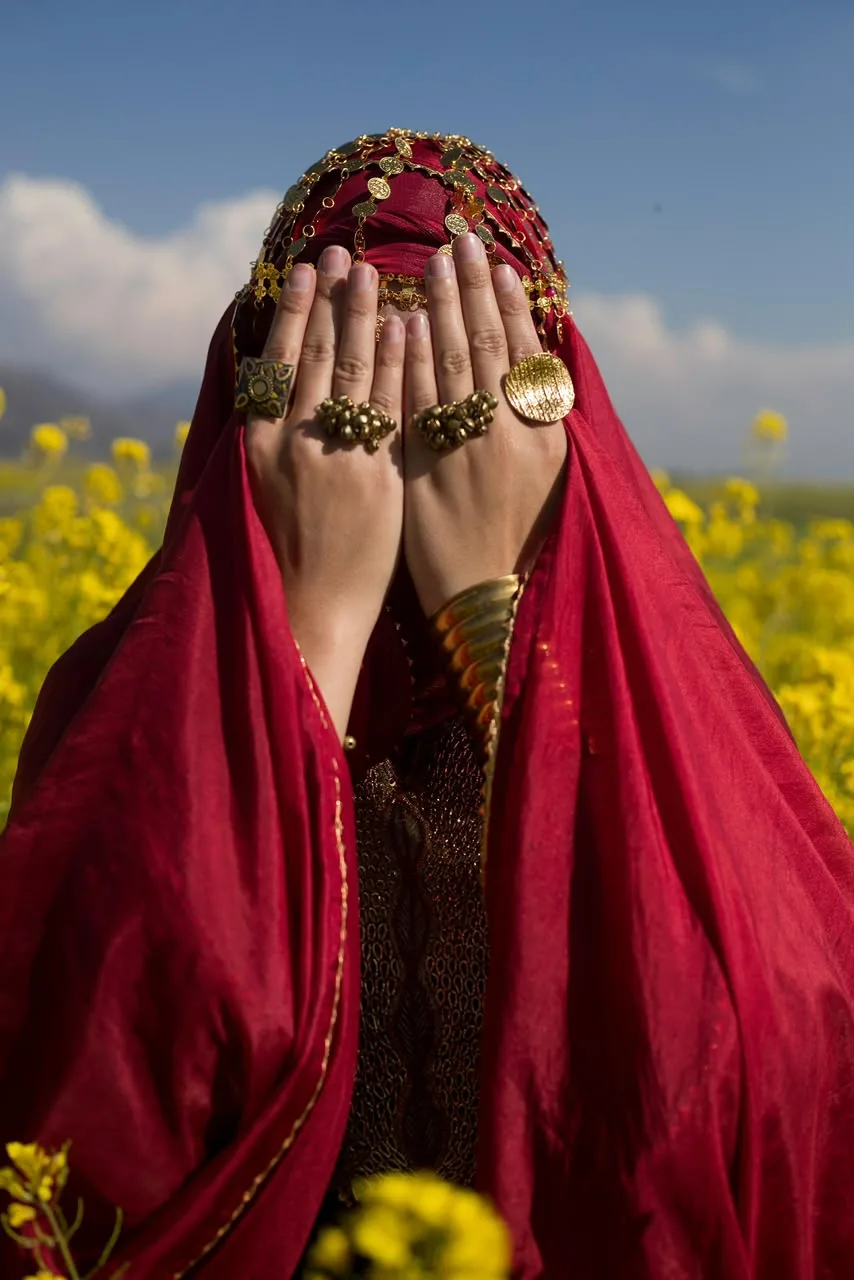
Tahri said she repeatedly encountered images of Muslim women that reduced their lives to the home and ignored their ambitions.
“They always have this stereotype about Muslim women, like they are just staying at home, cooking and cleaning, and not really following their dreams and passion.”
Horseback riding gave her a visual response to those assumptions. Her images place a modestly dressed woman in a setting defined by movement, physical control, and confidence.
Keeping her face private also protects the boundary between Tahri and the public character she created.
“I am not an influencer,” she said. “I am not here to show what I do in my daily life.”
For Tahri, social media does not need to provide constant access to the person behind the account.
“I think social media should be used to show your creativity, your talent, and not to show daily life,” she said.
She believes that approach has resonated with women beyond her own audience.
“When I started, I was really the only one on social media being with this style,” Tahri said. “Now I see so many women around the world doing almost like I do.”
A horse cannot be forced into the picture
Tahri’s photographs often suggest an immediate harmony between rider and horse. She is careful not to romanticize what happens before the camera starts shooting.
Her work takes her around the world, which means she frequently rides horses she has never worked with before.
“If I come across a horse that is extremely scared of everything, I will not ride this horse,” she said.
She watches how the animal responds to its surroundings, noises, and the clothing involved in the shoot. Even flowing material touching a horse’s back can create discomfort in an animal unfamiliar with it.
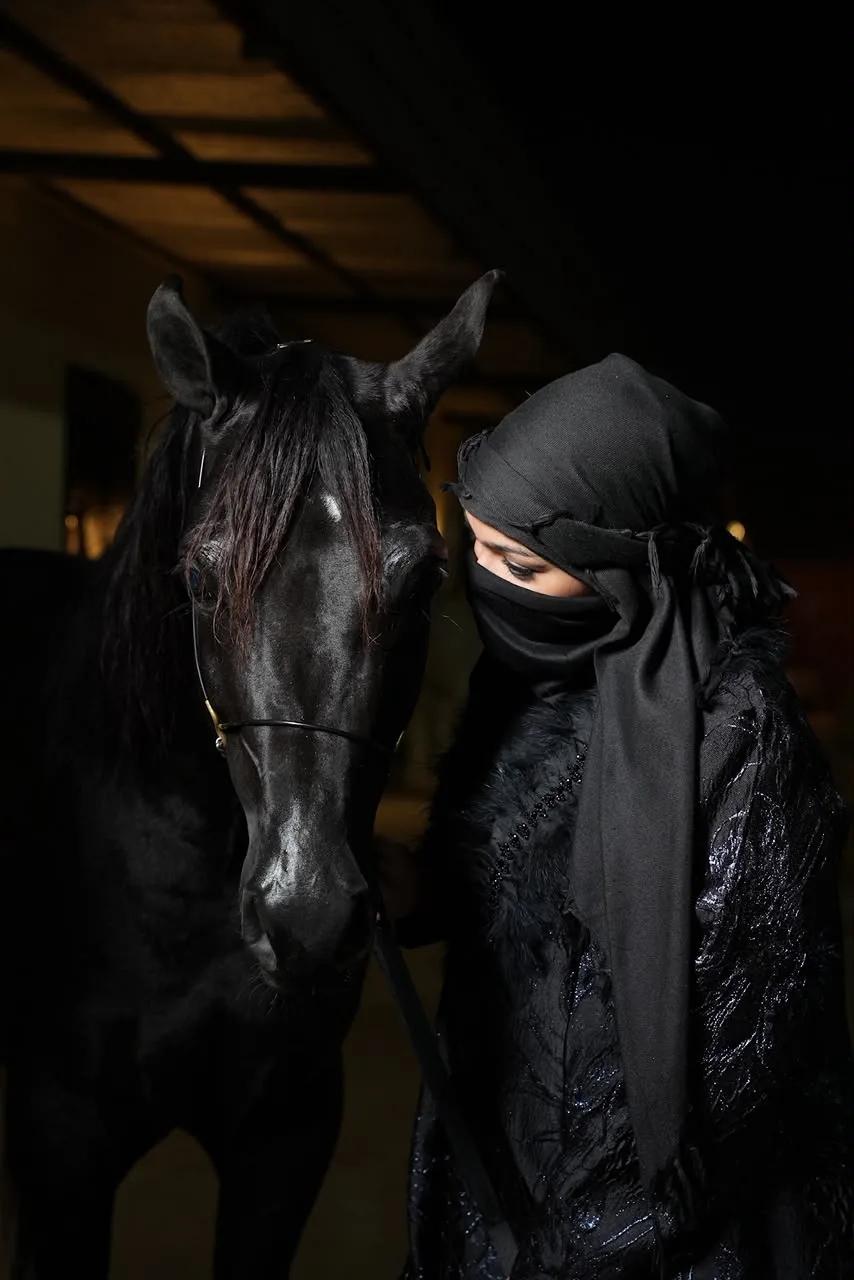
Tahri also rejects the idea that a rider can instantly form a deep bond with an unfamiliar horse.
“You do not build a connection straight away with a horse. This does not exist.”
She followed the point with a joke. “We are not like working with ‘Avatar.’”
For Tahri, real connection requires repeated contact. “A connection happens over time, when you spend a lot of time with the horse. The horse starts to know you. The horse is safe with you.”
What an experienced rider can do immediately is listen to what the animal is communicating.
“The horse can understand if you are a rider or not, and he can feel your energy,” she said.
“If you come and relax, the horse is going to be calm and relaxed. If you are stressed, the horse is going to sense it and he is going to be stressed as well.”
When riding becomes emotional release
Tahri saw another side of that relationship while teaching women to ride in Saudi Arabia in 2023.
She remembers one woman in particular who struggled with anxiety.
“Whenever she used to come, she used to feel like at least during the time when she was riding, the anxiety was getting less and less,” Tahri said.
Other riders described a similar emotional release after spending time on horseback.
“Whatever happens in their life or whatever stress, every time we finished the ride, they used to say that it gives them a sense of freedom.”
Tahri believes horses respond closely to the emotional state of riders. “Horse actually, it is like a sponge,” she said. “They absorb all your emotions.”
“If you are sad, they can feel it. If you are happy, they can feel it. If you are energetic, they can feel it,” she she explained
Those experiences expanded what riding meant to her. A horse could be part of a photograph or performance, but it could also give someone temporary distance from anxiety and everyday pressure.
Letting Moroccan artisans shape the work
Tahri is now carrying the same interest in heritage into design.
For her recent Vogue Arabia shoot, she collaborated with Alghorza, a cooperative working with deaf women, on a cape made using sfifa silk threads traditionally associated with Moroccan belts. The collaboration also featured in the magazine’s profile.
Tahri had the overall concept, but she said the women making the garment were given room to determine how individual sections should develop.
“They are the ones choosing the path,” she said. “I am not telling them how to do it. I give them the general idea, how I want it to be, the shape.”
The work was divided into separate pieces and shared among several women. “When they sew the silk, they choose the way,” she said. “Every woman has a piece. So they are part of this project.”
For Tahri, their contribution should not disappear behind her name as the designer. “They deserve to get this credit and they deserve for people to know that they are executing exactly my designs, and they are very good at this.”
She said she visits the women when she returns to Morocco and intends to continue bringing projects to the cooperative.
“Every time I have an opportunity for any kind of project where I have to make a costume, I will always go to Alghorza,” she said.
Her fashion projects are evolving as well.
Tahri founded “Filly Paris,” with “filly” referring to a young female horse. She said the Paris part of the name reflects the region where she grew up, although the availability of the original domain also helped determine the final name.
Her attention is now shifting toward another project called “Riad Street,” inspired by the traditional Moroccan riad.
“I use recycled saddles and I make them a piece of art,” she said.
The concept gives used saddles another life while moving her design work closer to the Moroccan identity she increasingly wants at its center.
Salma is not La Cavalière Élégante
The strongest character Tahri has designed may ultimately be La Cavalière herself.
She draws a clear boundary between the person who exists away from the camera and the woman audiences see confidently riding through her videos.
“I think Salma and La Cavalière Élégante are two different personas,” she said. “La Cavalière Élégante is a very strong woman, very confident, brave, with a lot of charisma, and not really caring about what people think about her.”
Her description of Salma sounds almost like the other side of that image.
“Salma is really hypersensitive, very empathetic.”
Tahri does not see the difference as a contradiction. Keeping the two separate helps her preserve a private life while giving herself a character capable of handling public attention.
“To be able to live my life and to do my work, it is important to have two different personalities,” she said, “When I have to be La Cavalière, it is someone else doing the job.”
That distinction becomes most tangible before public performances. “Sometimes when I am afraid, or I have to be in a spotlight where there are so many people and I have to do a show, I do feel very scared,” she said. “Salma is very scared.”
The change arrives when she becomes the character and gets on the horse.
“La Cavalière Élégante is the one giving me a lot of strength, courage, and bravery to be able to continue and to do the work without paying attention to all the audience and what could happen if it goes wrong.”
Tahri’s story is therefore not simply one of a rider rediscovering an inherited relationship with horses. It is also about deciding how heritage should be learned before it is displayed, how artisans should participate in the work that bears her name, and how a public image can create strength without consuming the private person behind it.
La Cavalière Élégante may appear fully formed on screen. Salma Tahri remains more interested in learning, particularly about the Morocco she once knew mainly through holidays and now increasingly understands as part of her own story.