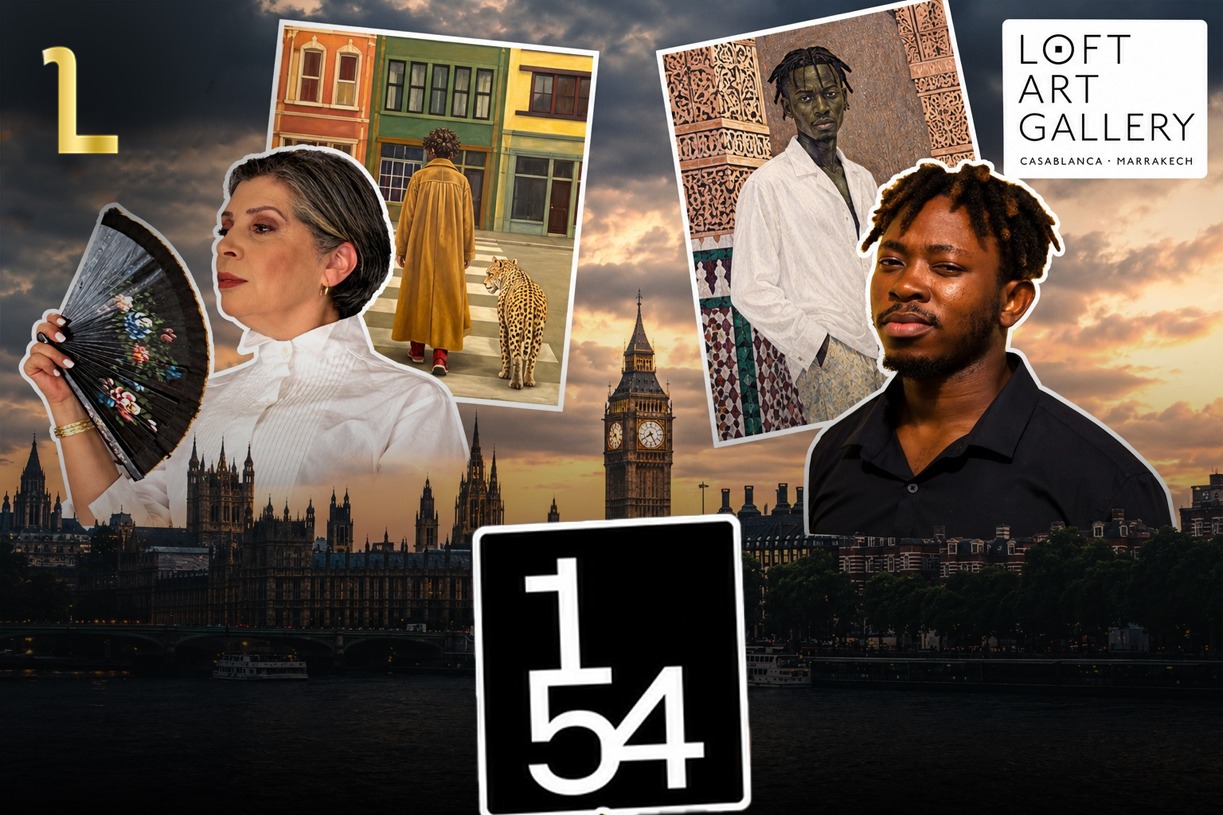
Fez — Morocco’s Loft Art Gallery is bringing Moroccan artist Amina Rezki and Ghanaian artist James Mishio together at London’s “1-54 Contemporary African Art Fair,” where memory takes two very different forms.
The Casablanca- and Marrakech-based gallery returns to the London fair from October 15 to 18 at Somerset House with a duo presentation at Booth W02. The pairing brings Rezki’s psychologically charged figures into conversation with new works Mishio developed during a 2026 residency in Marrakech.
Although their visual languages differ, both artists use the human figure to ask what people carry from the places, relationships, and histories that shape them.
For Loft Art Gallery co-founder Yasmine Berrada, that connection was immediate. “I immediately felt that there could be a very strong dialogue between their two worlds,” Berrada told Lifestyle magazine.
“Their practices are very different, but they come together in the way they address identity, memory and transmission,” she said.
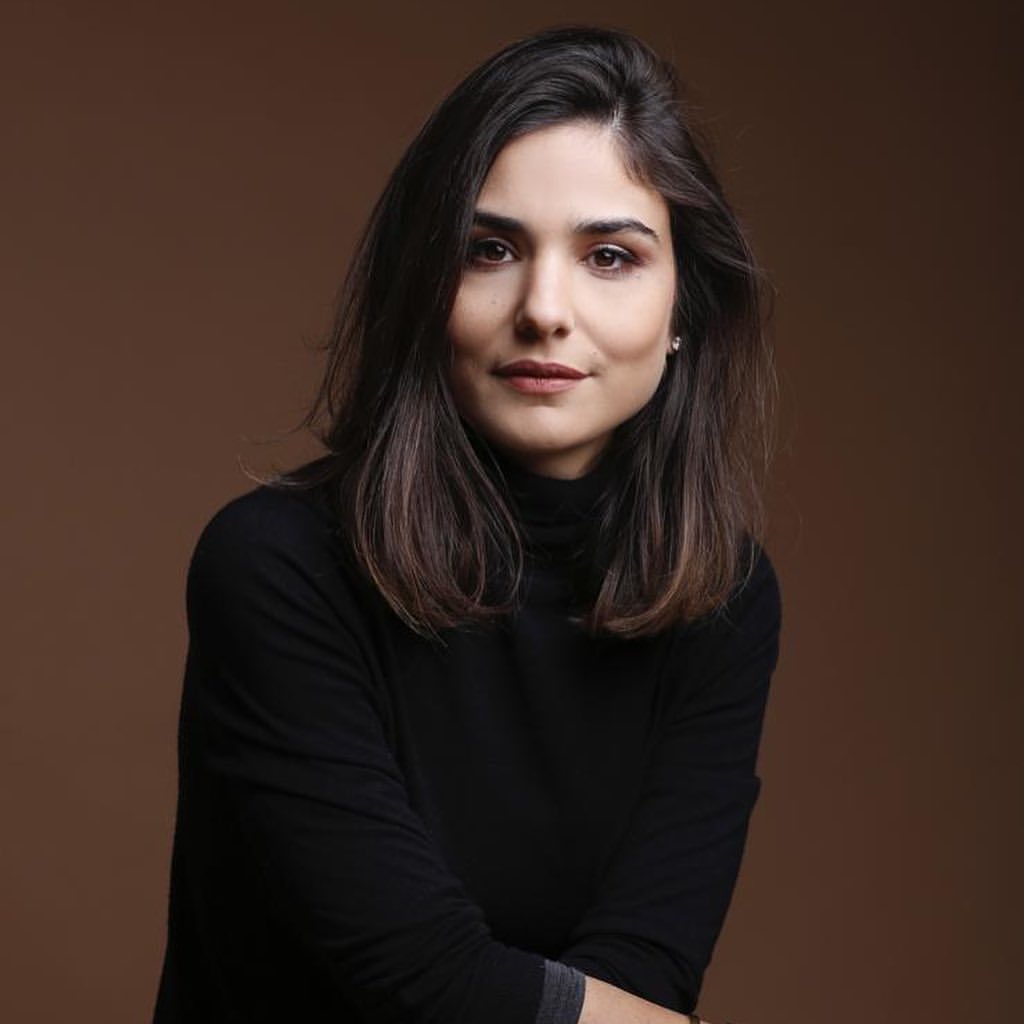
Berrada added that the pairing was not built around forcing the artists into a shared visual language, but around creating space for their differences to speak to one another.
“Together, their works create a conversation that goes beyond each of their individual practices,” she said.
That curatorial idea runs through the presentation.
For Rezki, memory often appears through childhood, domestic space, and recurring Moroccan details such as tilework. For Mishio, memory is carried through second-hand fabrics, architecture, color, and the sensory experience of Marrakech.
Amina Rezki leaves the face unfinished
Rezki, who was born in Tangier and is based in Brussels, has increasingly turned some of her figures away from the viewer.
She told Lifestyle magazine that the decision allows a painting to resist giving the audience an immediate answer.
“I wanted viewers of my paintings not to be drawn simply to a face or an already defined expression,” Rezki said. “By depicting certain figures from behind, I give the viewer the possibility of imagining their face, their expression, their emotion.”
Rather than defining the person on the canvas, she wants the viewer to complete part of the encounter.
“The figure then becomes less a specific person than a presence onto which each viewer can project their own imagination,” she explained.
That openness also shapes the way Rezki handles autobiography.
Her paintings often begin with memories and emotions, but she deliberately stops short of explaining everything.
“Painting my memories and emotions is also a form of revealing myself,” she told Lifestyle magazine. “But I only want to offer a few clues, leaving certain things in the shadows.”
She compared some paintings to rebuses, with objects and details acting as signs the viewer can follow without ever reaching one definitive interpretation.
“I am not looking to offer a single reading,” she said. “Each person can interpret the signs, objects and situations through their own story and lived experience.”
Morocco appears one tile at a time
Rezki grew up between Moroccan and Belgian cultural worlds, but she said she does not consciously divide them when she paints.
“I live between two cultures, and both of these cultures enrich and nourish me,” she said. “So I simply paint what I am.”
That can mean a Brussels interior existing beside Moroccan tiles in the same visual universe.
For Rezki, the tiles have become particularly persistent.
“They represent an anchor, a connection to my native land,” she told Lifestyle magazine. “They connect the figures to the ground and allow them, symbolically, to stand.”
She described the motif as “almost an obsession,” with individual lines and tiles linking her back to memory and childhood.
Sometimes they appear worn by time. Elsewhere they become a surface where children play.
“Between Brussels and Morocco, between reality and memory, my paintings become spaces in which these two worlds can coexist,” Rezki said.
Marrakech changed how James Mishio saw pattern
Mishio arrived in Marrakech from Accra for a residency with Loft Art Gallery, expecting a new working environment. Instead, he said the city altered the way he thought about composition itself.
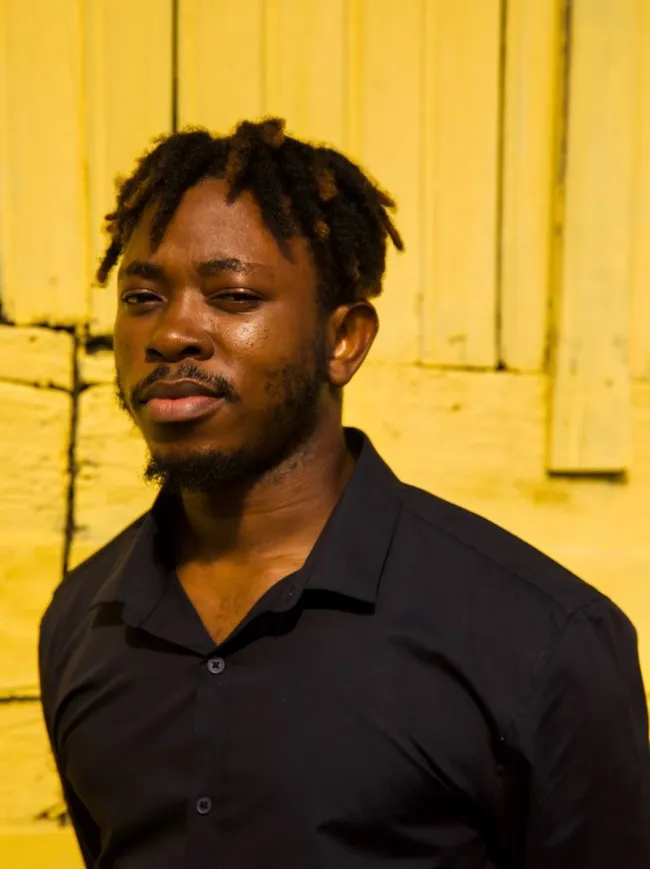
His first visit to the medina became one of the defining encounters. “Walking through its narrow streets, I was struck by how pattern lives in even the littlest elements,” Mishio told Lifestyle magazine, pointing to fabrics, tiles, carved doors, and woven baskets. “Every surface carried a rhythm, a repetition, a story passed down through craft.”
That observation moved directly into his work. “I began to let pattern and texture carry as much weight as the larger forms,” he said.
Mishio also watched how people moved through the city, spoke with shopkeepers, public transport drivers, and police officers, and paid attention to clothing and everyday routines.
The city’s light and architecture stayed with him too.
“Marrakech is modernizing while holding firmly to its culture through its architecture,” he said. “That commitment to preservation is something I wish to carry with me.”
A residency built around freedom
Berrada said Loft deliberately avoided prescribing what Mishio should produce during his time in Marrakech.
“For me, a residency must above all remain a space of freedom,” she told Lifestyle magazine.
“We gave him the time and the conditions to experiment without imposing a specific outcome on him,” she said.
That openness ended up reshaping the gallery’s own plans.
“Some of the works actually surprised us and naturally changed the way we envisioned London and his exhibition in Marrakech,” Berrada said.
Second-hand clothes carry somebody else’s history
Fabric was already central to Mishio before Morocco.
He traces that relationship back to childhood in Ghana, where clothing moved through his family from one person to another.
“My father would pass his outgrown clothes to my elder brother, and then to me,” he recalled. “It was like a treasure.”
That experience gave used clothing an emotional life beyond its material value.
When choosing fabric today, Mishio looks not only at color and pattern but at evidence that somebody has already lived with it.
“A faded patch, a seam that has been repaired,” he said. “These marks tell me the fabric has been lived in, and that someone’s story is already held within it.”
In Marrakech, he sourced pieces from second-hand markets and incorporated them into new works.
“The works made with them became a way of returning those materials to the community in a new form, as a gift,” he said.
The city also pushed him toward heavier use of pastel, whose softer surface felt connected to the textures and atmosphere he encountered there.
When a city reflects something back
Mishio’s earlier series “La mémoire de l’eau” used water and reflection to examine how perception shifts.
In Marrakech, that same question moved away from literal reflection and into architecture and space.
“Rather than observing reflections, I found that the city was reflecting something back onto me,” Mishio told Lifestyle magazine.
He described spaces as “muted voices” whose stories remain embedded in walls, atmosphere, light, and communities.
“You have to enter, linger and interact with them to hear what they carry,” he said.
Two new paintings, “Silent Stare I” and “Silent Stare II,” capture that change most directly.
Both depict young men against tilework influenced by Marrakech, but the architecture refuses to remain stable.
In one painting, Mishio said, the mosaic “bends and folds like cloth.” In the other, star shapes drift as though distorted by heat or memory.
“That is what I was reaching for,” he explained, “a figure adjusting within a space that is itself shifting.”
Beyond the fair
For Berrada, the London presentation is only one point in a longer process.
“Supporting an artist is never simply about an art fair or sales,” she told MWN Lifestyle magazine.
“The real challenge is to build a long-term trajectory: to develop their work, create the right connections, and gradually establish their presence in collections and institutions.”
Mishio’s London presentation will be followed by a solo exhibition at Loft Art Gallery Marrakech throughout November, expanding the body of work that emerged from his residency.
At 1-54, however, the encounter remains deliberately concentrated: two artists, two relationships with memory, and two ways of showing how a place can continue living inside an image long after the moment itself has passed.