Fez — Asilah is once again filling with artists, writers, poets, diplomats, and thinkers as the northern Moroccan city hosts the autumn session of its 47th International Cultural Moussem.
The latest chapter opened on October 2 and runs through October 18, bringing more than 400 participants from the worlds of culture, diplomacy, media, literature, and the arts.
This year’s theme, “Asilah… Land of Encounters and Dialogue,” captures what has made the event unusual for almost half a century.
The Moussem is not simply a festival staged inside a city. In many ways, the city itself became part of the artwork.
The walls are part of the story
The International Cultural Moussem of Asilah began in 1978, co-founded by Moroccan artist Mohamed Melehi and Mohamed Benaïssa, with Toni Maraini and the Al Muhit Cultural Association also closely involved in its beginnings.
At the time, Asilah’s medina was deteriorating.
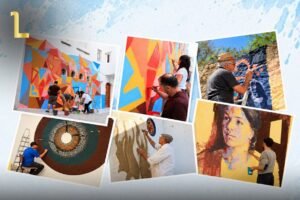
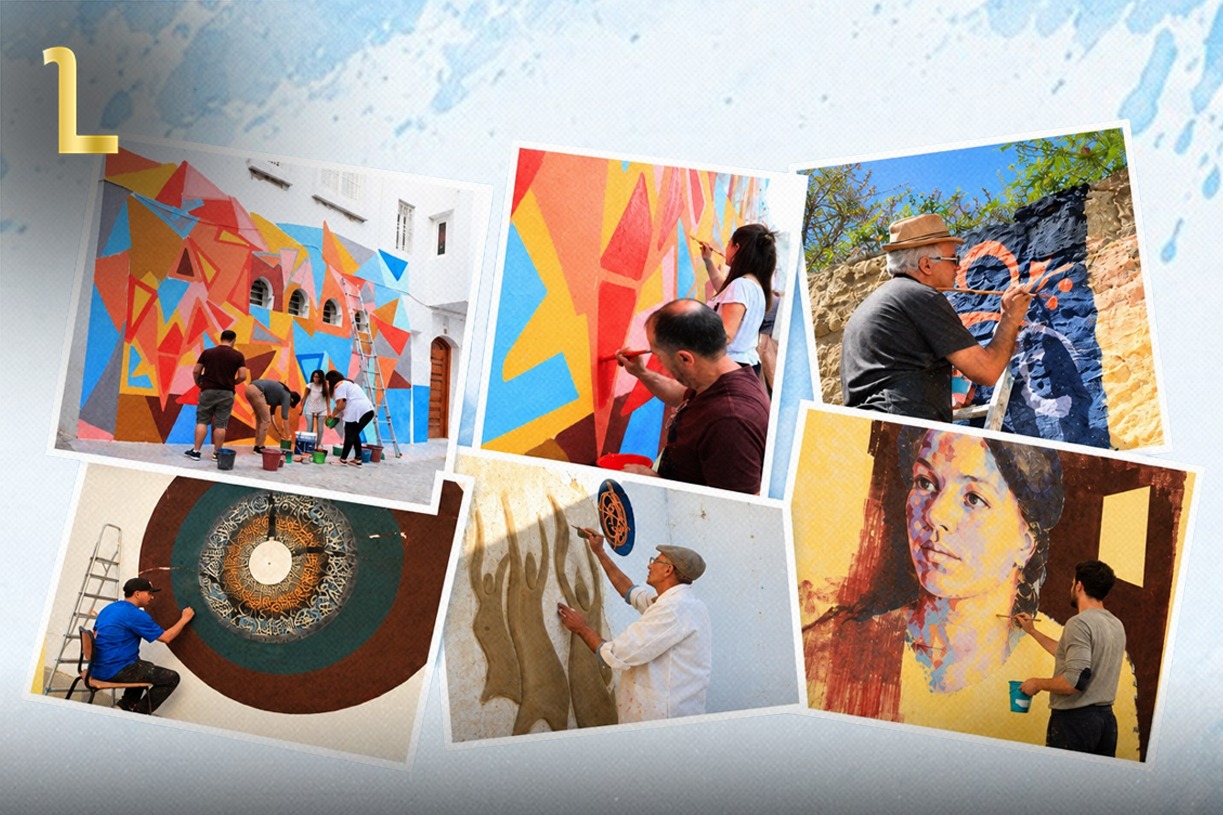
Rather than placing art behind gallery doors, the organizers invited artists to work directly on the city’s walls.
The Museum of Modern Art’s research platform documents how murals, workshops, exhibitions, music, and public participation became tied to a wider effort to improve the city and connect art with everyday life.
Residents joined artists. Walls were whitewashed. Streets became exhibition spaces.
That idea eventually became one of Asilah’s signatures.
The tradition continues today, with murals regularly transforming the white walls of the medina and giving visitors an open-air gallery that changes over time.
During the summer part of the 2026 Moussem, 15 artists from Morocco, Syria, Spain, and Belgium participated in its mural-painting workshop.
More than murals
The autumn session moves from the walls into bigger conversations.
It began with a two-day conference on Africa’s energy and water challenges, examining how climate pressures and strategic infrastructure are reshaping geopolitics across the continent.
The official program also includes discussions on the Arab world toward 2030, bringing together questions of political change, regional transformation, and future challenges.
On October 5 and 6, the Moussem will honor art historian and critic Toni Maraini, whose relationship with Moroccan modern art stretches back to the Casablanca Art School and the earliest years of Asilah’s cultural experiment.
Moroccan writers and artists also remain central.
An October 13 “Creativity Tent” will focus on writer M’barek Rabi, while October 15 brings a tribute to Tunisian author Hassouna Mosbahi.
Poetry takes over toward the end of the program.
The fourth poetry gathering is scheduled for October 16, followed one day later by the eighth Buland Al-Haidari Prize for Young Arab Poets.
Exhibitions, book signings, music, printmaking, painting, lithography, and creative workshops for children complete the program.
That mixture is precisely what makes Asilah’s Moussem difficult to reduce to one category.
It is part art festival, part literary gathering, part intellectual forum, and part long-running experiment in what happens when culture becomes embedded in the physical identity of a city.
Nearly 50 years after artists first began painting its walls, Asilah still offers the same proposition: culture does not have to sit inside a museum. Sometimes, an entire city can become the canvas.