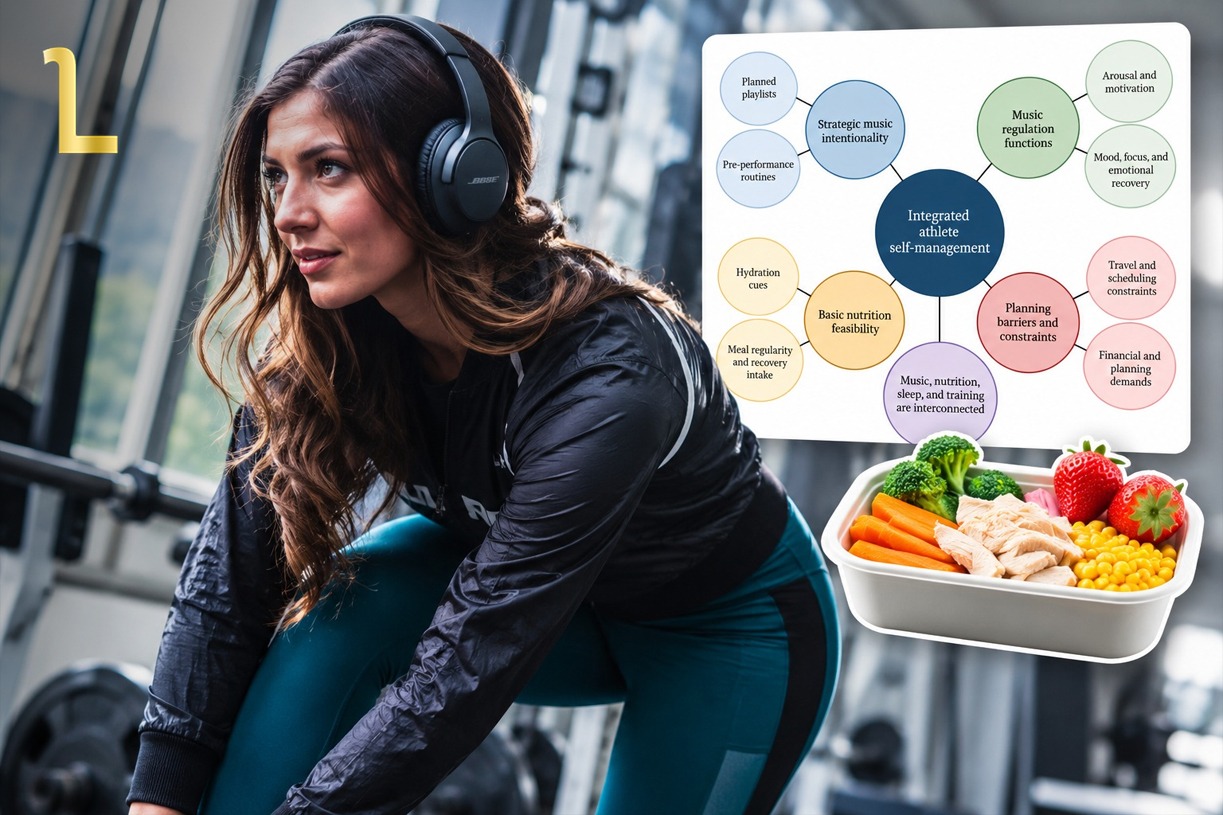
Fez — The playlist before training and the meals surrounding it may deserve attention alongside the workout itself.
Researchers Fangkun Li and Weiqiang Zhang examined music use, nutrition routines and wellbeing among 350 competitive athletes in Changsha, China. Published in “Frontiers in Nutrition” on October 5, the study also included interviews with 30 participants.
Athletes reporting more deliberate music use and consistent nutrition strategies also reported better psychological functioning.
Interviews described music as a tool for managing energy, concentration and emotional recovery. Participants considered regular meals and hydration more manageable than detailed food planning, which could be disrupted by travel, schedules and resources.
More than background music
Earlier research has also explored what music contributes to exercise.
A review published in “Psychological Bulletin” in 2020 analysed 139 studies involving 3,599 participants. It found beneficial effects on feelings during exercise, physical performance and perceived exertion.
The size of those effects varied across settings. Music’s performance benefits were greater in exercise than competitive sport, while faster music produced larger effects than slower selections.
That earlier evidence helps explain scientific interest in the familiar training playlist. It does not establish that a particular genre, song or listening habit will work equally well for everyone.
A connection, not a prescription
The new Chinese study was observational. It cannot show that music or nutrition routines caused better wellbeing, and it did not test a prescribed playlist or diet.
Its participants were competitive athletes, so the findings cannot automatically be extended to casual gym users or Moroccan sporting communities.
For coaches and fitness enthusiasts, a useful question is how routines fit the person practising them. A carefully designed schedule has limited practical value if work, travel or access to food makes it difficult to maintain.
The research invites closer attention to the everyday experience surrounding exercise. Understanding those routines locally would help distinguish appealing wellness advice from habits people can realistically sustain.