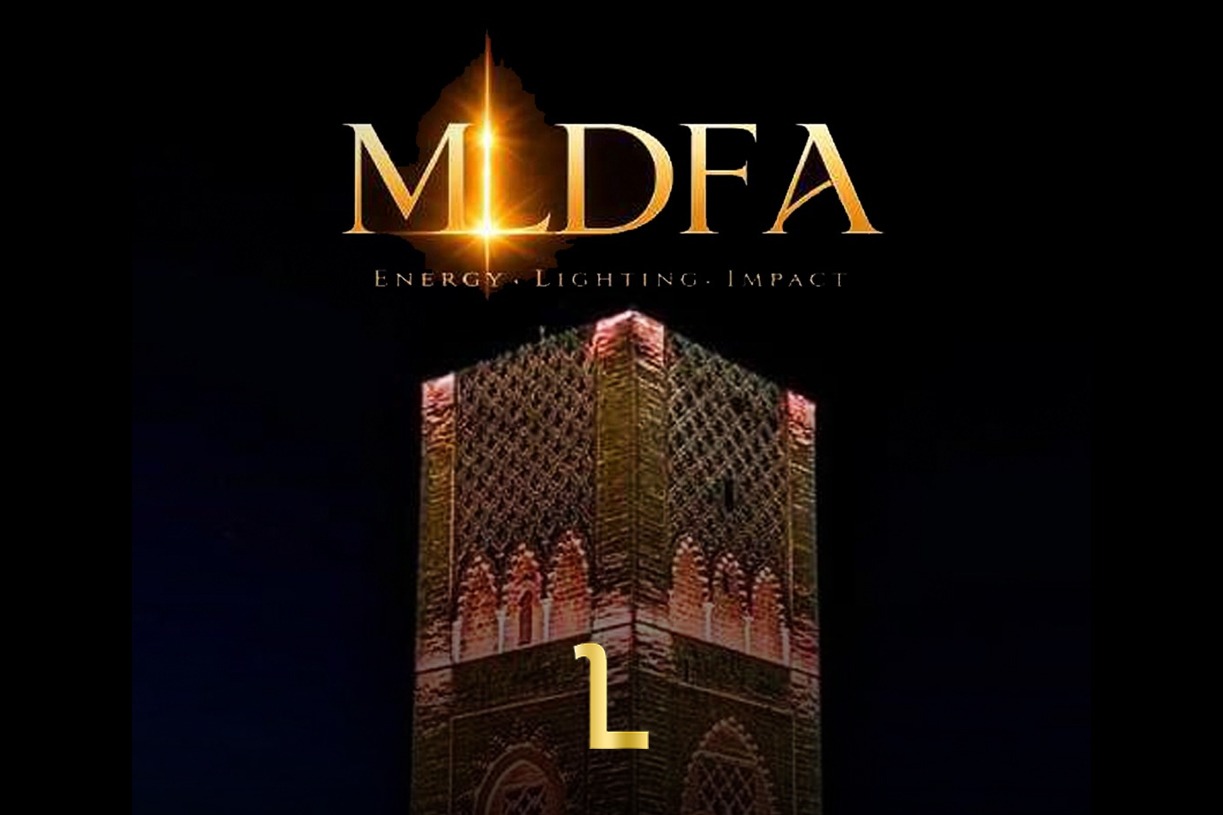
Fez — Rabat will host the fourth edition of the “Moroccan Lighting Days for Africa” from June 9 to 11, 2027, bringing together African and international professionals working across lighting, smart cities, energy, and sustainable infrastructure.
The upcoming edition will mark the first time the event takes place in the Moroccan capital, positioning Rabat as a meeting point for public decision-makers, manufacturers, architects, lighting designers, local authorities, engineering firms, startups, and researchers.
Organizers are presenting the 2027 edition under the theme “Africa in Light: A Paradigm for the World of Lighting,” with a focus on using lighting as a tool for sustainable urban transformation across the continent.
The event is expected to run over two and a half days, combining expert discussions, an exhibition space, professional networking, and meetings aimed at developing partnerships and future projects.
AI, public spaces, and the future of urban lighting
The preliminary program is structured around four major expert sessions.
The first, “Smart Cities & AI,” will examine how artificial intelligence is already changing public lighting. Topics will include generative AI, predictive maintenance, digital twins, network supervision, and cybersecurity.
A second session, “Lighting & Quality of Life,” will explore how lighting can affect health, safety, tourism, public spaces, heritage, and the nighttime attractiveness of cities.
The program gives particular attention to the illumination of medinas, linking lighting design with the protection and presentation of historic urban environments.
Another session, “Lighting Made in Africa,” will focus on strengthening local manufacturing and African expertise. Discussions are expected to address equipment standards, industrialization, professional training, startups, South-South cooperation, and knowledge transfer.
The final session, “Future of Lighting,” will examine the economic and institutional structures needed to finance sustainable lighting projects.
Public-private partnerships, energy-performance contracts, maintenance models, energy efficiency, and environmental impact are among the subjects included in the preliminary agenda.
Building African expertise and partnerships
The organizers have identified three main commitments for the fourth edition: supporting local and sustainable solutions, building strategic international alliances, and showcasing African expertise.
The event aims to give greater visibility to technologies and approaches designed for African contexts rather than relying exclusively on imported models.
Organizers argue that locally developed solutions can help reduce costs, strengthen regional industries, and create technologies better suited to the needs of African cities.
The international dimension will remain central, with the event designed to connect African authorities and project owners with manufacturers, designers, technical experts, and potential partners from outside the continent.
“Our ambition is clear: to make light a vector of transformation for territories, bringing all stakeholders together around a common objective: lighting differently, sustainably, together,” said MLDFA producer Amine Serraj.
Rabat takes the spotlight
The 2027 edition will also use Rabat itself as part of the conversation.
The opening keynote is scheduled around the theme “Rabat, City of Light: A Moroccan Vision Serving African Cities,” highlighting the capital as a case study for discussions about urban lighting and development.
Alongside the conference sessions, the program includes a “Lighting Speakers Reception,” an exhibition area, an evening reception, a Friday lunch, and a closing gathering intended to encourage direct exchanges between participants.
Previous editions have brought together professionals from lighting design, infrastructure, architecture, sustainability, and urban development, while the 2027 gathering aims to expand that network further.
How lighting intersects with artificial intelligence, heritage, energy, manufacturing, and quality of life forms the core of the Rabat edition, signaling a major shift away from simple illumination.
Discussions across the continent now go far beyond lighting streets and buildings, tackling the simultaneous development of technology, energy use, public space, and local industry to meet the needs of fast-growing African cities.