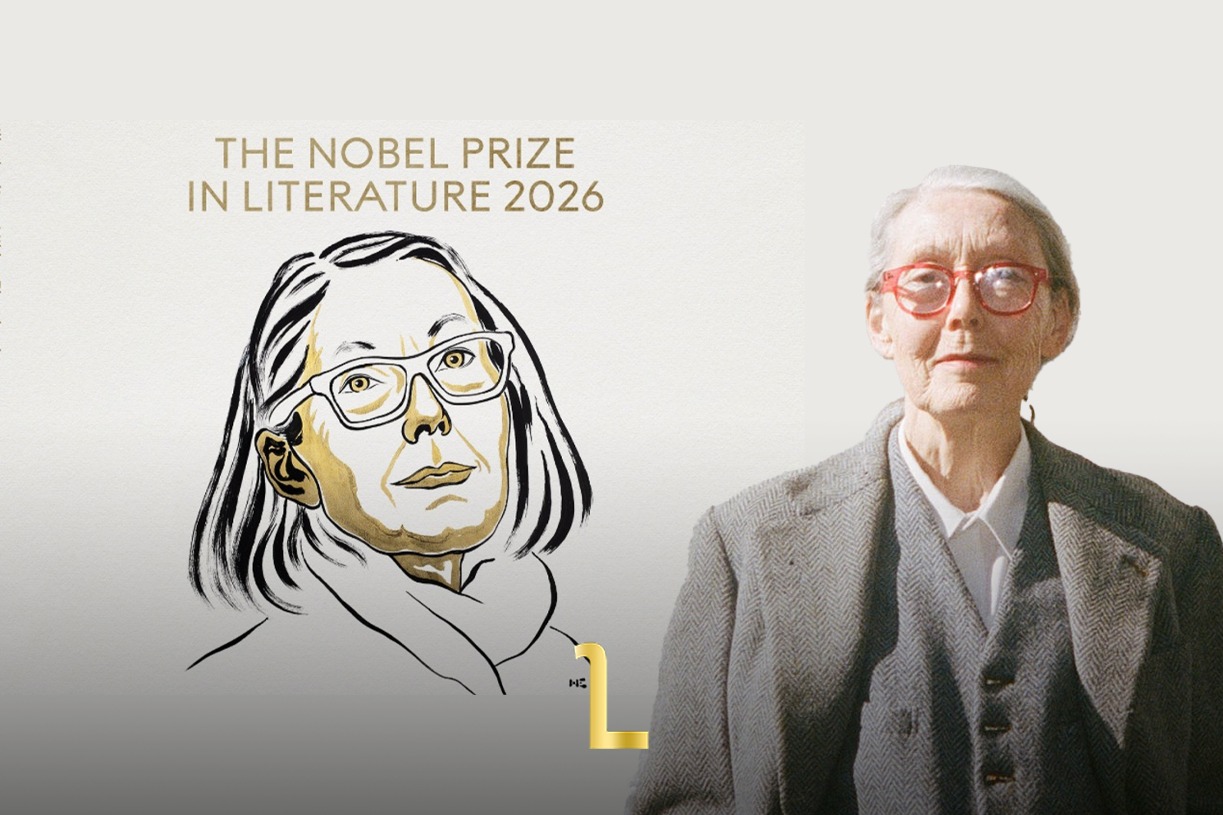
Casablanca – Canadian writer, poet, and translator Anne Carson has won the 2026 Nobel Prize in Literature, adding one of the world’s most prestigious literary honors to a career known for its bold and unconventional approach to writing.
At 76, Carson has spent decades moving between poetry, prose, translation, essays, classical scholarship, and performance. Her work often brings ancient Greek literature into conversation with contemporary life, creating forms that can feel difficult to categorize but deeply recognizable in their emotional core.
The Swedish Academy applauded her “bold and inventive oeuvre,” noting the way her work engages with classical traditions while creating new literary forms.
A writer who does not stay in one box
Carson’s writing has never followed a single formula. She moves between verse and prose, fiction and scholarship, often blending several forms within the same work.
Her academic background plays a major role in that style. Born in Toronto in 1950, Carson studied classics and earned a PhD in the field before building a career that spans several genres and areas.
Her work also includes opera libretti, literary criticism, adaptations, and experimental books, making the word “poet” only one part of the picture.
Translation is part of the picture
Carson’s relationship with ancient literature goes beyond inspiration. She has also worked directly as a translator of classical Greek texts, bringing works from antiquity into new literary contexts.
That relationship between translation and original writing has long shaped her approach to language. Carson treats words not simply as vessels for meaning, but as material that can be rearranged, questioned, stretched, and reinvented.
Her work with classical texts has also allowed her to place voices from very different periods in conversation with one another.
A career built around experimentation
Carson has received major recognition throughout her career, including the MacArthur Fellowship and the Griffin Poetry Prize. In 2001, she became the first woman to win the T. S. Eliot Prize for “The Beauty of the Husband.”
Her books include “Men in the Off Hours,” “Decreation,” “Nox,” “Red Doc>,” and “Float,” continuing her habit of playing with form, structure, image, and language.
A Nobel for a genre-defying voice
With this year’s Nobel, Carson now joins the long list of writers whose work has helped stretch the boundaries of contemporary literature.
Her win also puts a renewed spotlight on a kind of writing that does not always fit neatly into one category. Carson has built her career by allowing poetry to meet scholarship, mythology to meet modern life, and translation to become part of the creative process itself.
For readers discovering her work for the first time, the Nobel may be the perfect invitation to start with “Autobiography of Red” and see where Carson takes them from there.