

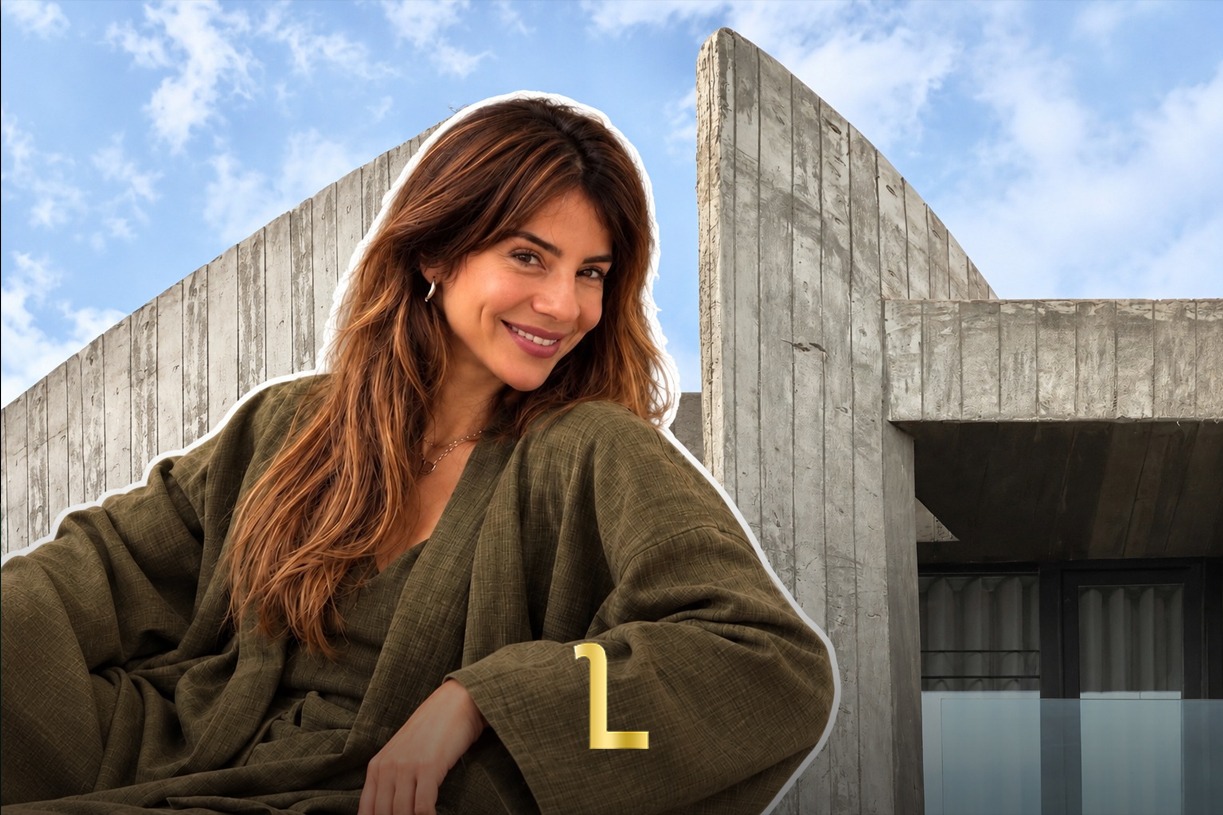
Fez — Concrete is often associated with coldness, weight, and permanence. For Casablanca-based architect Mariam Ammor, however, the material holds an unexpected capacity for movement, softness, and even sensuality.
Her architectural philosophy brings together the two seemingly opposing ideas of silent architecture and dancing concrete.
“Making concrete dance is precisely about searching for emotion within the material,” Ammor told Lifestyle Magazine. “It means creating architecture with a strong presence while leaving room for interpretation and personal experience.”
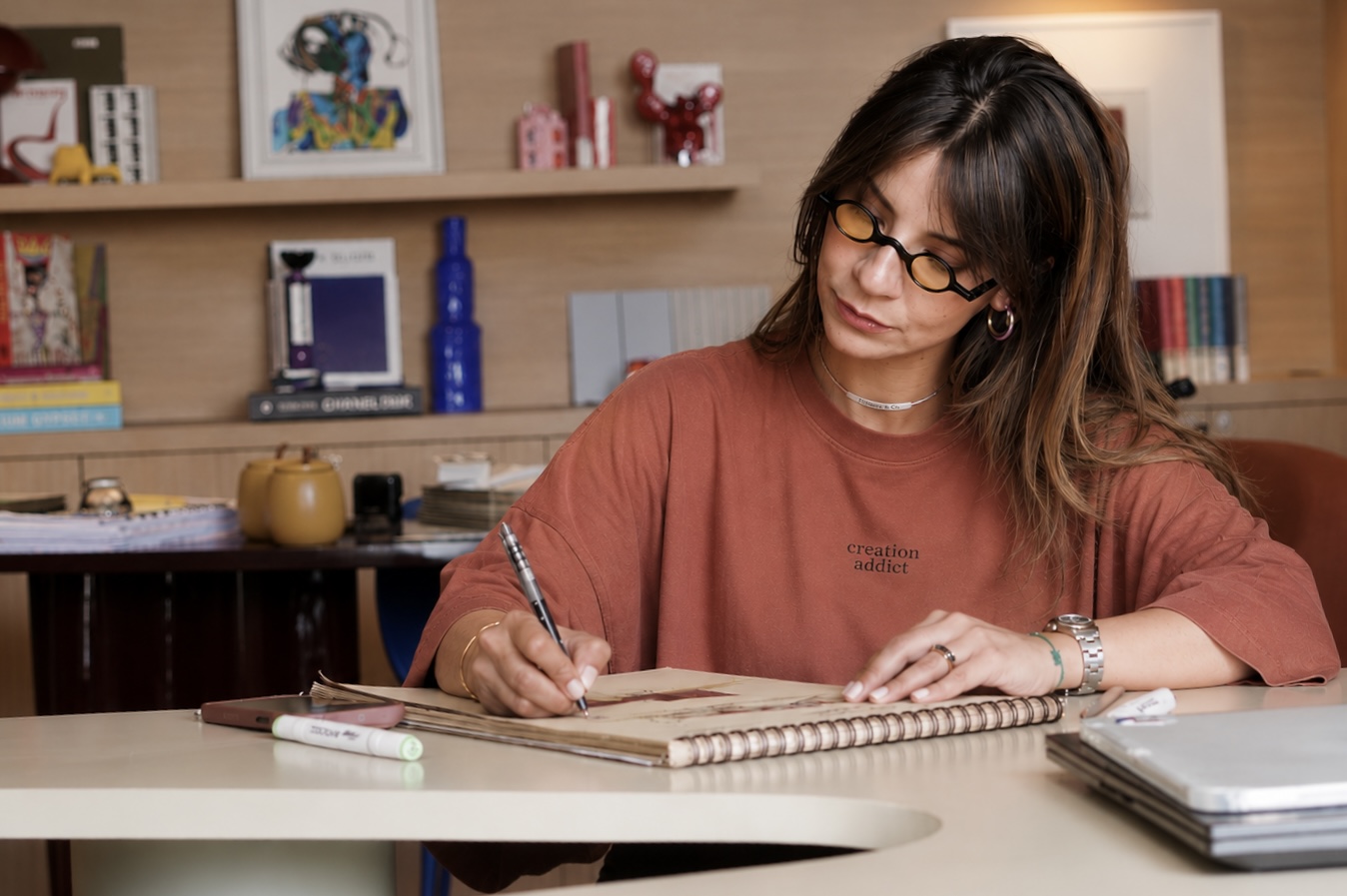
Her approach prioritizes proportions, textures, light, and the relationship between solid structures and open spaces. Rather than pursuing something too bombastic, she wants buildings to leave a lasting emotional impression.
“I am not necessarily trying to impress. I am trying to evoke something,” she explained.
From Casablanca to an architectural identity
Ammor’s fascination with architecture began during childhood, when she watched her parents build their first home in Casablanca.
The experience introduced her to the idea that buildings express more than their physical structures. They reflect decisions, convictions, and ways of living.
She subsequently studied at the National Higher School of Architecture of Lyon, where she developed her technical and conceptual foundations.
Her professional biography also documents advanced studies in architectural strategy and practice. She founded her architectural practice, Lignes de Mir, in 2017.
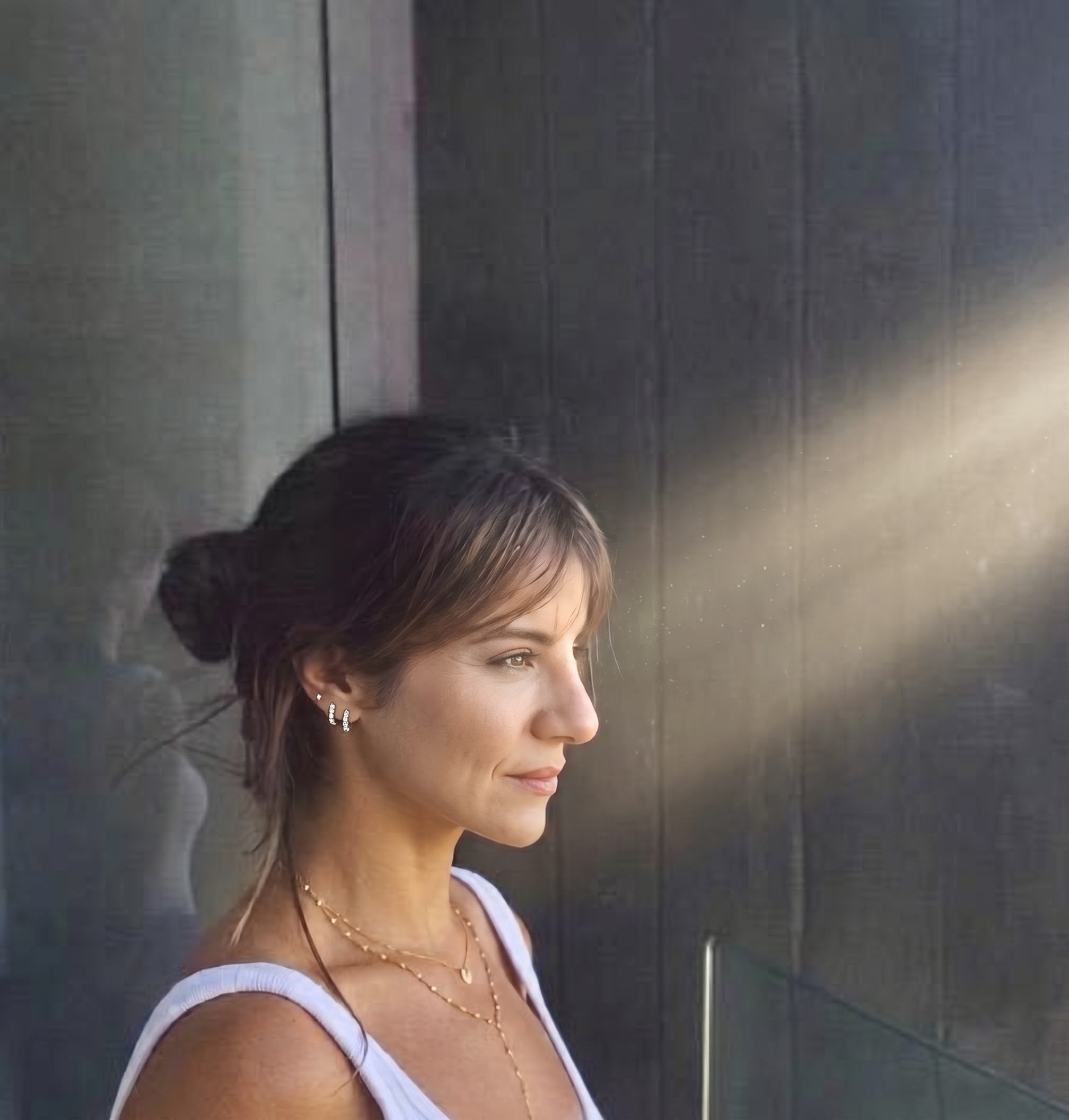
Experience in Rio de Janeiro exposed her to different relationships between architecture, landscape, light, and everyday life.
Returning to Morocco helped her reconnect with the country’s architectural traditions, particularly its use of materials, shadows, intimacy, and transitional spaces.
“I understood that the challenge was not to reproduce architectural models from elsewhere, but to develop my own language, shaped by my experiences and my environment,” she said.
Giving concrete a sense of movement
Two projects, “Le Patio Bleu” and “C32,” illustrate the architectural convictions Ammor seeks to uphold.
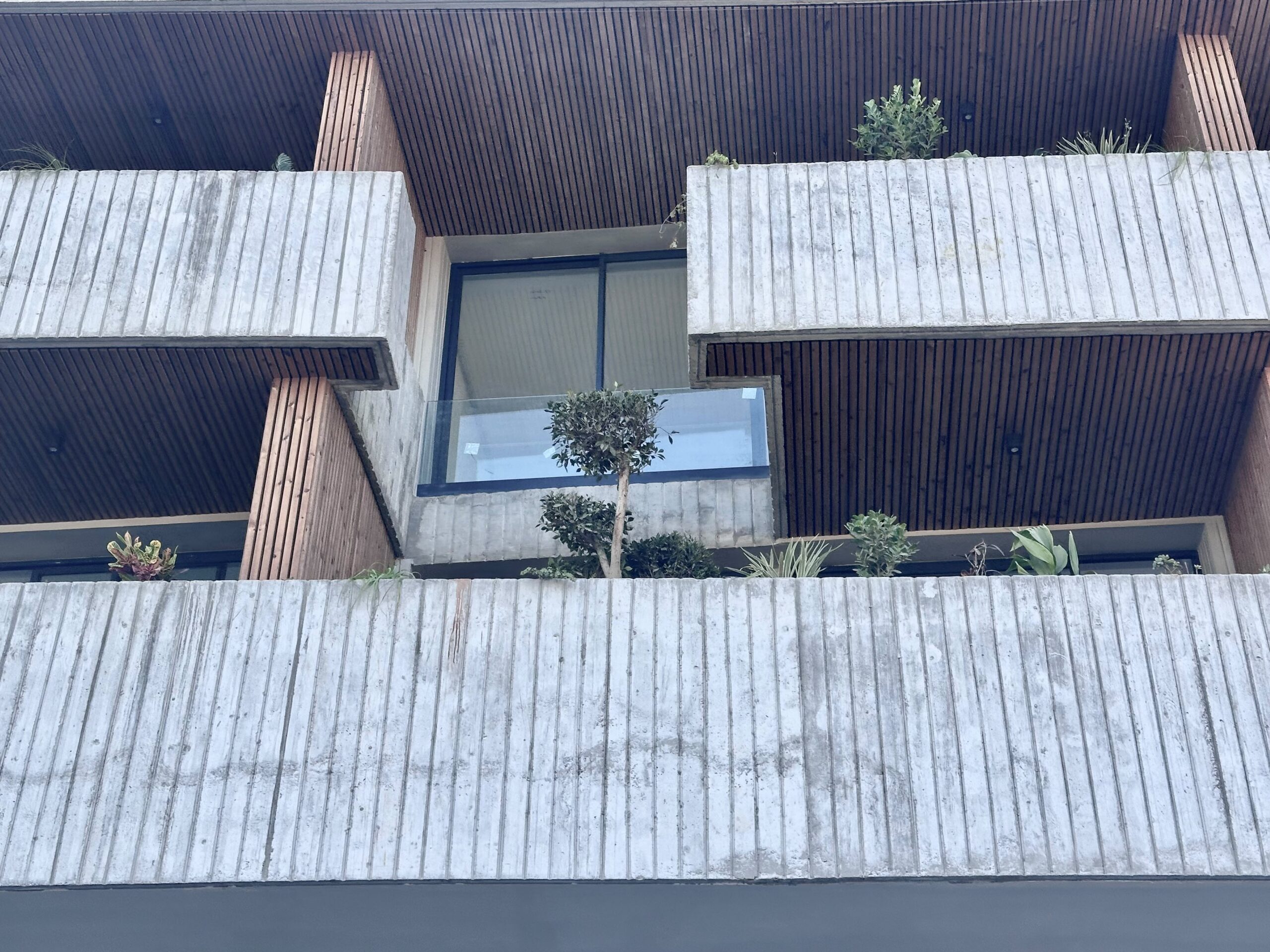
“Le Patio Bleu” explores the interaction between horizontal volumes, raw textured concrete, vegetation, and deep shadows.
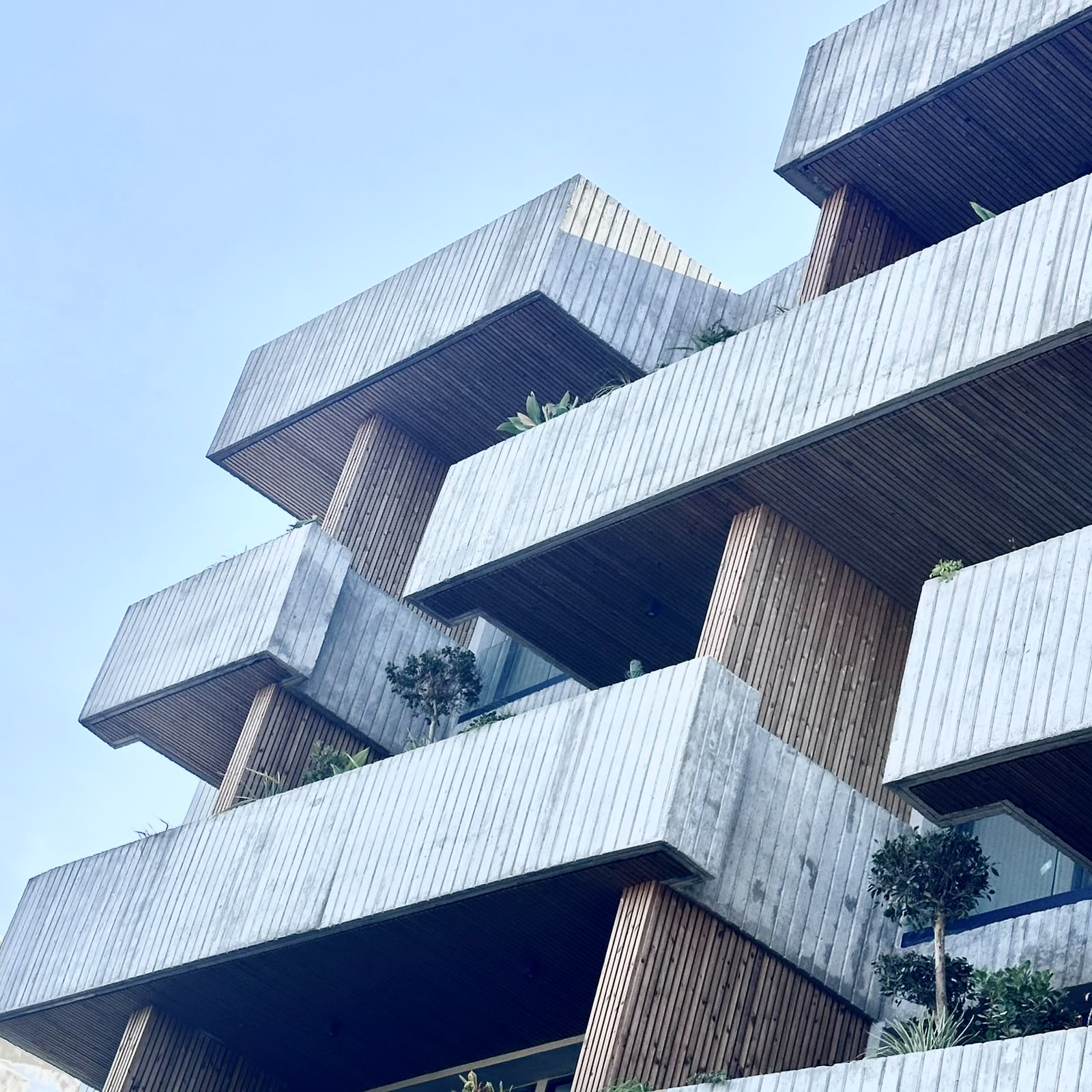
Its projecting balconies create a layered façade where natural light continuously changes the building’s appearance.
“C32” takes another direction, introducing curved forms that contrast with concrete’s strength and solidity.
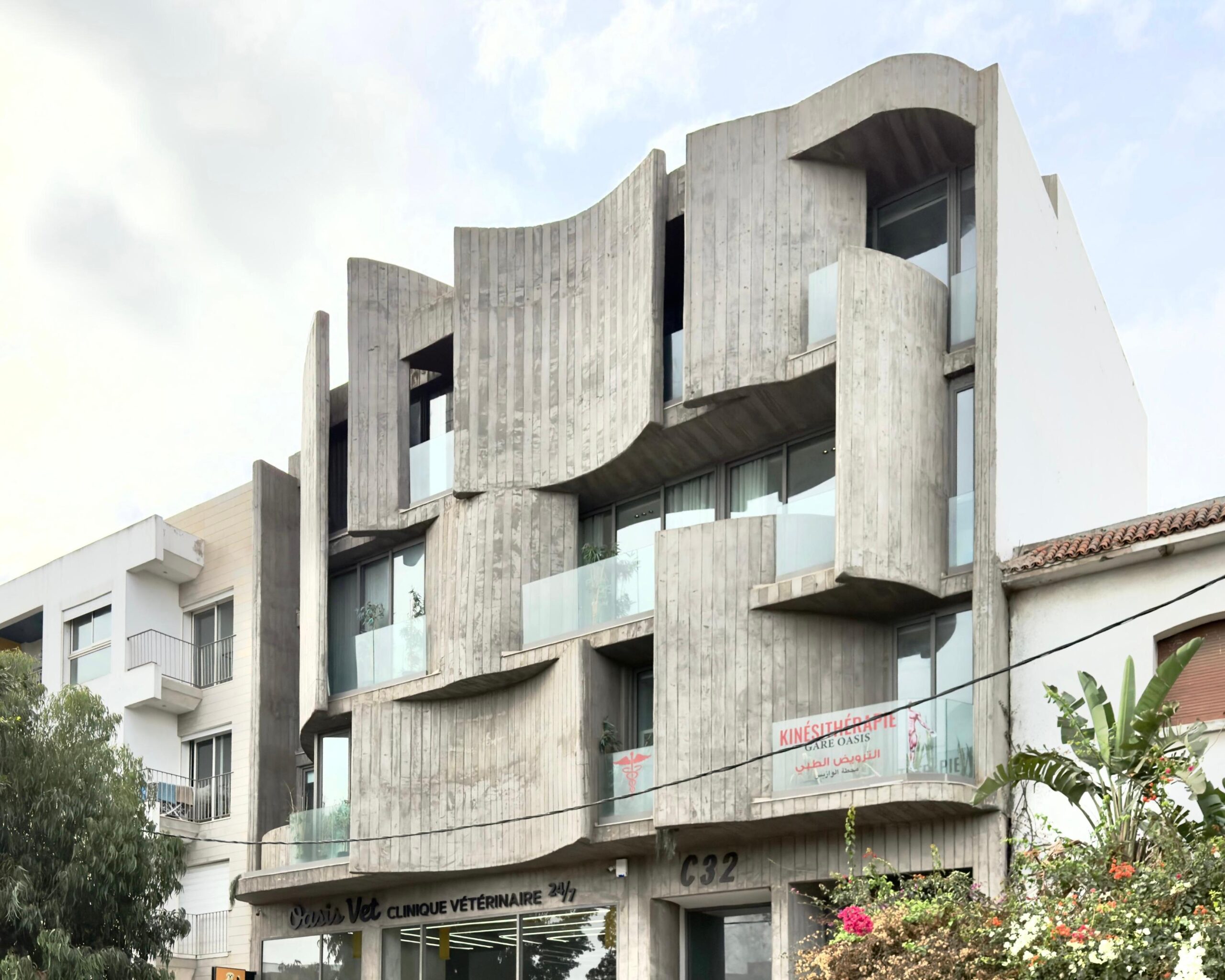
Despite their different architectural expressions, both projects reflect Ammor’s interest in creating distinctive identities through carefully considered materials and proportions.
Her creative process begins with a fundamental question. “When looking at projects such as Le Patio Bleu and C32, I rarely begin by asking what a building should look like. My first question is: what is the right thing to build here?”
For Ammor, successful architecture emerges when a building’s concept, materials, functionality, and human experience form a coherent whole.
Reinventing the Moroccan home
Ammor believes contemporary Moroccan architecture should respond to local ways of living rather than simply reproduce international aesthetic trends.
She points to traditional Moroccan homes as examples of intelligent spatial organization, particularly their balance between hospitality and privacy.
Courtyards, transitional spaces, controlled sunlight, vegetation, and water traditionally served practical and cultural purposes beyond decoration.
“In Moroccan culture, a home is much more than a functional space. It is a place of gathering, transmission, and sharing, but also a sanctuary that protects family privacy,” she explained.
Her vision involves reinterpreting these principles without simply reproducing historical architectural forms.
“For me, modernity does not mean erasing our heritage. It means understanding it deeply enough to reinvent it,” she explained.
Can architecture preserve human dignity?
Ammor’s interest in architecture’s psychological impact extends beyond residential and commercial buildings.
One of her ambitions is to design a modern prison that considers the emotional well-being and dignity of its occupants.
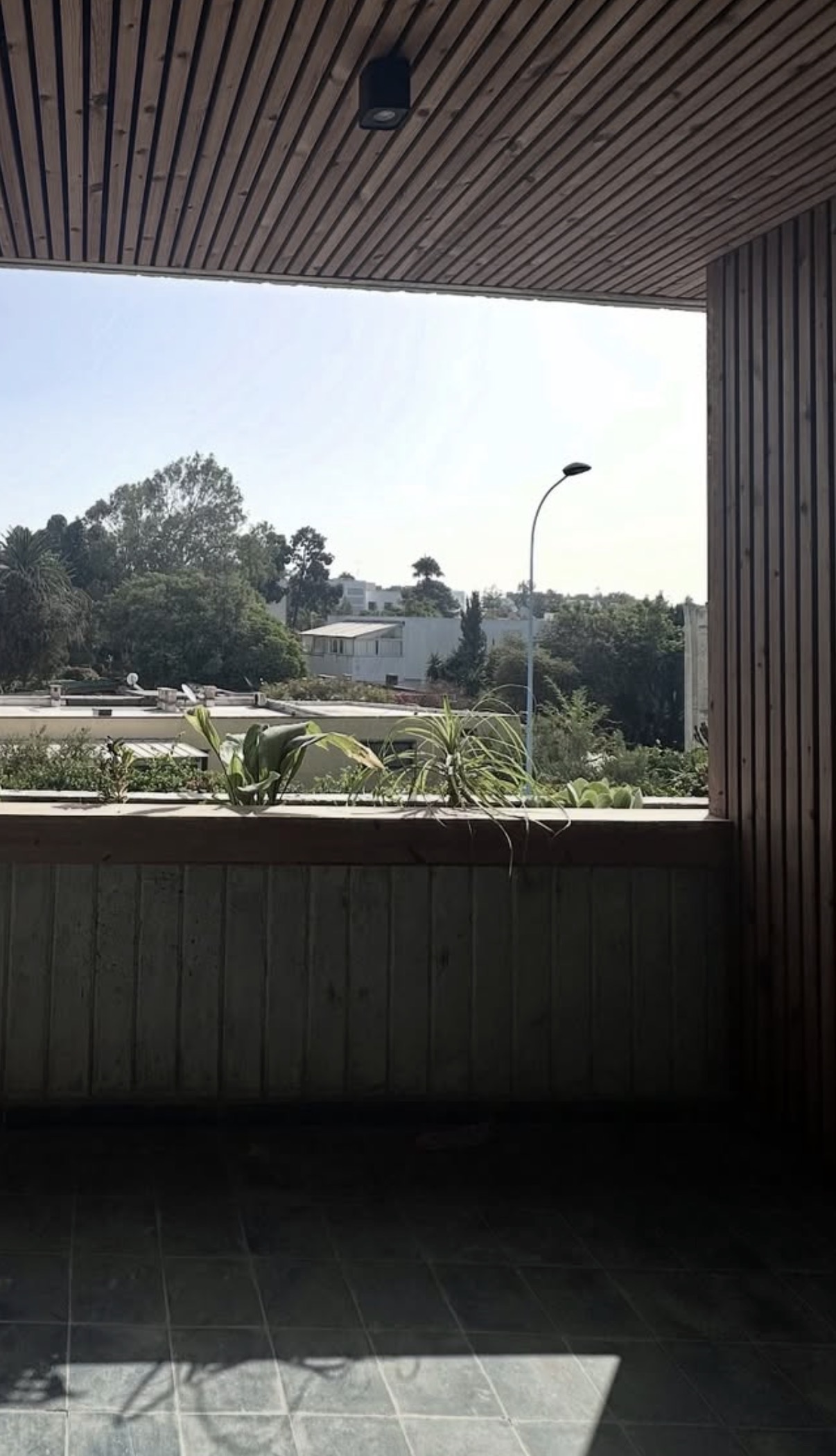
She believes such environments should address more than security and functionality, incorporating natural light, breathing spaces, and connections with the outside world.
“I find it fascinating to consider how an environment might help preserve a sense of humanity in a context of confinement,” she said.
Although architecture cannot resolve the broader challenges of incarceration, she believes it can contribute to less dehumanizing conditions.

This conviction reflects a philosophy that places human experience at the center of architectural practice.
“We are not simply designing buildings. We are designing the settings in which people will experience moments of their lives,” the architect reflects.
For Ammor, the true value of architecture lies beyond concrete, geometry, or visual impact. It emerges through the relationship between people and the spaces they inhabit, offering a vision of contemporary Moroccan design that remains attentive to both cultural memory and human dignity.