

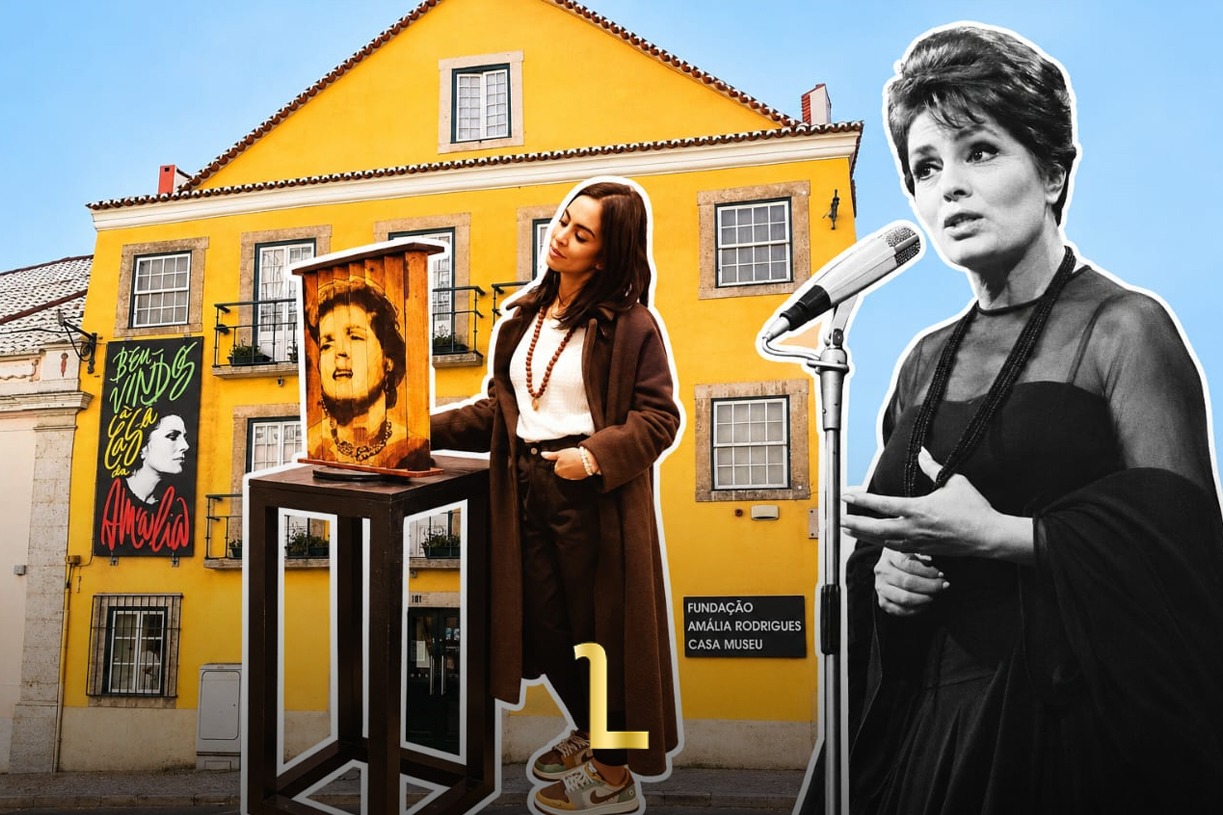
Fez — A portrait usually captures a single moment. Moroccan artist Imane Kamal Idrissi wants viewers to discover how one face can tell several stories.
Her artwork “Four Shades of Amália” now has a permanent place at Lisbon’s Amália Rodrigues House-Museum, celebrating one of Portugal’s most influential singers through an unusual exploration of time and identity.
On display since September 13, the wooden composition presents four portraits of the legendary fado performer, revealing different expressions and stages of her life.
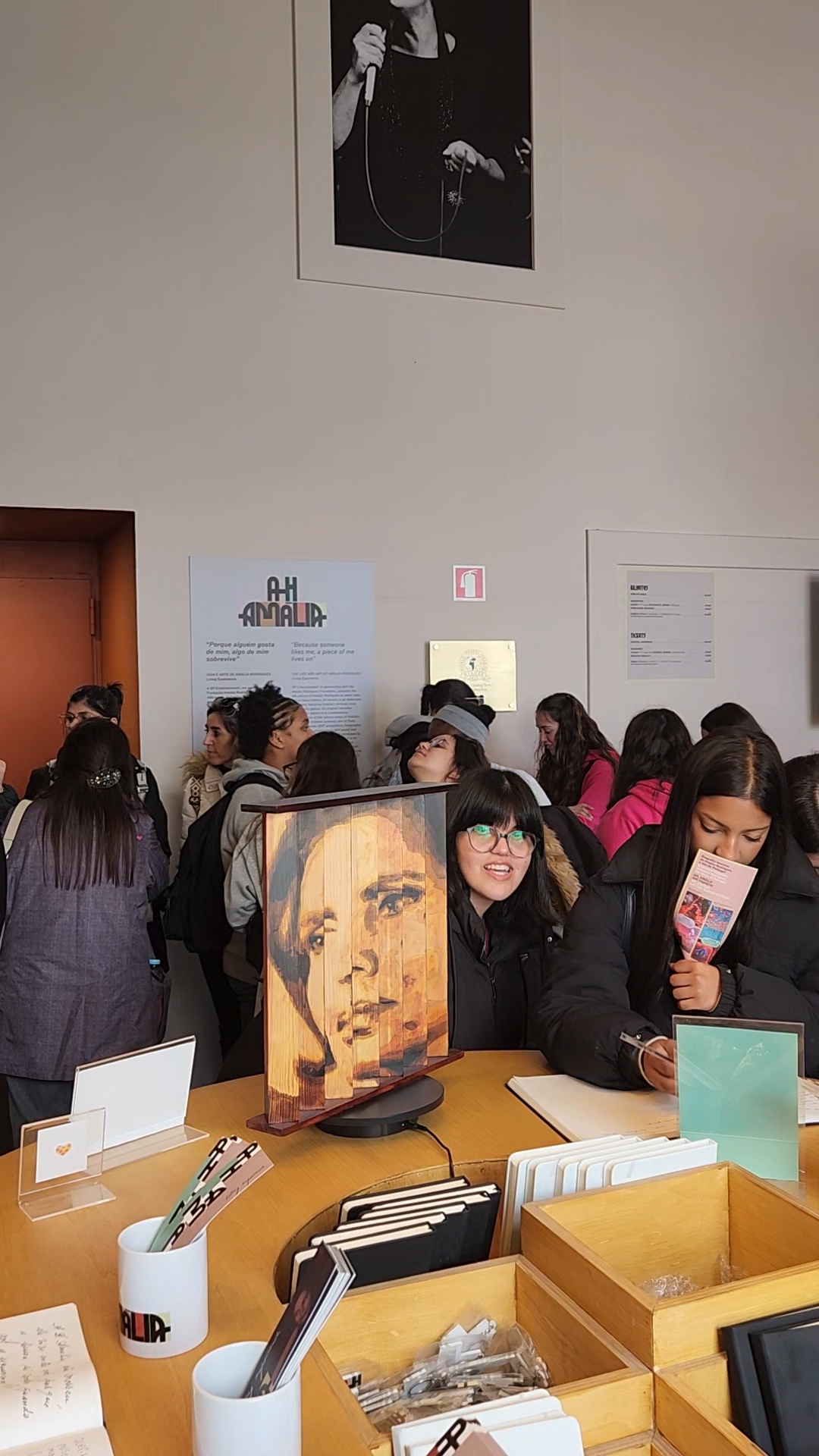
The artwork rests on a rotating structure that gradually brings each face into view. As the composition turns, its features overlap before separating into another portrait.
Rather than presenting Rodrigues as a fixed historical figure, Idrissi explores how experience, memory, and the passage of time shape a person’s identity.
The work also brings a Moroccan artistic perspective into a museum dedicated to preserving Portuguese musical heritage.
Four faces, one life
Born in Casablanca in 1984, Idrissi has developed a distinctive approach to portraiture through experimentation with materials, transparency, and perspective.
For “Four Shades of Amália,” she uses natural wood in different shades, allowing the material’s texture and warmth to become part of the composition.
The changing faces encourage viewers to move around the artwork and reconsider what they see.
This interaction is central to her practice. Rather than allowing a portrait to reveal everything immediately, she invites audiences to discover its different layers.
The Amália Rodrigues House-Museum occupies the singer’s former Lisbon residence, where she lived for more than four decades. The institution preserves her personal belongings and artistic legacy while welcoming contemporary cultural projects.
Visitors can explore the museum’s history and collection.
Giving women’s memories a visual form
The museum installation follows another Lisbon presentation that examined women’s experiences through a different visual language.
In March 2026, Idrissi presented “Mémoires vivantes” (Living Memories) at the Cape Verde Cultural Center.
The exhibition, which ran until April 11, explored personal and collective memory, cultural inheritance, and the experiences of African women.
Through oil paintings and layered plexiglass portraits, the artist created compositions that changed according to the viewer’s position.
Some faces appeared clearly, while others remained partially concealed behind transparent surfaces.
Among the subjects were Moroccan women bearing traditional Amazigh facial tattoos, which Idrissi approached as visual records of cultural identity and inherited history.
The works connected individual experiences with broader questions about how communities preserve memories across generations.
Visitors were encouraged to examine the portraits from different angles, revealing how perception can transform a seemingly familiar image.
The exhibition also highlighted the relationship between vulnerability and resilience, presenting women as carriers of personal and collective histories.
An artistic journey across cultures
Idrissi’s interest in layered images began with an early introduction to painting through her father, Moulay Noureddine Kamal Idrissi, who studied at the Casablanca School of Fine Arts.
Her career has since taken her across Morocco, Mozambique, South Africa, and Portugal.
She works with oil paint, wood, plexiglass, collage, and other materials, frequently investigating the relationship between identity and visual perception.
Her latest Lisbon presentations demonstrate how these experiments can serve different cultural narratives.
In “Mémoires vivantes,” the focus falls on the inherited experiences of African women. In “Four Shades of Amália,” the same fascination with perspective becomes a tribute to a Portuguese cultural icon.
A face can preserve a memory, reveal a cultural inheritance, or reflect a lifetime of transformation. Sometimes, seeing the full picture simply requires looking from another angle.