

Fez — The chocolates were always going to disappear. What interested Ghita Berrada was the possibility that something meaningful could remain.
When Moroccan chocolatier BRUNES approached her about a collaboration, the Marrakech-born painter and interior architect saw an opportunity to take her art somewhere unexpected.
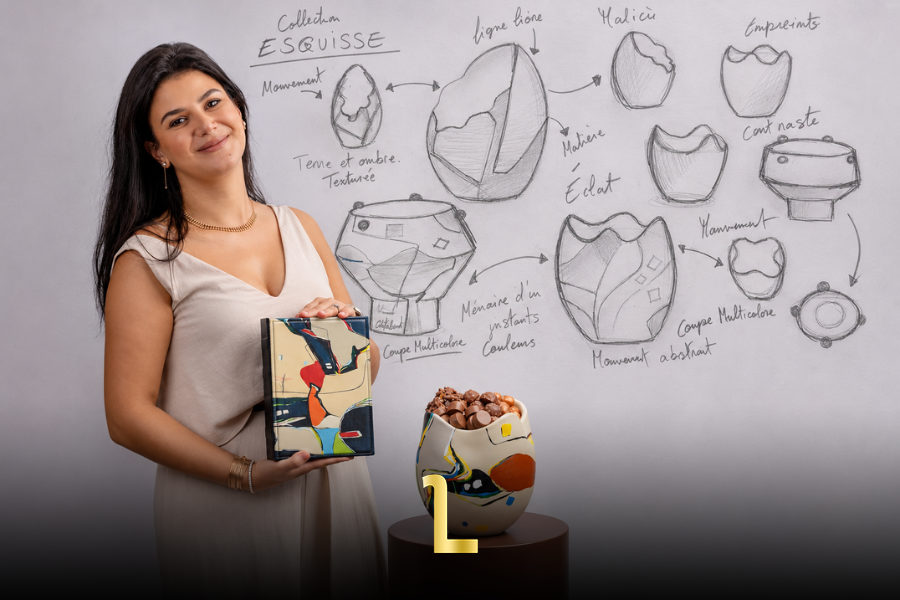
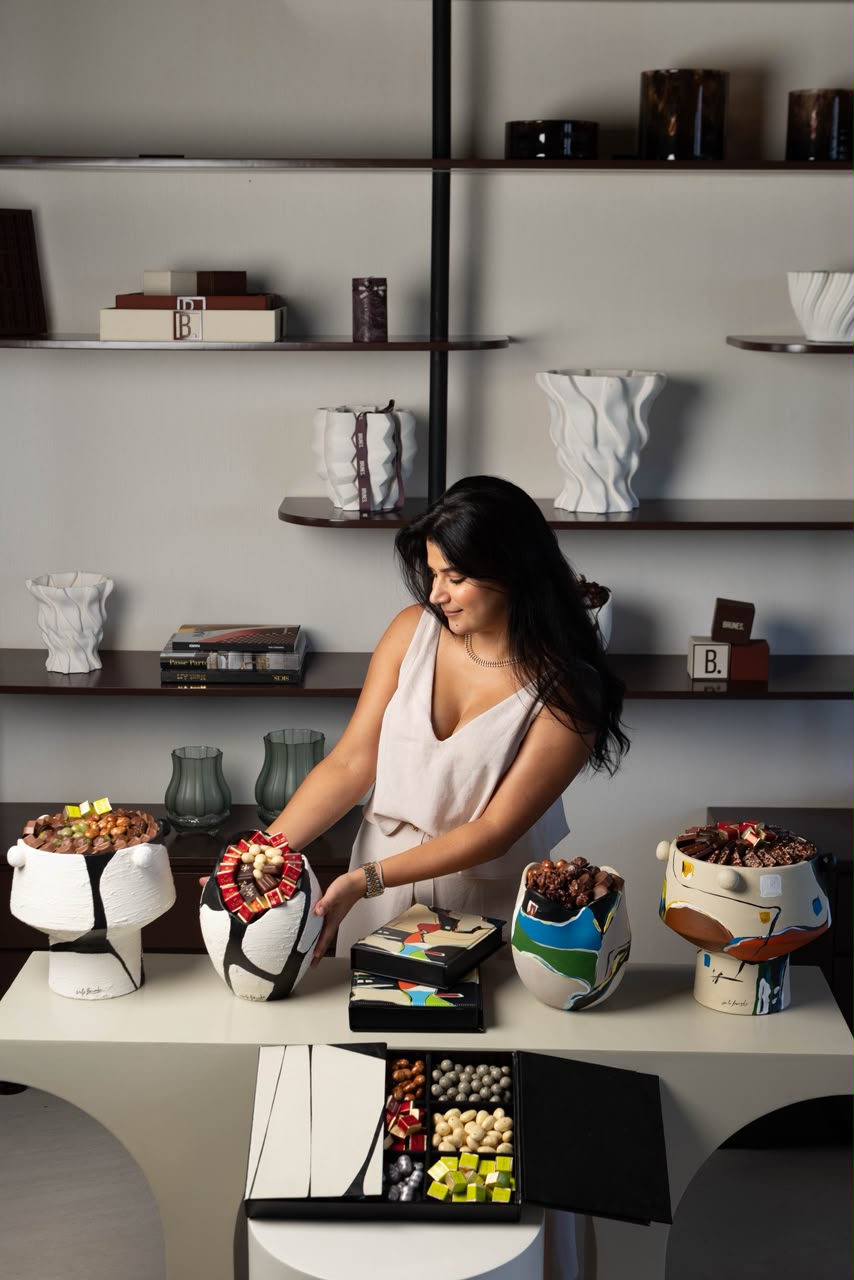
She designed sculptural ceramic bowls, painted them by hand, and imagined them finding a second life in people’s homes.
The result was “ESQUISSE,” a collection that brings together her artistic language and the chocolatier’s craftsmanship.
But the idea behind it reaches further back, to a childhood shaped by two Moroccan cities and a lifelong fascination with the beauty of ordinary things.
The places that taught her to see
For Berrada, childhood memories begin with Marrakech’s medina. Colors, materials, and textures surrounded her long before she understood how deeply they would shape her creative practice.
Visits to Fez, her family’s city of origin, introduced her to other craft traditions and ways of working with materials.
“I think my desire to create developed little by little, in the middle of all that,” she told Lifestyle Magazine. “Drawing became a way of extending what I loved looking at.”
Her earliest artistic interests centered on portraiture. She wanted to capture the small detail that makes a face unmistakably someone’s own. “Sometimes, it’s simply a way of looking,” she explained.
As her practice evolved, she began searching for that same individuality in abstract compositions, textured surfaces, and interior spaces.
Her professional journey reflects this movement between disciplines.
After graduating in interior architecture in 2019, she established Atelier Design by Ghita Berrada in late 2021. Her paintings, meanwhile, continued to develop through portraits, abstraction, and mixed media.
A painter’s eye, an architect’s mind
Berrada doesn’t treat painting and interior architecture as separate creative worlds. “When I design an interior, I often have a painter’s eye,” she said.
She notices how natural light changes a color, how two materials interact, and how an empty wall can influence the atmosphere of a room.
When she paints, her architectural instincts take over. She considers proportions, negative space, and the movement of the viewer’s eye across a composition.
Yet beneath that attention to structure lies something deeply personal.
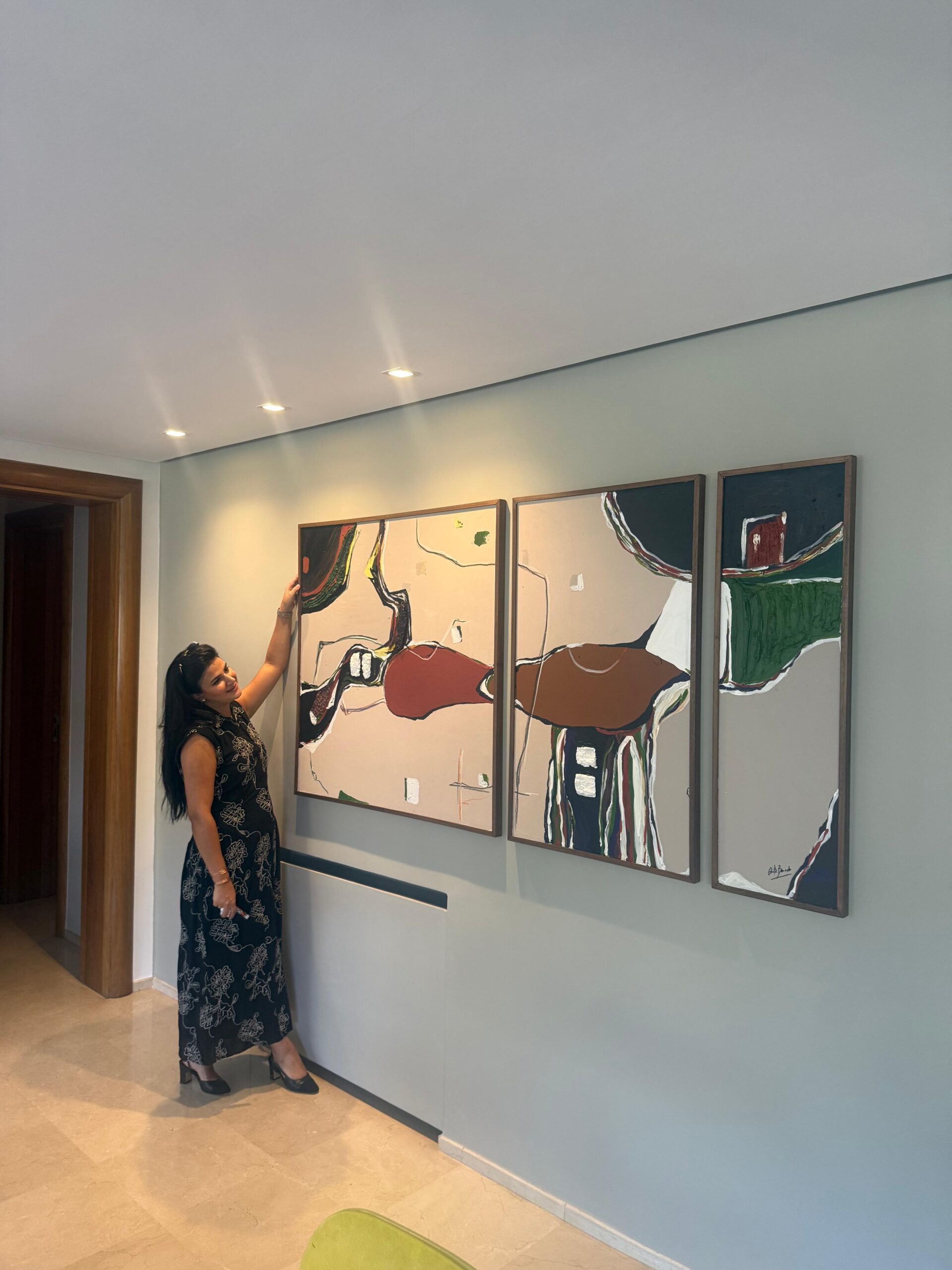
Painting, for her, “is a form of meditation.” She describes beginning with an emotion and allowing it to find expression through pigments, gestures, and textures.
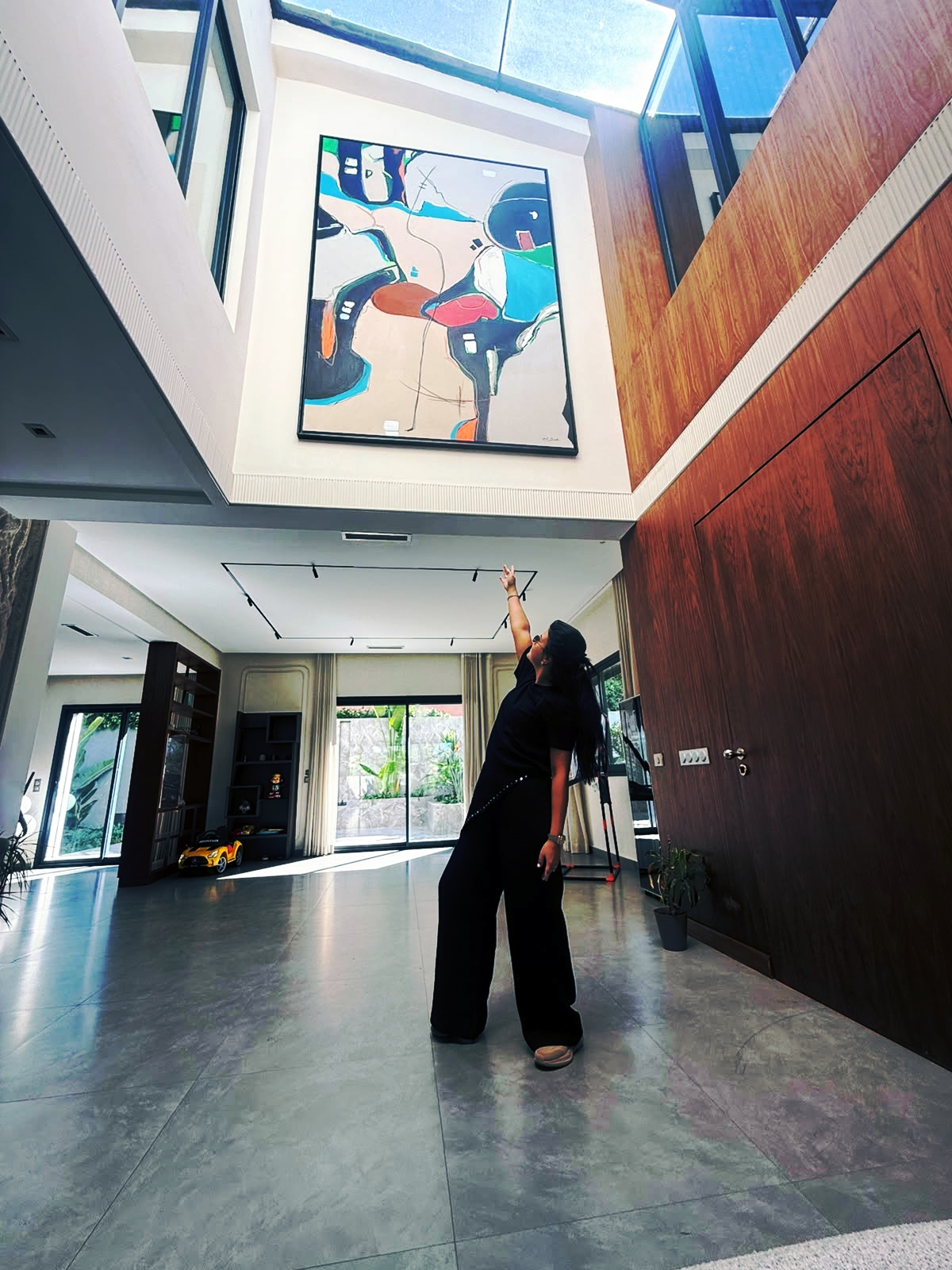
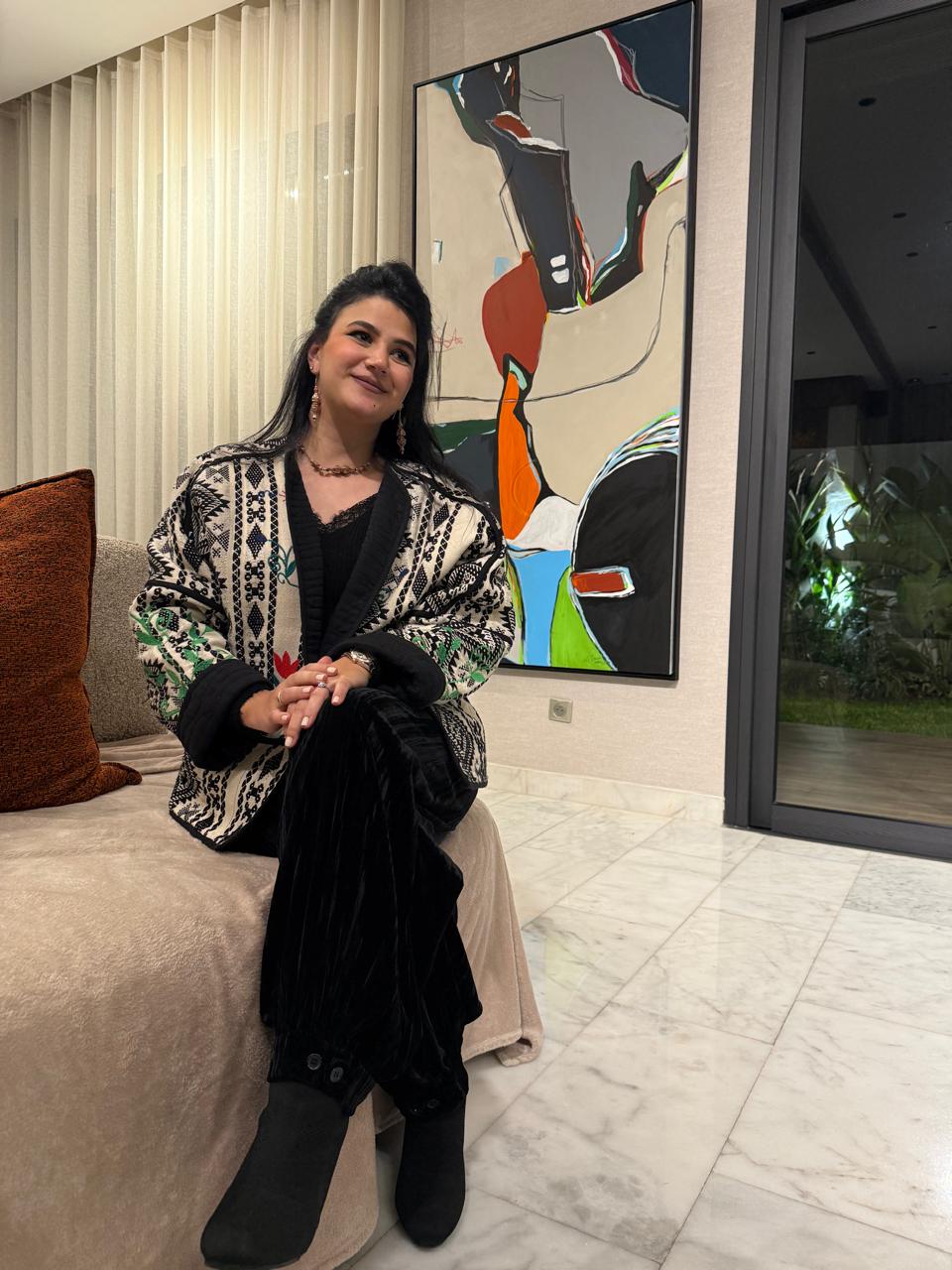
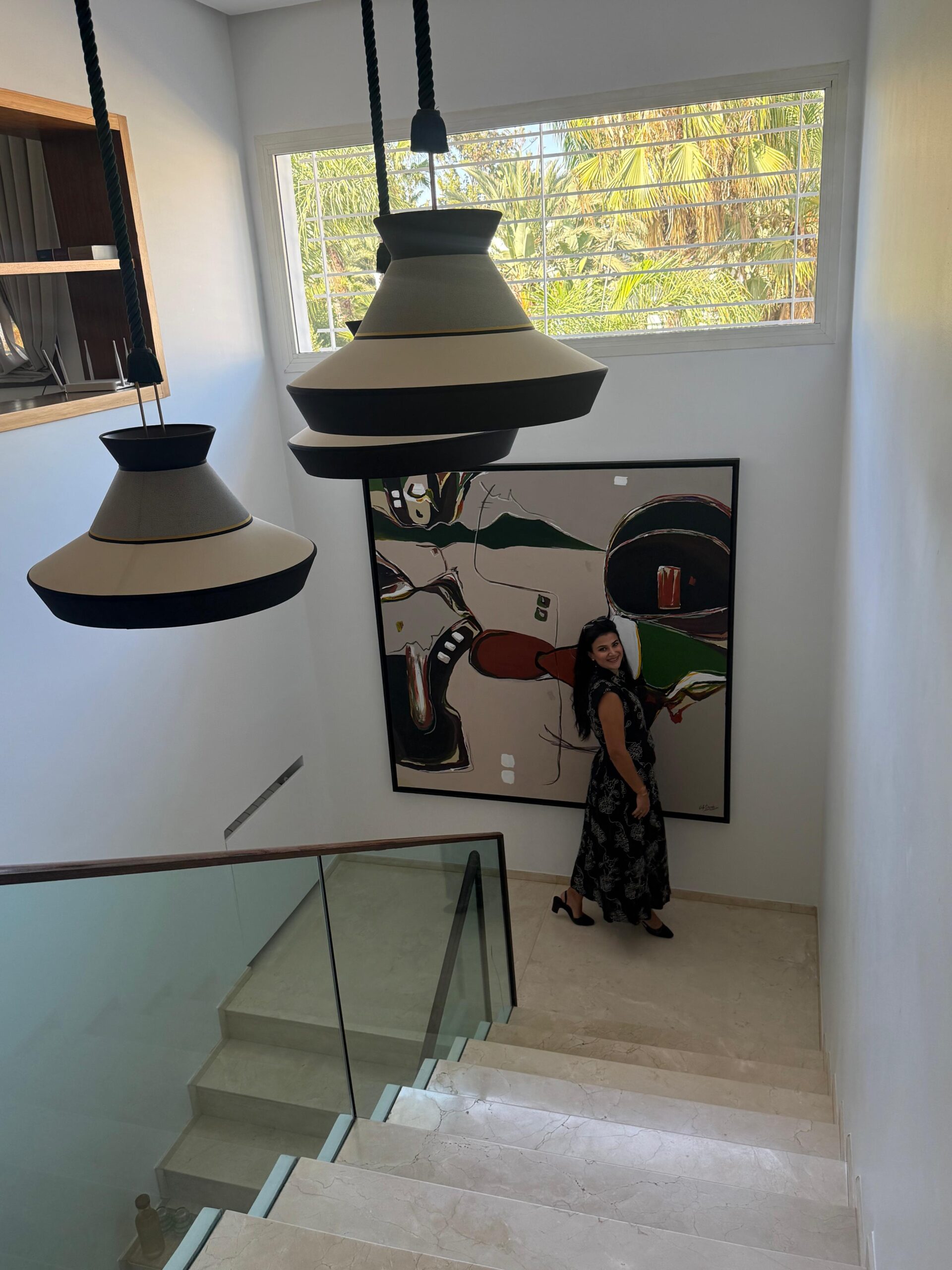
Her painting “Silences en mouvement” (Silences in Motion) captures this relationship between stillness and feeling.
“A canvas can seem calm at first glance and, when you spend time with it, reveal that something is moving,” she said.
As a mother of two, Berrada also approaches design through the realities of everyday living. She considers not only how a space looks, but how people will experience it over time.
This attention to lived experience would eventually become central to “ESQUISSE.”
When painting leaves the canvas
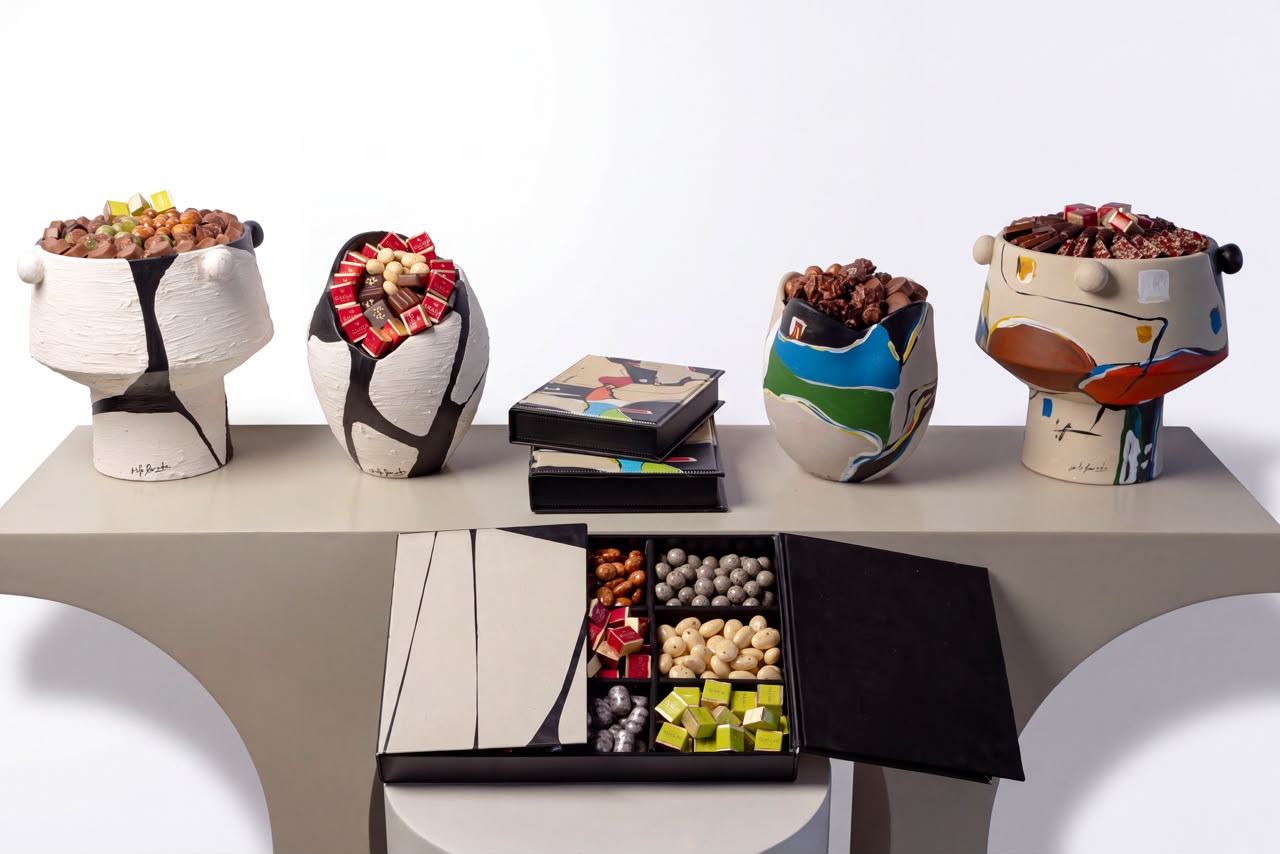
For the BRUNES collaboration, Berrada drew inspiration from two of her paintings, “Terre et Ambre” (Earth and Amber) and “Mémoire d’un instant” (Memory of a Moment).
Instead of transferring their imagery onto conventional packaging, she designed new ceramic forms.
She wanted objects that could carry the character of her paintings while becoming something people could hold, turn, and use.
The transition changed her relationship with the painted line.
On a canvas, the composition faces the viewer. On a curved ceramic surface, it reveals itself gradually as the object moves.
“That gave me another way of painting,” she explained. The experience brought together her sensitivity to color, her understanding of volume, and her fascination with materials.
Most importantly, it allowed her work to enter everyday life without losing its artistic identity.
What remains after the moment passes
Berrada’s favorite possibility is not that someone will simply admire one of her ceramic pieces.
It is that the object might become part of their personal history.
The chocolates will be shared. The occasion will pass. But the bowl might return to a table or find a permanent place somewhere in the house.
Years later, someone could pick it up and remember the person who gave it to them.
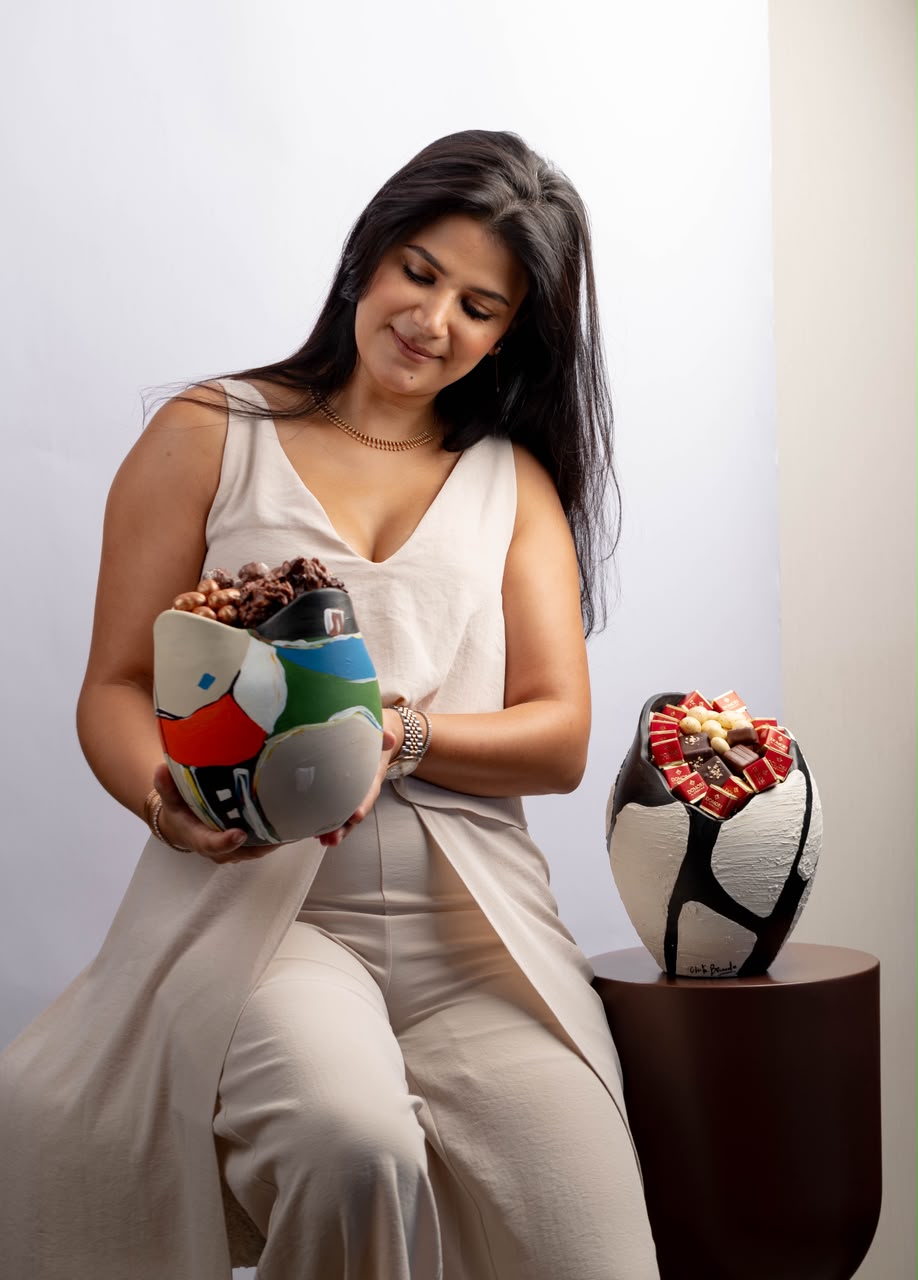
That possibility matters to Berrada because she wants people to develop their own relationships with her creations.
Looking ahead, she hopes to explore relief and volume further, discovering new ways for painting to move beyond the canvas.
Above all, she wants to preserve the freedom to experiment and make work that people connect with for reasons she may never fully know.
In “ESQUISSE,” the artist offers something more enduring than a beautifully presented gift.
She creates the possibility that an ordinary object might quietly become part of someone else’s story.