

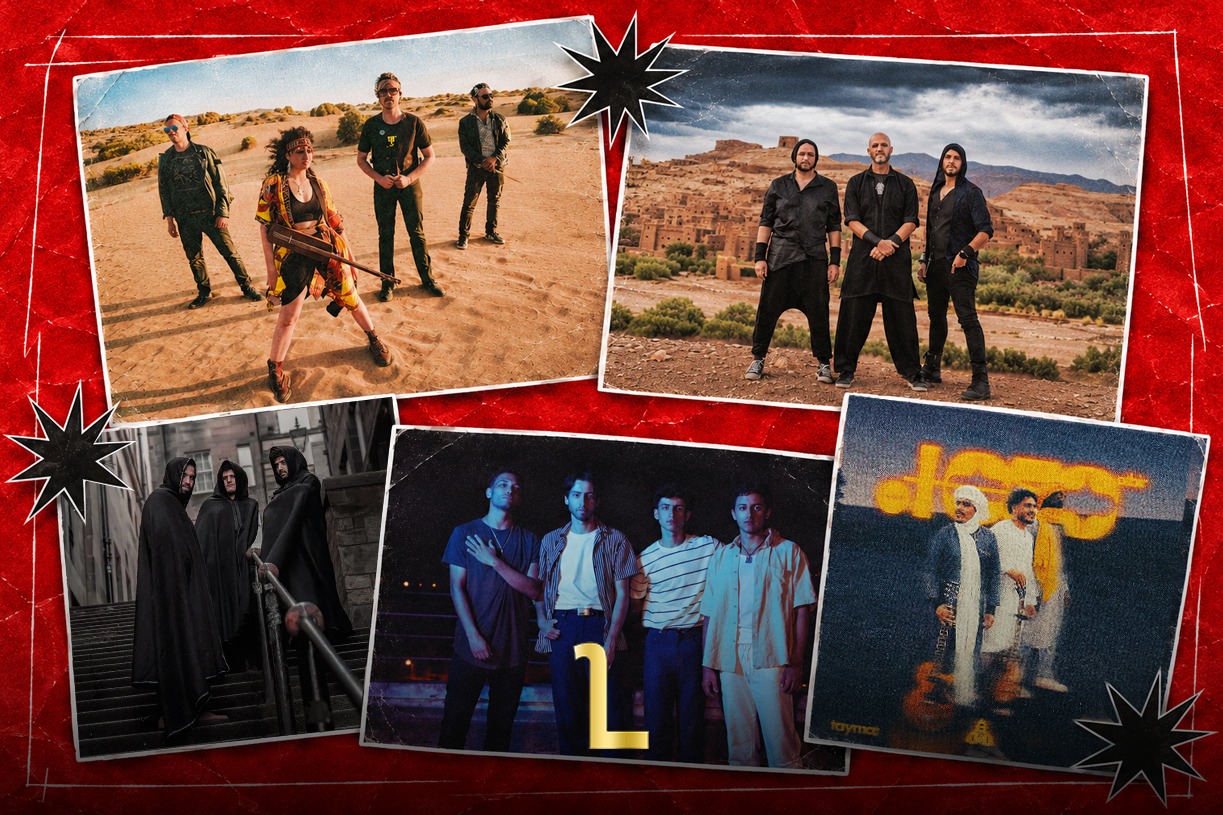
Casablanca – Morocco’s music scene has plenty of sounds worth exploring, with bands experimenting across genres and bringing their own styles to the stage. Among them, Bab L’Bluz, Lazywall, Meteor Airlines, Taymat Band, and MOOD stand out for their distinct sounds and musical identities.
Bab L’Bluz
If you enjoy music that crosses borders without losing its roots, Bab L’Bluz is a band worth adding to your playlist.
The Moroccan-French group brings together psychedelic rock, Gnaoua traditions, Hassani chants, and Chaâbi grooves, creating a sound that draws on Moroccan musical heritage while exploring contemporary influences.
But their music goes beyond an unusual mix of genres. Through songs that touch on freedom, peace, justice, women’s place in society, and acceptance, the band gives its sound a message as well as an identity.
In a previous interview with Lifestyle Magazine following their performance at Jazzablanca, founder and lead singer Yousra Mansour spoke about the particular connection the band shares with Moroccan audiences. While listeners abroad can feel the music, she says, Moroccan audiences also understand the words and the cultural references behind it.
“When you perform in Morocco, you have everyone understanding perfectly the dialect and the words that we are singing,” Mansour explained.
That connection also reflects the band’s relationship with the country itself. French-born musician Brice Bottin, who plays the guembri, guitar, percussion, and vocals, shared with Lifestyle Magazine how immersing himself in Moroccan musical traditions had shaped his identity.
“I fell in love with the Moroccan culture. And now, I’m a Maghrebi. It’s my nationality,” he said.
Lazywall
If Bab L’Bluz draws you into a blend of psychedelic rock and Moroccan musical traditions, Lazywall takes you in a heavier direction, with powerful guitar riffs, alternative rock, and metal influences.
Formed by three Moroccan brothers in England’s Reading in 2003, the band initially wrote and performed in English. Their sound, however, has always made room for Moroccan influences, incorporating instruments such as the oud and guembri.
In 2022, Lazywall made a shift that brought their music closer to home: they began singing in Moroccan Darija. The change also gave them a way to address difficult social issues through their lyrics.
As the band explains in its website biography, “We don’t talk about politics because we don’t care. We don’t talk about religion because it’s a personal thing. But singing about that underage girl who was forced to marry her rapist is tough in any language.”
It is this contrast between the intensity of their music and the subjects they tackle that makes Lazywall worth discovering. Their songs bring rock into a Moroccan context while giving space to stories that are not always easy to tell.
Meteor Airlines
If you’re curious about what rock sounds like when it meets Amazigh heritage, Meteor Airlines is a good place to start.
Hailing from the Tinghir region in southeastern Morocco, the group has built its identity around Amazigh rock, combining traditional rhythms and melodies with electric guitars and progressive rock influences.
But their connection to Amazigh culture goes beyond the music itself. The band sings primarily in Tamazight, drawing on local history, identity, and the relationship between communities and their land. Their musicians also take the stage wearing Azennar, traditional Amazigh capes that reflect the cultural roots behind their sound.
This connection runs through their 2024 album, “Agdal.” Named after an Amazigh practice of protecting and managing communal natural resources, the album explores themes such as water scarcity, biodiversity, and environmental preservation.
Through their music, Meteor Airlines bring these subjects into a sound that feels both rooted in local traditions and open to modern rock.
Taymat Band
Zagora also has a place on Morocco’s music map, as the hometown of Taymat Band. The five-member group brings together Desert Blues and rock, drawing on the musical traditions of southeastern Morocco to create a sound that feels deeply connected to its roots.
The band’s name, which means “brotherhood” in Amazigh, reflects the sense of unity behind its music. Singing in both Amazigh and Arabic, the band draws inspiration from the region’s oral traditions, local stories, and everyday life.
That connection is also reflected in the band’s beginnings. Brothers Said and Ibrahim first started experimenting with music in 2010, making their own guitars from palm tree wood and bicycle cables before the group officially came together in 2015.
Through their music, Taymat Band gives traditional sounds room to meet modern influences, introducing listeners to another side of Morocco’s musical landscape.
MOOD
Looking for something closer to pop? Moroccan boy band MOOD brings together four voices, smooth harmonies, and a mix of Arabic and English lyrics, giving the group its own musical identity.
Formed in Salé in 2019, the band combines contemporary pop and R&B influences with sounds from across the Arab world. Brothers Rafik and Monsef founded the group before Hamza and Imad joined, completing the four-member lineup.
But MOOD’s appeal goes beyond its musical style. The group puts vocal harmonies at the center of its songs, with each member contributing to a sound that moves naturally between Arabic and English.
In 2025, the band took another step forward after winning a Battle of the Bands competition organized by the American Cultural Association and American Language Centers in Morocco. The win led to a national tour, taking MOOD’s music to audiences in seven Moroccan cities.
A little something for each Moroccan taste
From the psychedelic sounds of Bab L’Bluz to the Amazigh rock of Meteor Airlines, the heavier riffs of Lazywall, the Desert Blues of Taymat Band, and MOOD’s contemporary pop, these groups show just how many directions Moroccan music can take. Each has its own sound, influences, and stories to share, making them all worth a place on your playlist.
So, which of these bands are you going to check out first?