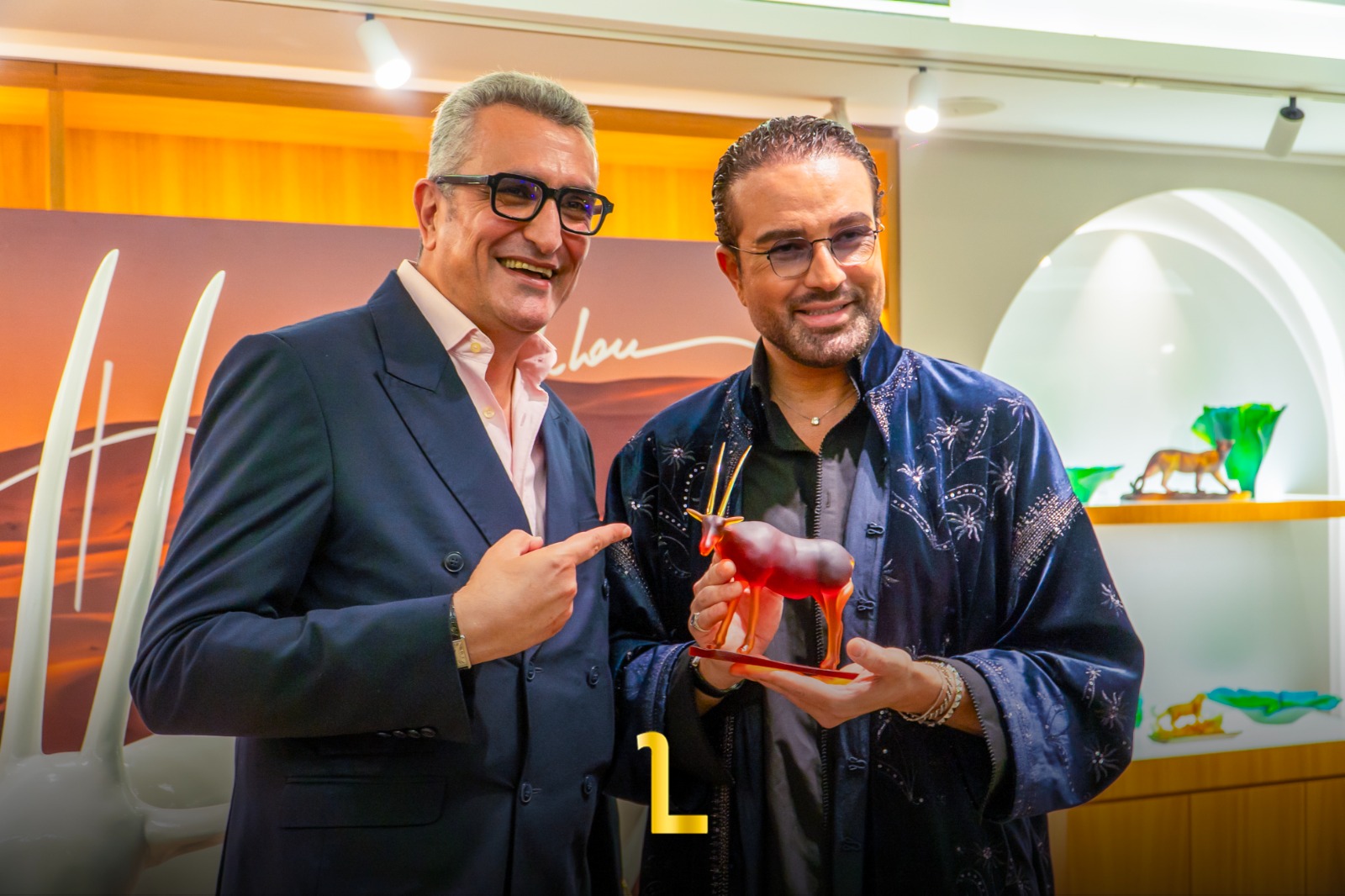
Casablanca – French crystal house Daum joined Moroccan designer Hicham Lahlou at The ICONIC in Casablanca on Thursday for “Regards Croisés,” an evening dedicated to design, craftsmanship, and the creative ties between Morocco and France.
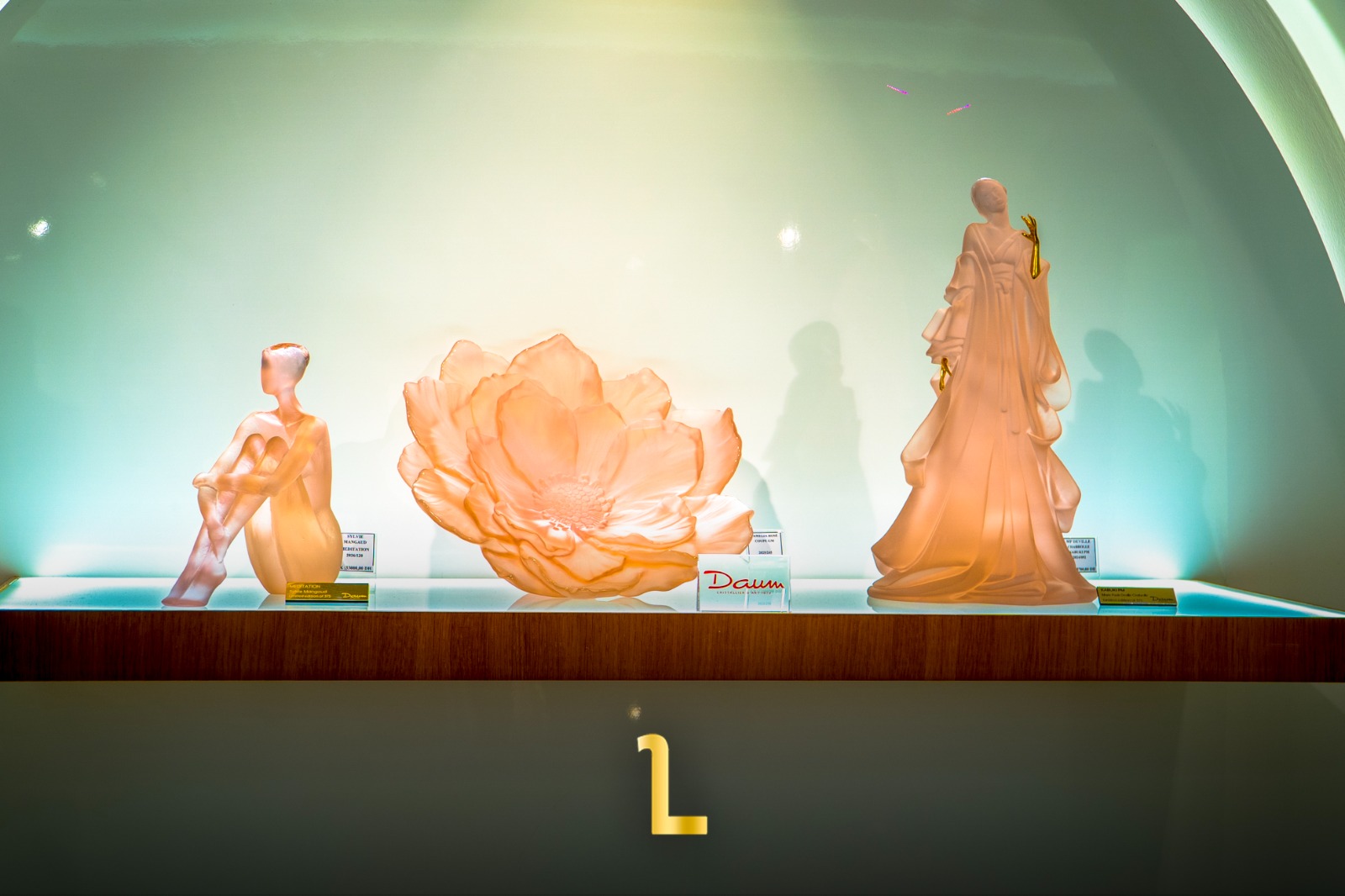
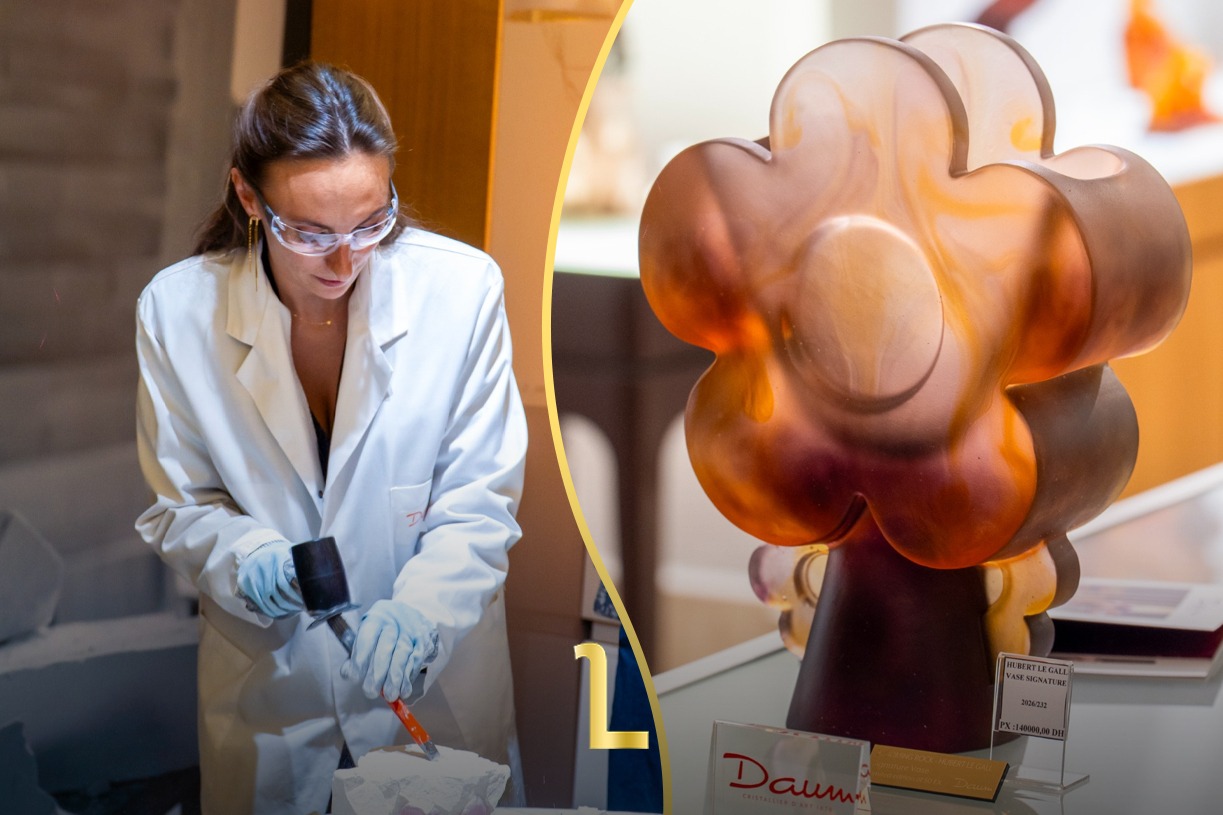
The gathering brought together guests and design enthusiasts for a closer look at Daum’s artistic creations, including pieces developed with Lahlou over the past decade. The event also featured the house’s Blooming Rock collection and its Daum Intérieur range, as well as a live craftsmanship demonstration.
A chance encounter, a decade of design
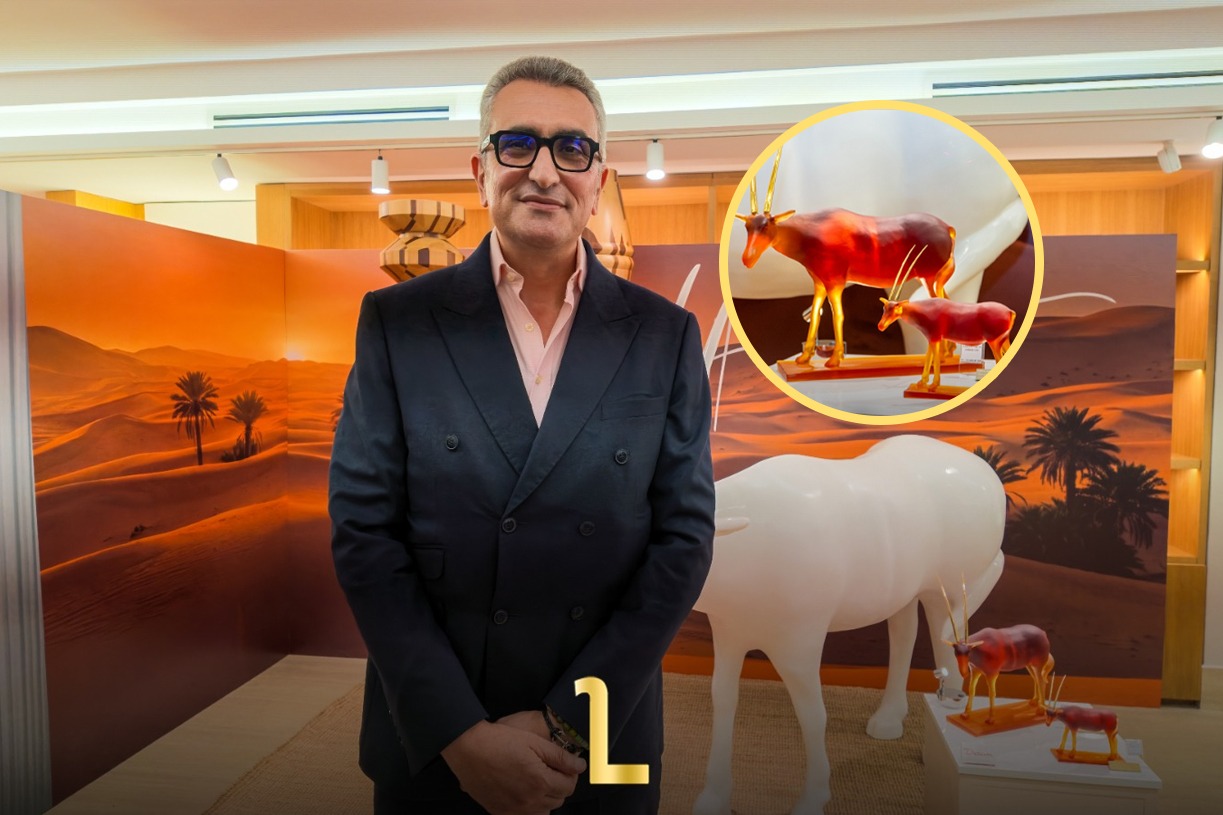
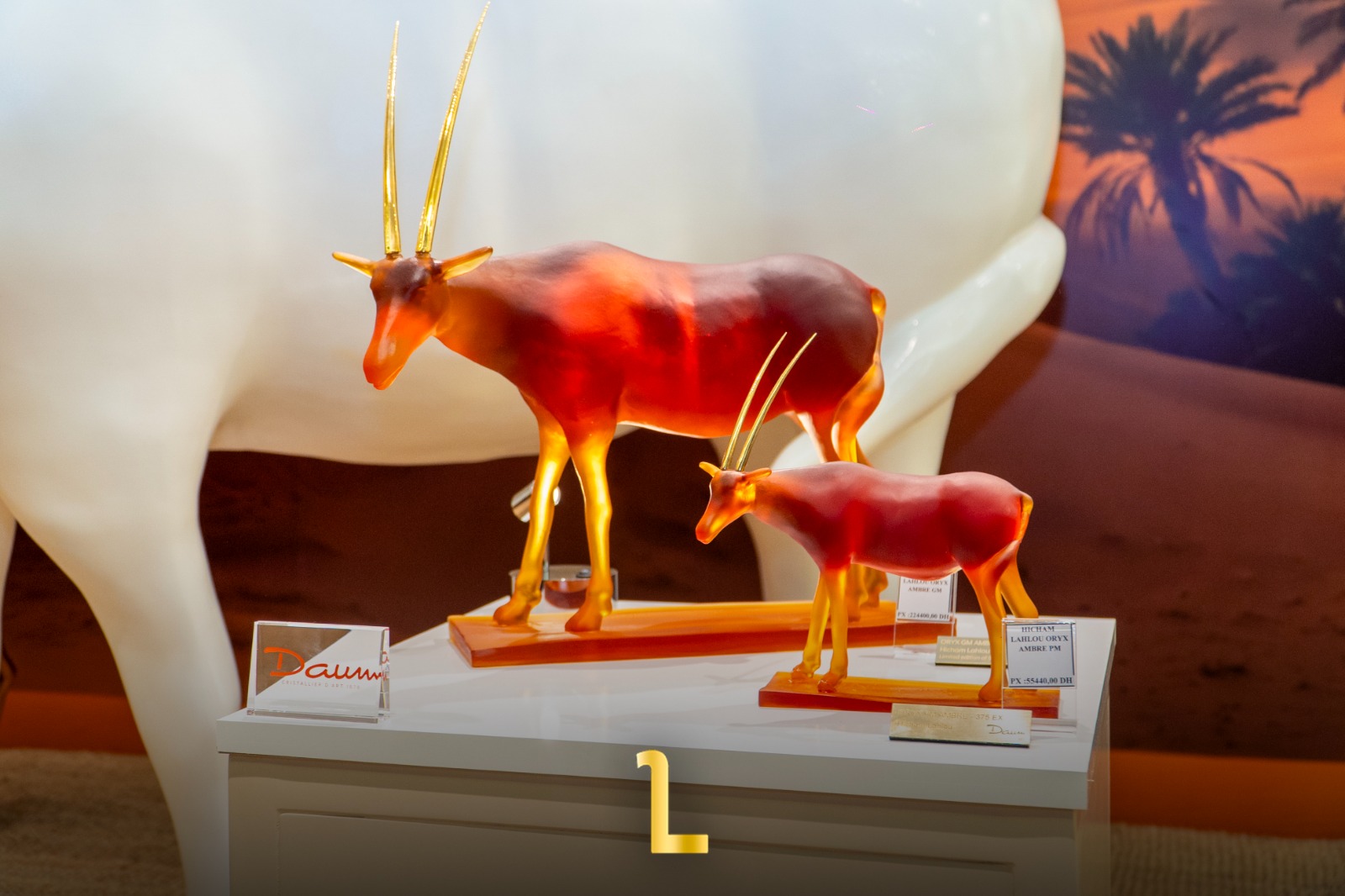
Lahlou, an internationally recognized designer, interior architect, and artist, was the guest of honor. His relationship with Daum began in 2014, when an unexpected meeting in Paris led to the creation of one of his best-known sculptures, Oryx.
Speaking during the event, he recalled receiving a phone call shortly before his flight home to Casablanca. Myriam Pariente, then president of Daum, wanted to meet him at the Royal Monceau hotel.
“She told me, ‘I love your work and I want to make the Oryx, because it’s an animal that isn’t very well known and we’d like to crystallize it,’” Lahlou recalled.
The meeting took place in September 2014, and the sculpture was presented in January 2015. Its amber-colored crystal body and gilded brass horns reflect the animal’s distinctive silhouette, interpreted through Daum’s pâte de cristal technique.
For Lahlou, joining the French house’s artistic catalogue was particularly meaningful. Daum, founded in Nancy in 1878, has worked with internationally recognized artists including Salvador Dalí, César, and Arman.
“I am very proud to be part of the history of art and as well the history of Daum,” he told Lifestyle Magazine.
When crystal meets culture
The partnership later grew beyond Oryx with Constellation, a sculptural incense burner co-created by Lahlou and Malian designer Cheick Diallo.
The piece was introduced in 2025 to mark the opening of Daum’s first boutique at Dubai Mall, in partnership with the Chalhoub Group.
More than a decorative object, Constellation draws on the shared cultural significance of incense across Morocco, Africa, and the Middle East. Its crystal body and intricately worked metal elements combine references to Moroccan and Malian artistic traditions.
Vanessa Sitbon, Daum’s brand director, also spoke about the personal relationship behind the collaboration, which developed across generations of the family involved in the French house.
“With Hicham, our meeting was first and foremost a human one, because there was a genuine family connection,” she said during her address.
Sitbon explained that the decision to create an incense burner came from the desire to find an object with cultural meaning across different communities.
Through incense, light, and the symbolism of the moon, she said, the designers wanted to express the traditions and experiences that people share, regardless of their religious or cultural backgrounds.
Speaking separately to Lifestyle Magazine, Sitbon described The ICONIC as a fitting setting for the occasion.
“In this magnificent boutique, you have a real mix of craftsmanship, a blend of cultures between Morocco and France that we have tried to demonstrate through our works of art,” she said.
Myriem Rahmouni, director of The ICONIC Casablanca, said the event also introduced guests to Daum’s Blooming Rock and Daum Intérieur collections.
She described the presentation as an encounter between French and Moroccan heritage, with the boutique bringing together different expressions of design and decorative art.
Guests also gathered to watch a live craftsmanship demonstration, adding an interactive element to an evening otherwise centered on the finished creations.
Moroccan by instinct
For Lahlou, Moroccan identity remains present in his work even when a design does not draw directly on familiar national symbols.
Speaking to Lifestyle Magazine about the cultural influences behind his sculptures, he pointed to the traditional incense burner as an object shared across Moroccan and regional cultures, while Oryx takes inspiration from wildlife associated with Africa and the Arabian Peninsula.
But he suggested that cultural identity is also something more personal, expressed through an artist’s creative instincts.
“When you have your spirit, your sensibility, it’s Moroccan. That’s it,” Lahlou said.