

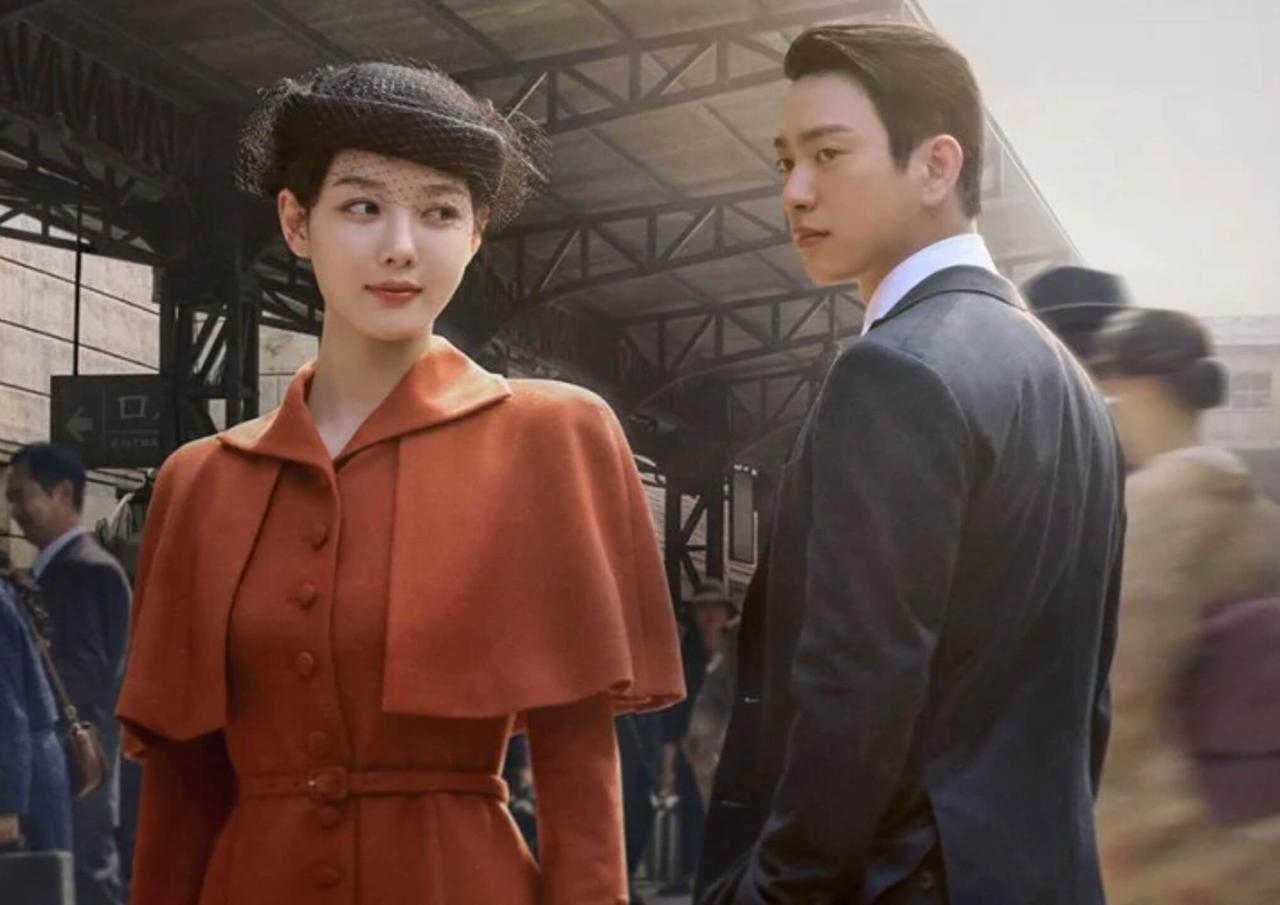
Rabat – What happens when a pickpocket takes on a new identity and enters the heart of a colonial government?
The new Korean drama “100 Days of Deception” takes viewers to 1932 Gyeongseong, the colonial-era name for Seoul. The 16-episode series offers plenty of reasons to add it to your weekly Netflix watchlist, with Kim You-jung and Park Jin-young in the lead roles, alongside Kim Hyun-joo as Yoo So Ran, Lee Moo-saeng as Philip Yoo, and Jin Sun-kyu as Sato Shinichi.
It also brings together director Yu In-sik, known for popular productions such as Extraordinary Attorney Woo and the Dr. Romantic series, and director Kim Yoon-jin.
The drama airs every Saturday and Sunday, with new episodes streaming weekly on Netflix.
The story is full of secrets
At the heart of the story, Lee Ga-kyung (Kim You-jung) had one goal which is to save enough money to leave Korea for America. As one of Gyeongseong’s most skilled pickpockets, she knows how to read people and stay one step ahead, but her plans take an unexpected turn when the independence movement recruits her for a dangerous mission.
She must spend 100 days under a false identity as Geum Seo-hee, a trainee interpreter at the Government-General of Korea.
There, she meets Kim Tae-woong (Park Jin-young), an elite interpreter and the adopted son of a senior colonial official. However, he also hides secrets of his own.
The story keeps viewers guessing about who they can trust and what each character really wants as both characters try to protect their identities.
The other main roles also deserve attention. Kim Hyun-joo plays Yoo So-ran, while Lee Moo-saeng takes on the role of Yoo Phillip. Jin Seon-kyu completes the main cast as Sato Shinichi, a powerful colonial official.
The historical setting
This K-drama is set in 1932, when Korea was under Japanese imperialism, which ran from 1910 until 1945. Even though the characters and the plot come from fiction, the series draws on a real and difficult period in Korean history. At the time, the Japanese-led Government-General of Korea governed the country, while independence activists fought to free Korea from colonial rule.
Moreover, this period provides the audience with a chance to see how the streets of Gyeongseong were developing over time. One can see the trams, department stores, cafes, and Westernized clothing in Gyeongseong of the early twentieth century.
Thus, for fans of historical dramas, this series is a chance to discover part of the history of Korea along with the love and loyalty story.
The role of languages
In many spy dramas, characters rely on weapons or physical confrontations, but in “100 Days of Deception,” language plays one of the most important roles.
The story moves between Korean, Japanese, English, and Chinese, and it reflects the differences between people and political interests that shaped Gyeongseong at the time.
This detail gives the drama another layer of suspense, since a small mistake in translation or an unexpected change of language could expose someone’s identity or reveal information they want to keep secret. It also makes viewers pay closer attention to conversations, expressions and the way characters communicate with one another.