

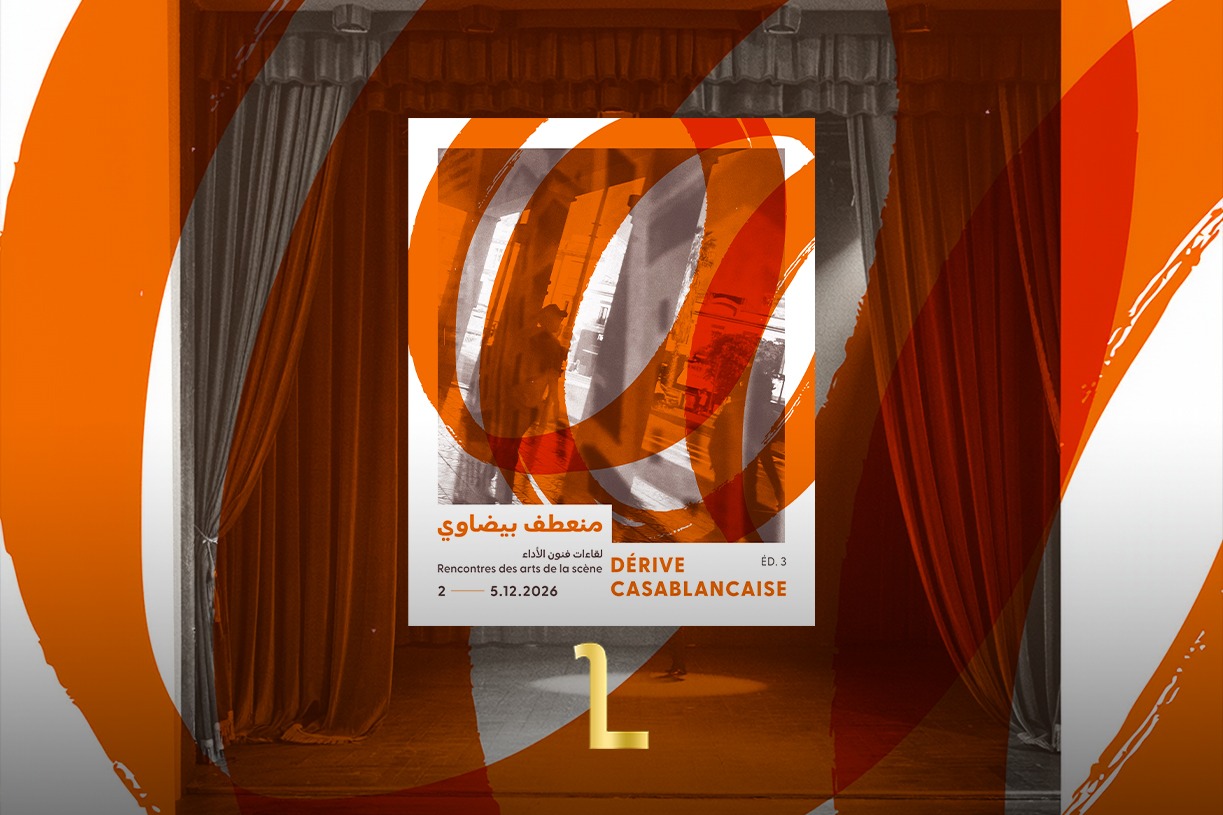
Casablanca – What happens when theater, dance, cinema, music, and poetry share the same space? Dérive casablancaise is bringing these different forms of expression together for its third edition, running from December 2 to 5 across several cultural venues in the city.
The biennale welcomes artists from Morocco, Lebanon, Egypt, Syria, Palestine, Spain, France, Haiti, and Belgium, with a program that gives audiences plenty of ways to experience their work.
Among the participating artists are Lebanese performer Chrystèle Khodr, Syrian theater director Wael Kadour, Moroccan choreographer Bilal El Had, and Spanish-French artist Jordi Galí.
From the stage to the screen
The program moves between different artistic experiences. Theater fans can discover Khodr’s “Silence, ça tourne!” and Kadour’s “Chapitre 4. Ennemi du peuple… rien de plus,” while dance performances include El Had’s “Ch’tahh” and Galí’s “Ciel.”
Cinema also has its place, with a screening of Johan Grimonprez’s documentary “Soundtrack to a Coup d’État,” while music lovers can catch a concert by Dwarfs of East Agouza.
The program also makes room for poetry, readings, and visual art, including “Bibliothèques Vivantes” and an exhibition of letters exploring intangible heritage.
View this post on Instagram
Looking at the past to understand the present
There is also a bigger idea connecting this year’s edition: the way history continues to shape our lives today. Through their work, participating artists explore forgotten memories, overlooked stories, and experiences that often go unheard.
The biennale invites audiences to consider how the past remains present in the stories we tell, the places we inhabit, and the way we see the world.
Beyond the performances, morning meetings will give invited artists, researchers, and cultural professionals a space to exchange ideas about their creative practices and the contexts in which they work.
The program unfolds across several venues, including La Coupole, the Annexe du Sacré-Cœur, and Théâtre 121 at the Institut Français. Audiences can also attend public events in open spaces for free.
Read Also: Régine Mahaux Explores Icons and Intimacy in Rabat Exhibition