

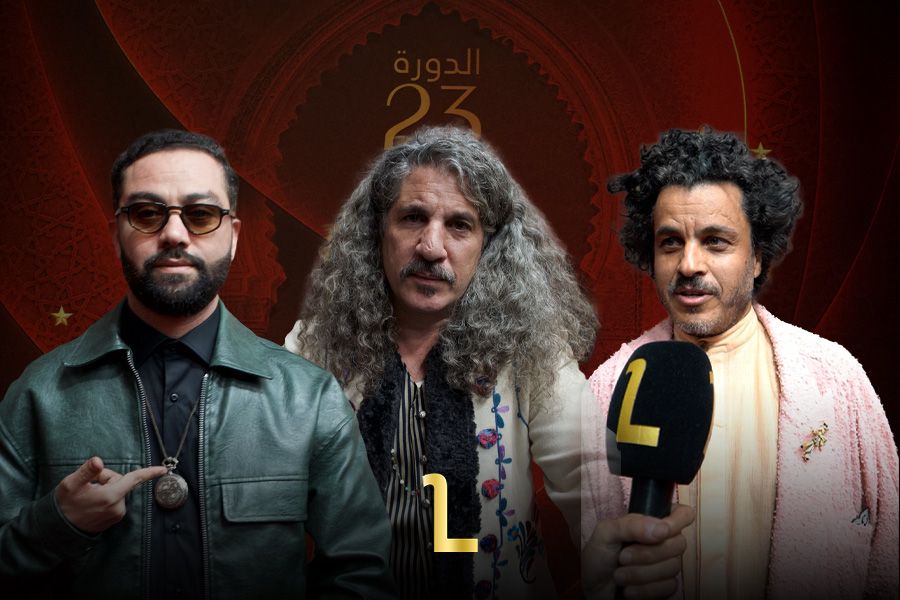
Marrakech — Artificial intelligence, corporate power, ancestral memory, and cultural identity took center stage at the 23rd Marrakech International Film Festival this evening, November 26, with the presentation of Luca Guadagnino’s “Artificial” and the world premiere of Yassine Marco Marroccu’s “Alkebulan.”
The two productions explore different worlds. One revisits a dramatic chapter in the development of artificial intelligence, while the other follows a journey across Morocco shaped by exile, spirituality, and the search for belonging.
Yet both raise questions about the forces that shape people’s lives and identities.
Luca Guadagnino examines the power behind artificial intelligence
Italian filmmaker Luca Guadagnino presented “Artificial,” a film revisiting the November 2023 leadership crisis at OpenAI, when CEO Sam Altman was unexpectedly dismissed before returning to his position days later.
Starring Andrew Garfield as Altman, the film examines the relationship between technological innovation, economic influence, and the individuals who exercise control over increasingly powerful systems.
Speaking to Lifestyle Magazine, Guadagnino explained that the story appealed to him because of the larger questions behind the corporate conflict.
“I think it’s an amazing study of power, of technology, of what our lives can become if we put ourselves into the hands of very few people who control the technology and the economy behind it,” the director said.
For Guadagnino, the events surrounding Altman’s dismissal and reinstatement offered an opportunity to explore the consequences of concentrating technological and economic influence among a small number of decision-makers.
The filmmaker also discussed his collaboration with Andrew Garfield, whose performance anchors the film.
“Andrew is my friend,” Guadagnino said, recalling that the actor had previously accompanied him to Marrakech when he served as the festival’s jury president.
“To work with him for me is always a profound joy,” he added.
The production also features Yura Borisov, Monica Barbaro, Cooper Hoffman, and Jason Schwartzman.
‘Alkebulan’ turns a grandfather’s diaries into cinema
Earlier in the day, Moroccan-Italian filmmaker Yassine Marco Marroccu presented “Alkebulan,” his latest feature and a contender for the festival’s Étoile d’Or.
The Moroccan-Hungarian-Qatari production follows Edoardo, an Italian exile who travels from Casablanca toward the Sahara in search of a missing vessel. His journey intersects with that of Amastan, a young Tuareg shaman searching for a sacred amulet stolen from his community.
The adventure brings together historical memory, cultural encounters, and elements of spirituality and fantasy.
But the story’s origins are deeply personal.
“My grandfather left only one thing in his life. He didn’t leave walls or… he owned nothing. He left this journey,” Marroccu told Lifestyle Magazine.
The director explained that his grandfather kept diaries for approximately 40 years, documenting his experiences from the 1920s through the 1960s.
After leaving Fascist Italy in the early 1930s, his grandfather gradually adopted Moroccan customs and ways of thinking.
“When you read the diaries, you feel that the guy was having a transformation with the time. He was getting ‘Moroccanized,'” Marroccu said.
The filmmaker found particular meaning in the idea that identity develops through encounters and lived experiences rather than remaining tied to a single birthplace.
“We don’t come from a place, we come from everywhere,” he said.
That philosophy also shaped the film’s approach to storytelling.
Asked about the relationship between historical reality and fantasy, Marroccu rejected the idea that the two should necessarily remain separate.
“The fantasy is part of the reality,” he explained, adding that everyday life contains countless experiences, connections, and forces that cannot always be captured through a strictly realistic narrative.
Actors reflect on belonging and Moroccan solidarity
Tunisian-Italian actor Mohamed Zouaoui portrays Edoardo, whose journey takes him away from Italy and into a world shaped by new relationships and unfamiliar traditions.
Zouaoui described the character as a grieving man who leaves his homeland during the Fascist period and eventually makes his way to Casablanca.
For the actor, the production also represented another meaningful collaboration with Morocco’s film industry.
Having worked on international productions in the country for approximately a decade, Zouaoui spoke warmly about his experiences and his previous collaboration with Marroccu on “Catharsis.”
“I love Morocco,” he said, praising the warmth and generosity he has encountered throughout his career.
Moroccan actor Mourad Hmimou, who portrays Aziz, was similarly drawn to the film’s humanity.
Speaking in Moroccan Arabic, Hmimou explained that the story reminded him of ordinary Moroccans who work hard, value loyalty, and maintain deep friendships.
He pointed to his character’s refusal to abandon a friend, even when facing death, as an expression of the solidarity he wanted to portray.
“I was happy to represent this kind of honorable, free, and sincere Moroccan,” Hmimou said.
For the actor, the role offered more than an opportunity to participate in an international production. It also allowed him to celebrate human qualities he believes deserve greater recognition.
With “Artificial” examining the future of technological power and “Alkebulan” revisiting the histories that shape personal identity, Thursday’s program presented two distinct cinematic visions.
One questioned who controls the systems shaping tomorrow. The other asked how the journeys of previous generations continue to shape who we are today.